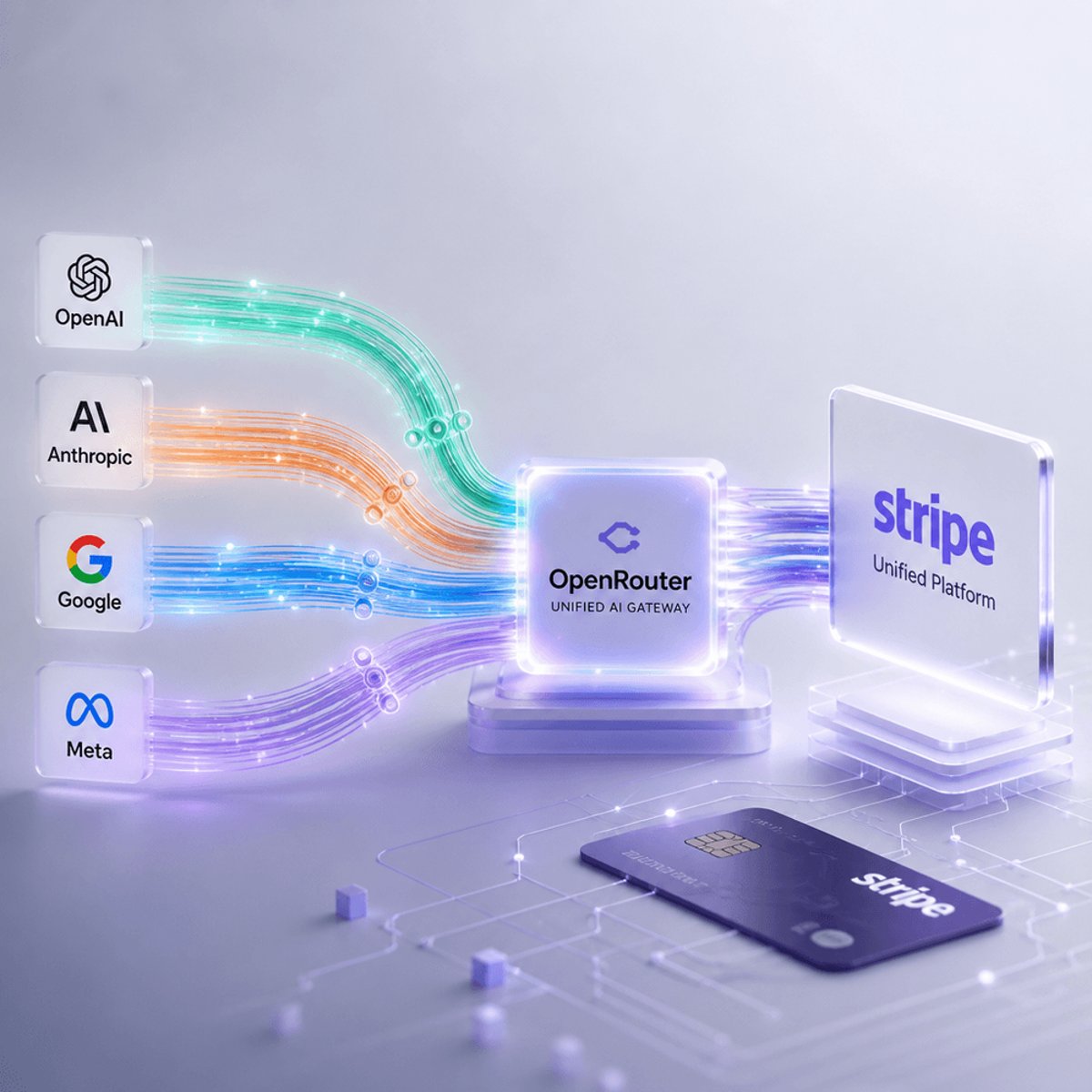
Stripe is acquiring OpenRouter, the AI model marketplace that routes requests across multiple large language models, marking the payments giant's boldest move yet into artificial intelligence infrastructure. The deal, announced Wednesday, positions Stripe to become a critical gateway between developers and AI models - essentially bringing its battle-tested payment rails philosophy to the chaotic world of AI model access. It's a bet that the future of AI commerce runs through the same company that already processes hundreds of billions in online transactions.
Stripe just made its clearest signal yet that AI infrastructure is the next frontier for fintech. The company's acquisition of OpenRouter - a platform that aggregates access to dozens of AI models through a unified API - reads less like a typical tech acquisition and more like a land grab for the picks and shovels of the AI era.
OpenRouter has been operating somewhat under the radar, but it's become indispensable for developers who want to avoid getting locked into a single AI provider. The platform routes requests to models from OpenAI, Anthropic, Google, Meta, and others, automatically selecting based on cost, speed, or capability. Think of it as Stripe for AI models - you integrate once, and suddenly you have access to the entire ecosystem.
The strategic logic is obvious once you see it. Stripe built a $95 billion business by making it dead simple for developers to accept payments without dealing with the nightmare of individual bank relationships and processor integrations. Now they're applying that exact playbook to AI model access. Instead of developers maintaining separate API keys, rate limits, and billing relationships with OpenAI, Anthropic, and a dozen other providers, they'll have one Stripe-powered interface.
For Stripe, this isn't just about revenue from API calls - though that's certainly part of it. This is about becoming embedded in the next generation of software infrastructure. Every company building AI features needs model access, and most need flexibility to switch between providers based on cost and performance. Stripe is positioning itself as the universal adapter.
The timing is particularly interesting given the current chaos in AI model pricing. OpenAI has been aggressively cutting prices on GPT-4, while Anthropic's Claude models have been winning enterprise deals on reliability grounds. Google's Gemini keeps undercutting everyone on cost for certain use cases. Developers are increasingly treating models as commodities, routing requests based on real-time pricing and performance - exactly the kind of complexity that middleware platforms like OpenRouter were built to solve.
OpenRouter's appeal has been its neutrality and its sophisticated routing logic. The platform lets developers set preferences like "use the cheapest model that can handle this task" or "fail over to a backup provider if the primary is down." That kind of intelligent orchestration is becoming table stakes for production AI applications, especially as costs scale and reliability becomes critical.
Financial terms weren't disclosed, but the deal represents Stripe's most significant move into AI infrastructure since it began offering AI-powered fraud detection and financial tooling. The company has been methodically building out its platform beyond pure payment processing - adding billing, revenue recognition, corporate cards, and banking-as-a-service features. AI model access fits naturally into that expansion, particularly as more of Stripe's customers incorporate AI features that require reliable model access and clear billing.
The acquisition also positions Stripe against an emerging class of AI infrastructure companies. Startups like Anyscale and Modal are building platforms for AI deployment, while established cloud providers like Microsoft Azure and Google Cloud are bundling model access with compute. Stripe's advantage is its existing relationship with millions of developers and businesses - OpenRouter instantly becomes available to that entire ecosystem.
For OpenRouter's existing users, the big question is whether the platform maintains its model-agnostic stance or gradually favors certain providers. Stripe has a strong track record of maintaining neutral platforms - it supports competing payment methods and doesn't play favorites - which suggests OpenRouter's independence will be preserved, at least initially.
The deal is still subject to standard regulatory approval, but doesn't face the antitrust headwinds that have complicated other tech acquisitions lately. Neither company disclosed how many employees are joining Stripe or what happens to OpenRouter's existing customer contracts, though the platform is expected to continue operating under its current brand in the near term.
Stripe's OpenRouter acquisition is a clear-eyed bet that AI model access will be as foundational to the next decade of software as payment processing was to the last. By bringing its aggregation playbook to AI infrastructure, Stripe isn't just expanding its business - it's positioning itself as essential middleware for the AI economy. For developers, this means one less integration headache and potentially better pricing through Stripe's scale. For the AI industry, it's a signal that the infrastructure layer is consolidating fast, and the winners will be companies that make complexity disappear. The deal won't grab headlines like a splashy product launch, but it's the kind of strategic move that quietly reshapes markets.