Apple just made its biggest acquisition in over a decade, snapping up Israeli AI startup Q.AI for nearly $2 billion. The deal marks Apple's second-largest purchase ever, trailing only the $3 billion Beats Electronics acquisition from 2014. With Meta, Google, and Apple locked in an escalating AI arms race, this acquisition signals Cupertino's intent to dominate the next frontier: hardware-embedded AI that transforms how devices hear, see, and respond to the world around us.
Apple isn't playing catch-up anymore. The company just pulled off its most aggressive AI move yet, acquiring Israeli startup Q.AI for nearly $2 billion in a deal first confirmed by Reuters. It's a statement purchase that positions Apple to leapfrog competitors in the hardware-AI integration race that's defining 2026.
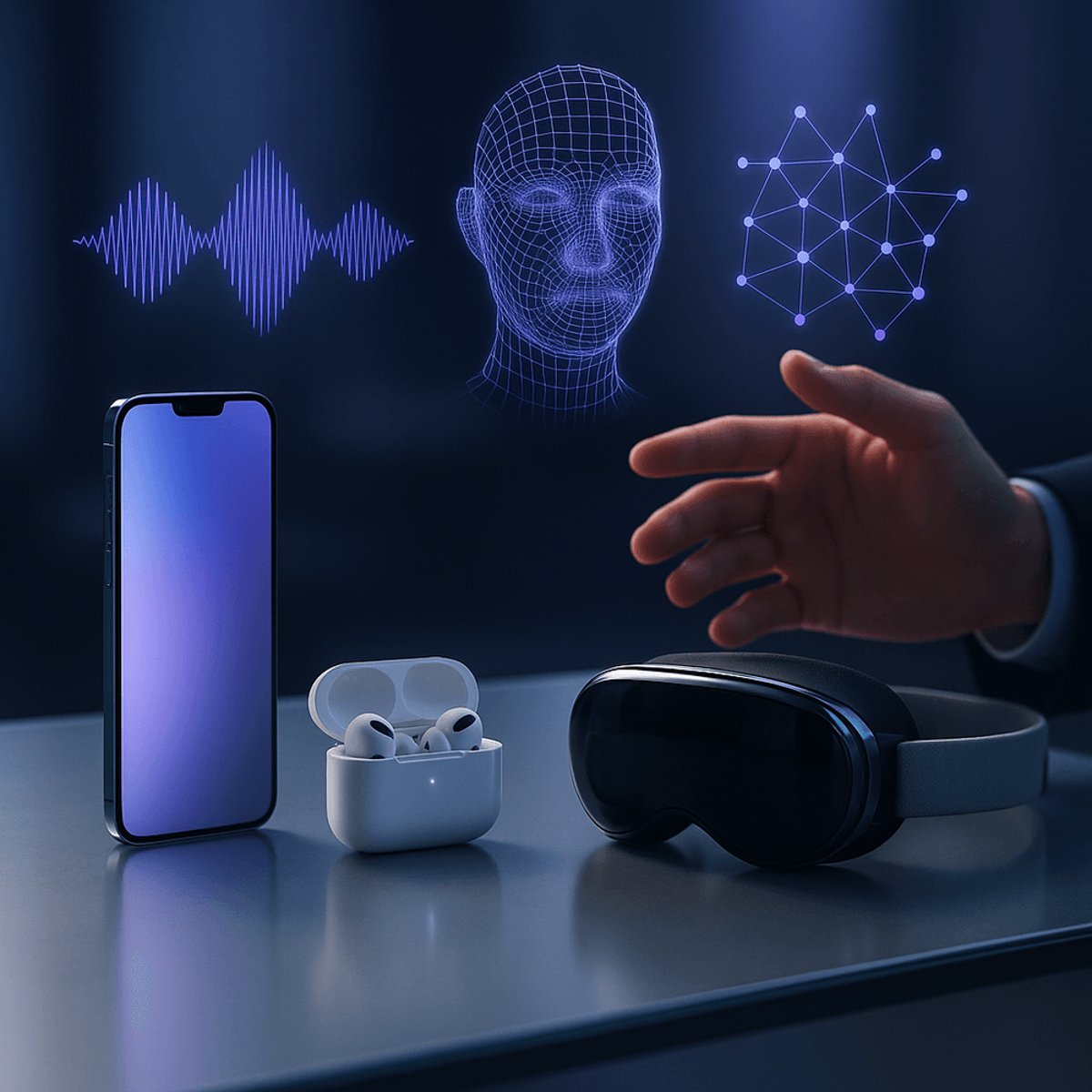
The timing couldn't be more deliberate. Hours before Apple reports what analysts predict will be a blockbuster quarter with around $138 billion in revenue, the Q.AI acquisition reshapes the narrative from "Apple is behind in AI" to "Apple is buying its way to the front." And they're not buying vaporware. Q.AI brings battle-tested tech that enables devices to interpret whispered speech, enhance audio in chaotic environments, and detect subtle facial muscle movements that could supercharge the Vision Pro headset.
This marks Apple's second-largest acquisition ever, according to The Financial Times, trailing only the $3 billion Beats Electronics deal from 2014. But while Beats gave Apple a consumer brand and streaming service, Q.AI delivers something far more strategic: the building blocks for AI that lives inside hardware, not the cloud.
The company behind the deal knows Apple intimately. Q.AI CEO Aviad Maizels previously sold PrimeSense to Apple in 2013, the 3D-sensing startup that became the foundation for Face ID. That acquisition helped Apple ditch fingerprint sensors and pioneer facial recognition on iPhones. Now Maizels is back with technology that could do for audio and spatial computing what PrimeSense did for biometric security.
Q.AI launched in 2022 with backing from Kleiner Perkins and Gradient Ventures, building imaging and machine learning tech specifically designed for resource-constrained devices. The startup's whisper detection and noise-cancellation algorithms slot perfectly into Apple's existing roadmap. The company has been steadily adding AI features to AirPods, including the live translation capability rolled out last year. Q.AI's tech could make those features work in environments where current AI fails - crowded restaurants, windy streets, whispered conversations.
The facial muscle detection technology is where things get interesting for Vision Pro. While Meta has been loud about its AI hardware ambitions and Google continues pushing AI into every product, Apple's been quietly assembling pieces for a different play: AI that responds to micro-gestures and ambient audio cues without users needing to speak commands aloud. Q.AI's ability to detect subtle facial movements could enable Vision Pro users to control interfaces with barely perceptible expressions.
Maizels and co-founders Yonatan Wexler and Avi Barliya will join Apple as part of the acquisition, bringing not just technology but institutional knowledge of how to navigate Apple's notoriously secretive product development process. That matters more than the tech itself - Apple's graveyard is full of acquired startups whose founders couldn't translate innovation into shippable products.
The deal lands as the broader AI hardware war intensifies. Meta recently announced massive AI infrastructure spending, while Google has been integrating Gemini into its hardware ecosystem. Apple's approach differs: instead of building massive cloud AI systems, it's acquiring capabilities that let AI run locally on chips like the M4 and A-series processors. Q.AI's algorithms are designed for exactly that - powerful inference on device without constant cloud connectivity.
Wall Street will be watching Apple's earnings call closely for any hints about how Q.AI integrates into the product roadmap. Analysts expect this to be Apple's strongest iPhone sales quarter in four years, potentially hitting $138 billion in total revenue according to Yahoo Finance. But the real question isn't about this quarter - it's whether Apple can turn Q.AI's tech into features that justify the next iPhone upgrade cycle.
The acquisition also signals Apple's continued bet on Israel as an AI talent hub. The country has become ground zero for imaging and sensor startups, with companies like PrimeSense proving that Israeli tech can become core iPhone features. Q.AI follows that playbook: deep technical expertise in hardware-constrained AI, proven founders, and technology that solves real problems Apple faces in its product lineup.
For competitors, this is a warning shot. Apple just spent 2x what most AI startups raise in their entire lifecycle on a single acquisition. That's not desperation - it's a company with $162 billion in cash deciding that owning the AI hardware layer matters more than building everything in-house. The Beats acquisition brought Apple into streaming and audio. Q.AI could bring them into ambient AI computing where your devices understand context without you saying a word.
Apple's $2 billion bet on Q.AI isn't just about catching up in the AI race - it's about redefining where that race happens. While competitors pour billions into cloud infrastructure and large language models, Apple is buying the expertise to make AI feel native to hardware, invisible to users, and impossible to replicate without owning the entire stack. The real test comes when these features ship: will whisper detection and facial micro-gestures become as essential as Face ID, or will this join the long list of expensive acquisitions that never quite found product-market fit? With Maizels' track record and Apple's timing, the smart money is on transformation, not integration theater.