Jeff Bezos is launching his most ambitious post-Amazon play yet. The billionaire is reportedly seeking $100 billion to acquire traditional manufacturing companies and transform them with artificial intelligence under a new initiative called Project Prometheus. According to TechCrunch, the move signals a major bet that AI can revitalize America's struggling industrial sector while generating massive returns for investors willing to fund the audacious vision.
Jeff Bezos isn't done transforming industries. The Amazon founder who revolutionized retail and cloud computing is now setting his sights on something decidedly old-school: American manufacturing. But there's a twist that makes this pure Bezos - he wants to inject cutting-edge AI into the creaking machinery of legacy industrial firms.
Project Prometheus, as the initiative is reportedly called, seeks to raise a staggering $100 billion to acquire traditional manufacturing companies and completely overhaul their operations with artificial intelligence technology. The scale alone puts this in rarefied air, competing with the largest private equity megafunds ever assembled. According to TechCrunch, Bezos believes AI can unlock hidden value in companies that Wall Street has written off as dinosaurs of a bygone industrial era.
The timing is telling. While tech giants pour billions into training ever-larger language models and consumer AI applications, Bezos is betting that the real money lies in applying AI to physical world problems - specifically, making factories smarter, faster, and more profitable. It's a thesis that aligns with his long-held fascination with operational efficiency, the same obsession that turned Amazon warehouses into marvels of logistics optimization.
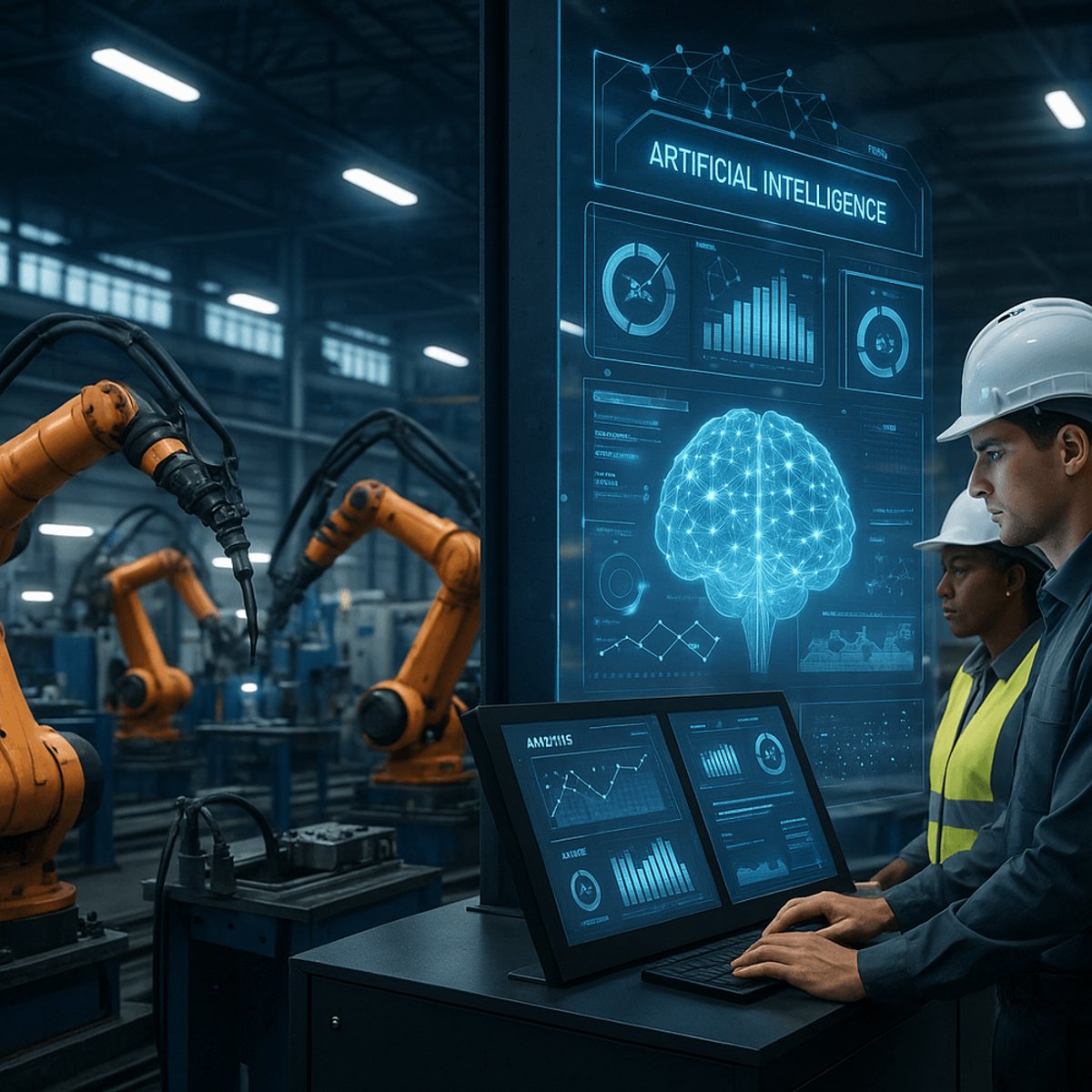
The playbook appears straightforward on paper: identify undervalued manufacturing firms with solid customer bases but outdated processes, acquire them at reasonable multiples, then retrofit everything with AI-powered systems. That means predictive maintenance algorithms that prevent costly breakdowns, computer vision systems for quality control, intelligent inventory management, and supply chain optimization powered by machine learning models that can anticipate disruptions before they cascade through production lines.
But executing at $100 billion scale is another matter entirely. Manufacturing presents challenges that e-commerce and cloud computing don't - union negotiations, environmental regulations, physical infrastructure constraints, and decades of embedded institutional knowledge that doesn't easily translate into training data for AI models. The graveyard of manufacturing turnaround attempts is littered with well-funded failures.
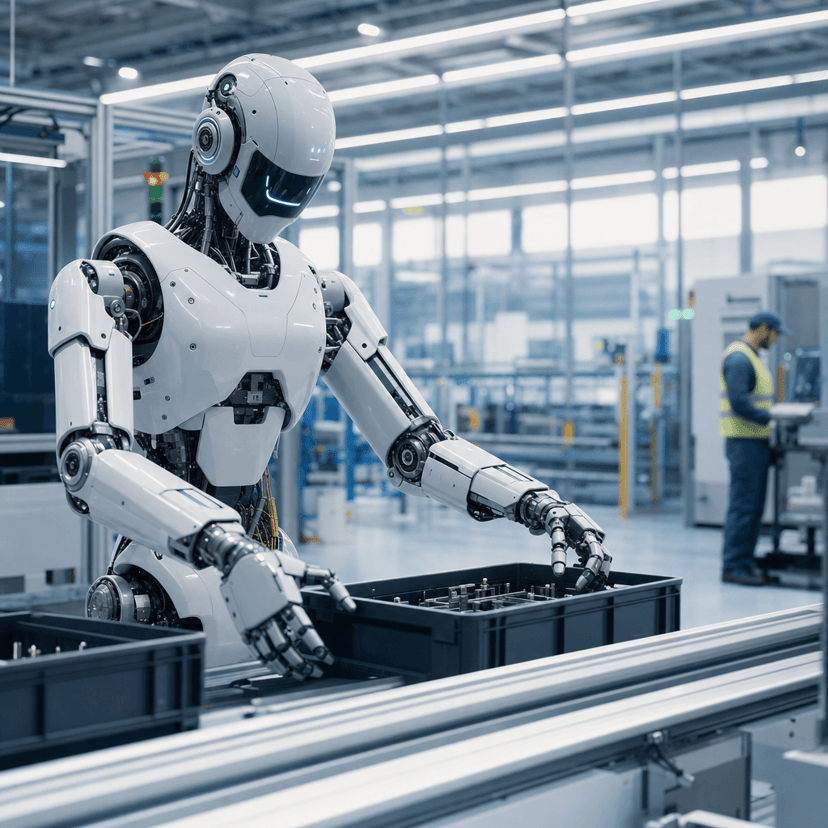
Still, Bezos brings credible experience to the table. Amazon's fulfillment network represents one of the world's most sophisticated applications of AI and robotics to physical operations. The company's Kiva robots, computer vision systems, and route optimization algorithms have delivered measurable productivity gains year after year. If anyone can translate those lessons to traditional manufacturing, the thinking goes, it's the executive who built that system from scratch.
The capital raise itself will be a test. At $100 billion, Project Prometheus would need to attract sovereign wealth funds, pension funds, and ultra-high-net-worth individuals willing to lock up capital for what could be a decade-long transformation effort. Returns aren't guaranteed, and manufacturing margins are notoriously thin compared to software businesses. Investors will want to see detailed plans for which sectors Bezos intends to target - automotive parts, aerospace components, industrial equipment, and chemical production all present different risk profiles and AI application opportunities.
There's also the competitive landscape to consider. Private equity firms like Blackstone and KKR have been circling manufacturing assets for years, and they're increasingly touting their own operational improvement capabilities. Tech-forward investors like Andreessen Horowitz have funded industrial AI startups promising to modernize factory floors without requiring full company acquisitions. Bezos will be competing for deals against entrenched players with deep industry relationships.
The broader implications extend beyond financial returns. If Project Prometheus succeeds, it could provide a roadmap for revitalizing American manufacturing at a time when reshoring and supply chain resilience have become national priorities. Demonstrating that AI can make domestic production cost-competitive with overseas alternatives would have significant economic and geopolitical ramifications. Politicians from both parties have spent years promising a manufacturing renaissance - Bezos might actually deliver one, albeit on his own terms and timeline.
What remains unclear is how quickly Bezos plans to deploy the capital and whether he'll take a hands-on operational role similar to his Amazon days or delegate to experienced manufacturing executives. The success of AI transformation efforts often hinges on change management as much as technology - convincing skeptical factory workers and middle managers that algorithms won't eliminate their jobs but rather augment their capabilities.
Project Prometheus represents Jeff Bezos's biggest bet since founding Amazon - a wager that AI can breathe new life into America's industrial base while generating outsized returns. The $100 billion question is whether manufacturing turnarounds can scale the way software businesses do, or if physical world constraints will prove more stubborn than the billionaire anticipates. If Bezos can replicate even a fraction of Amazon's operational excellence across dozens of legacy manufacturers, he'll cement his legacy as more than just an e-commerce pioneer. He'll be the architect of America's industrial AI revolution. But that's a big if, and the coming months will reveal whether investors share his conviction enough to write checks that could reshape American manufacturing for decades to come.