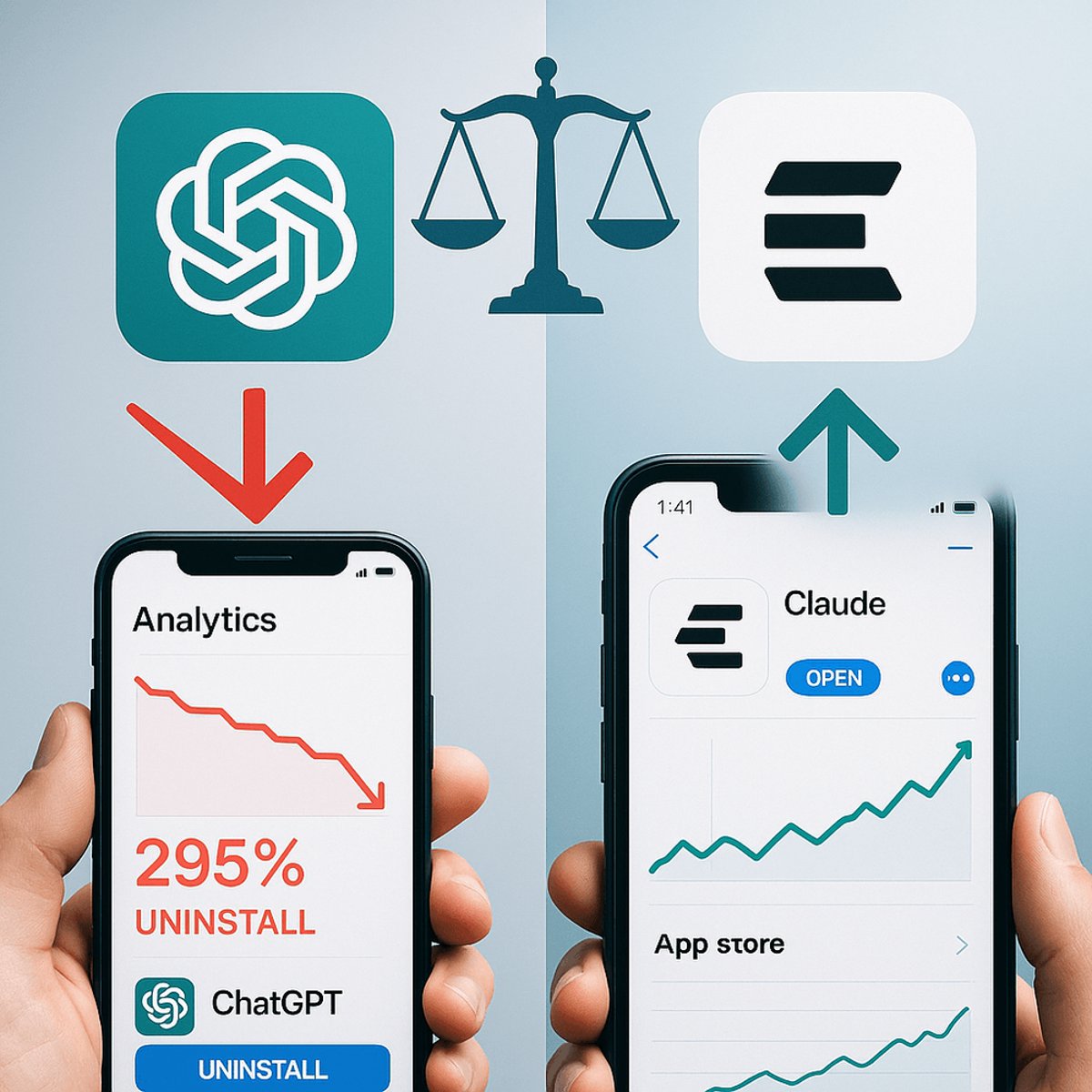
The backlash is real, and it's showing up in the data. ChatGPT uninstalls jumped 295% following news of OpenAI's controversial partnership with the Department of Defense, according to exclusive app analytics reported by TechCrunch. While users deleted the AI assistant in droves, rival Anthropic's Claude saw downloads climb, marking one of the most dramatic consumer revolts in the AI industry's short history. The numbers reveal what OpenAI's reassuring press releases couldn't hide - a significant chunk of its user base is voting with their phones.
OpenAI just learned that military contracts come with civilian casualties. The company's ChatGPT app is bleeding users at an unprecedented rate, with uninstalls skyrocketing 295% in the immediate aftermath of its Pentagon partnership announcement. The data, first reported by TechCrunch, paints a stark picture of consumer sentiment when AI companies cross into defense territory.
The timing tells the whole story. Within hours of OpenAI confirming its Department of Defense deal, app analytics platforms started registering the exodus. Users who'd spent months asking ChatGPT to help with homework, write emails, and plan vacations suddenly wanted nothing to do with an AI assistant that would also serve military applications. The 295% spike represents thousands of deletions above baseline levels, a rejection that hits OpenAI where it increasingly counts - consumer market share.
Anthropic is the immediate beneficiary of OpenAI's stumble. The company's Claude assistant saw download numbers climb as users actively sought alternatives to ChatGPT. While exact figures for Claude's surge weren't disclosed in the analytics data, the migration pattern is clear enough to worry OpenAI's leadership. Anthropic has positioned itself as the "responsible AI" company, emphasizing constitutional AI principles and avoiding defense contracts - a positioning that's suddenly worth its weight in user acquisition.
This isn't just about app store rankings. The consumer revolt signals a broader reckoning in the AI industry about values, use cases, and who gets to profit from technology that billions now use daily. OpenAI spent years building trust with everyday users through ChatGPT's free tier and accessible interface. That goodwill is evaporating fast among the segment of users who see military applications as a red line, regardless of OpenAI's assurances about ethical guardrails and defensive-only use cases.
The Pentagon deal itself promises OpenAI significant revenue and strategic positioning in the lucrative government contracting space. Defense and intelligence budgets dwarf consumer subscription fees, making the DoD partnership financially logical even if thousands of free-tier users bail. But the optics are brutal, and the competitive implications are real. Every user who switches to Claude becomes harder to win back, especially if Anthropic continues building features that match or exceed ChatGPT's capabilities.
Industry watchers are now questioning whether OpenAI misjudged the consumer market's tolerance for military AI, or simply decided that enterprise and government contracts matter more than consumer sentiment. The company has increasingly pivoted toward business customers with ChatGPT Enterprise and various API deals that generate far more revenue per user than consumer subscriptions. The DoD partnership fits that pattern - it's just that this time, the consumer base noticed and reacted.
Competitors beyond Anthropic are watching closely. Google's Gemini, Meta's Llama-powered assistants, and a dozen smaller AI startups all stand to benefit if OpenAI's brand becomes associated with military applications in users' minds. The AI assistant market remains wide open, with no single player commanding loyalty the way Apple or Google do in their ecosystems. That fluidity makes consumer backlash especially dangerous - switching costs are minimal when every AI assistant lives one app store search away.
OpenAI hasn't publicly addressed the uninstall surge, instead maintaining its position that the DoD partnership focuses on cybersecurity and defensive applications. That messaging hasn't resonated with the users deleting ChatGPT, who appear less concerned with the technical details of the contract than the simple fact of military involvement. The company faces a classic tech dilemma - chase the money in enterprise and government contracts, or nurture the consumer base that made ChatGPT a household name.
The 295% spike also raises questions about how OpenAI measures success going forward. If consumer market share becomes a secondary metric behind enterprise revenue, the company can probably weather this storm. But if OpenAI's leadership still views ChatGPT as a consumer product that needs mass adoption to train better models and maintain cultural relevance, this week's numbers should be alarming. User trust, once lost, takes years to rebuild - just ask Meta about its ongoing struggles with privacy perception.
The 295% uninstall surge isn't just a bad week for OpenAI - it's a market signal about where lines get drawn in AI development. Users are proving they'll actually switch products over ethical concerns, not just complain on social media. That makes Anthropic's decision to avoid defense contracts look prescient and puts every AI company on notice that military partnerships carry real consumer costs. OpenAI now has to decide whether enterprise revenue is worth the brand damage, or whether winning back consumer trust matters enough to rethink its strategy. Either way, Claude just got its best marketing campaign handed to it for free.