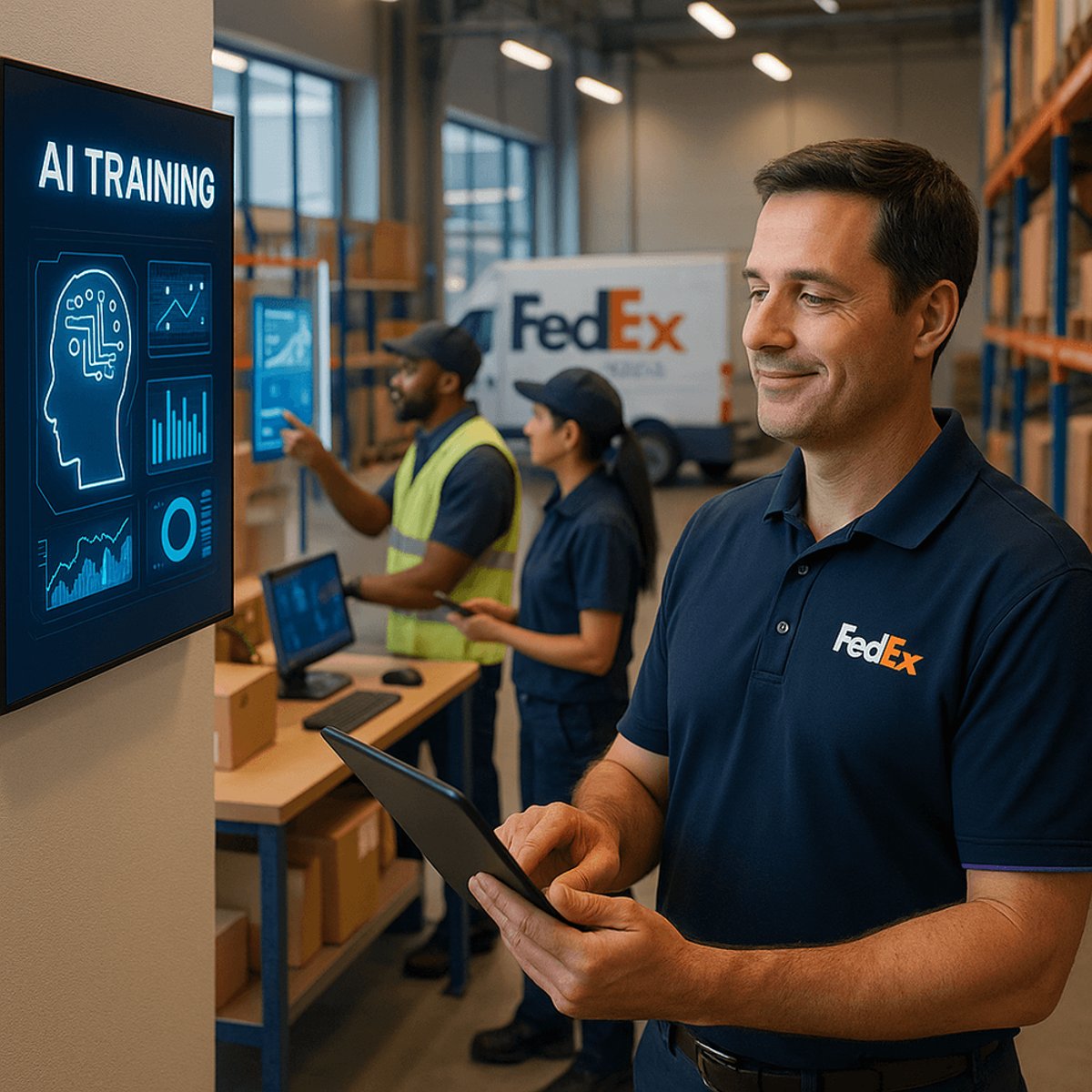
FedEx is rolling out what may be the logistics industry's largest AI training program, pushing 'promotion-ready' artificial intelligence education to more than 400,000 workers across its global operations. The initiative marks a significant shift from corporate AI experimentation to full-scale workforce transformation, signaling that enterprise AI adoption has moved from the C-suite to the warehouse floor. As companies race to integrate AI tools, FedEx's bet is that literacy - not just deployment - will determine competitive advantage.
FedEx is delivering something new to its workforce - and it's not packages. The logistics giant has launched an ambitious AI literacy initiative targeting more than 400,000 employees worldwide, making it one of the most comprehensive corporate training programs since the internet era.
The program, which FedEx is positioning as 'promotion-ready' training, represents a fundamental reckoning with how AI will reshape operations from package sorting to route optimization. Unlike many corporate AI initiatives that focus on executive education or technical teams, this effort spans the entire workforce - from warehouse workers to delivery drivers to customer service representatives.
The timing isn't accidental. As competitors like Amazon and UPS pour billions into AI-powered automation, FedEx is making a different calculation: that human workers augmented by AI knowledge will outperform pure automation plays. The company's approach suggests that understanding AI tools matters as much as deploying them.
What makes this particularly noteworthy is the scale. Training half a million employees in emerging technology represents a massive operational and financial commitment. Most enterprise AI training programs touch a few thousand workers at most - often concentrated in engineering or data science roles. FedEx is effectively betting that AI literacy needs to be as universal as email proficiency became in the 2000s.
The 'promotion-ready' framing is strategic. By tying AI skills directly to career advancement, FedEx is creating internal incentives for participation while addressing workforce anxiety about AI displacement. The message: learn these tools and advance, or get left behind. It's a carrot-and-stick approach that other major employers are watching closely.
The logistics sector has been ground zero for AI adoption experiments. Route optimization algorithms, predictive maintenance systems, and automated sorting facilities have been deployed for years. But those innovations typically happened around workers, not through them. FedEx's initiative flips that model, treating employees as AI practitioners rather than subjects of automation.
Industry analysts see this as part of a broader pattern. After years of AI hype focused on replacing workers, companies are discovering that integration beats replacement. Microsoft's Copilot rollout, Salesforce's Einstein training programs, and now FedEx's literacy push all point toward a new consensus: AI works best when humans understand how to work with it.
The program arrives as corporate AI spending reaches new heights. Gartner estimates enterprise AI software spending will hit $297 billion globally in 2026, but training budgets haven't kept pace. Many companies deploy AI tools without adequate user education, leading to low adoption and poor ROI. FedEx is front-running that problem.
What remains unclear is the curriculum depth. 'AI literacy' can mean anything from basic ChatGPT prompting to understanding machine learning pipelines. The difference matters enormously for actual workplace impact. If FedEx is teaching conceptual awareness, that's useful. If it's building genuine practitioner skills across 400,000 people, that's transformative.
Competitors are likely scrambling to respond. When a major player in a capital-intensive industry makes this kind of workforce investment, it forces rivals to match or risk talent disadvantages. Expect UPS, DHL, and others to announce similar programs in coming months - assuming FedEx's initiative shows early wins.
The broader implication extends beyond logistics. If FedEx can successfully upskill half a million workers in AI, it provides a playbook for other traditional industries facing digital transformation pressure. Manufacturing, retail, healthcare - any sector with large workforces and narrow margins will be studying this closely.
FedEx's massive AI training push represents a watershed moment for enterprise technology adoption. By treating AI literacy as a core workforce competency rather than a specialist skill, the company is redefining what it means to be 'promotion-ready' in 2026. Whether this investment pays off depends on execution details we don't yet have - but the strategic signal is clear. Traditional industries are done experimenting with AI at the edges. They're going all-in, and they're bringing their entire workforces with them. For the 400,000-plus FedEx employees entering this program, AI knowledge just became as essential as knowing how to use the company's package tracking systems. For competitors and other industries, the pressure to follow suit just intensified considerably.