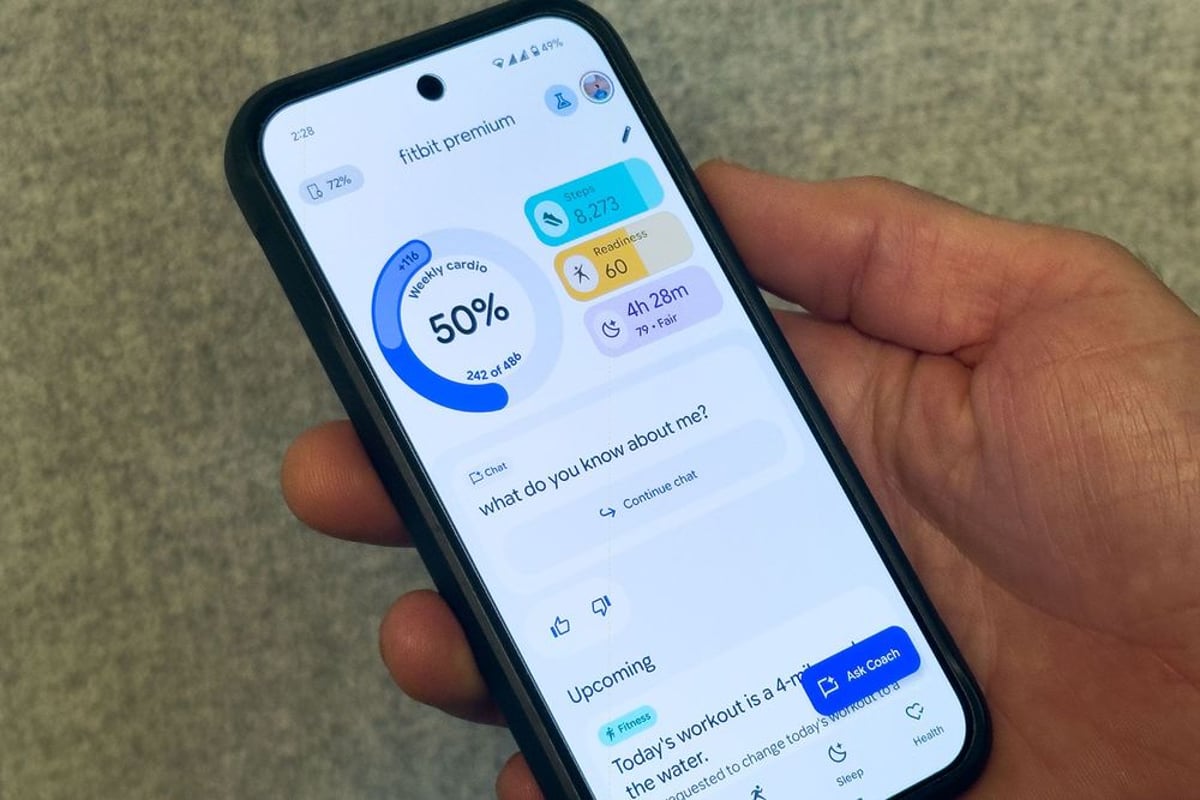
Google just launched Fitbit's most ambitious update yet - a complete app redesign centered around a Gemini-powered AI health coach that's now rolling out to Premium subscribers in the US on Android. This isn't just another chatbot feature; it's a ground-up reimagining of how wearable tech interacts with users, offering personalized workout plans, natural language conversations, and real-time fitness adjustments. The move signals Google's serious push into AI-powered health services, potentially disrupting the $4.4 billion fitness app market.
Google is making its biggest bet on AI-powered fitness yet. The company's Fitbit division just launched a dramatically redesigned app experience built around a Gemini-powered health coach that started rolling out to Premium subscribers today. This isn't your typical AI add-on - it's a complete reimagining of how fitness wearables should work.
The timing couldn't be more strategic. As Apple pushes deeper into health services and startups like Whoop gain traction with personalized coaching, Google needed a standout response. The new Fitbit app delivers exactly that.
"Rather than bolting AI features onto the existing app, the health coach is offered as an opt-in experience wrapped up in a redesigned Fitbit app," Taylor Helgren, Fitbit product manager, told The Verge. The distinction matters - this is architectural, not cosmetic.
Users start with a 5-10 minute conversation with the AI coach, either through text or voice. The system analyzes your fitness history, current goals, and available equipment to create weekly workout plans from a built-in exercise library. Want to train for a 5K? Building strength? Recovering from injury? The coach adapts in real-time based on natural language input.
The "coach's notes" feature tracks these conversations, creating a persistent fitness dialogue that evolves with your needs. It's a stark contrast to traditional fitness apps that offer static routines or basic progress tracking.
But Google faces serious challenges here. AI hallucinations could prove dangerous when dispensing health advice, especially as the coach is designed to field medical questions alongside fitness guidance. Helgren says the team worked with "internal and external clinicians and fitness experts" to build safety frameworks, with the system programmed to refer users to healthcare professionals when appropriate.
The rollout strategy reveals Google's cautious approach. Android Premium users get first access, with iOS following "later this year." Features like nutrition and cycle tracking remain on the roadmap. Users can switch between the new AI experience and the traditional app at will.
This measured launch makes sense given the stakes. The global fitness app market hit $4.4 billion in 2023, with personalized coaching driving premium subscriptions. Apple has dominated through tight hardware-software integration, while companies like Peloton proved users will pay premium prices for quality coaching experiences.
Google's advantage lies in its AI infrastructure. Gemini can process vast amounts of health data to deliver truly personalized recommendations - something traditional fitness apps struggle with. The question is whether users trust an AI coach enough to replace human trainers or physical gym experiences.
Early reactions from fitness tech experts suggest cautious optimism. "It's an unusually thorough integration of AI recommendations, which can often feel bolted on and spit out 'Captain Obvious-level summaries,'" Victoria Song, senior wearables reviewer at The Verge, noted.
The competitive implications extend beyond fitness apps. If successful, this could pressure Apple to accelerate AI integration in Apple Health, while potentially disrupting traditional gym and personal training models. Google is betting that AI coaching can deliver personalized fitness guidance at scale - something human trainers can't match economically.
The preview launch comes with typical Google timeline ambiguity. The company says the health coach will be "fully available next year" but won't commit to specifics. That leaves competitors time to respond and users wondering about long-term commitment.
Google's Fitbit AI coach represents more than a product update - it's a strategic play for the future of personalized health technology. By rebuilding the entire app experience around AI conversations rather than traditional metrics dashboards, Google is betting that natural language interactions will define the next generation of fitness tech. The success of this preview could determine whether AI coaching becomes mainstream or remains a premium experiment. For users, it offers the promise of truly personalized fitness guidance, but the real test will be whether an AI coach can deliver the motivation and accountability that drives long-term fitness success.