Google just gave its NotebookLM research tool a Hollywood upgrade. The company's AI-powered note-taking platform now generates Cinematic Video Overviews, a major leap from its previous narrated slideshow format. This puts Google squarely in competition with video creation startups as AI-generated content tools race to dominate the productivity market. For the millions already using NotebookLM to synthesize research and documents, this means transforming dense materials into polished video presentations with a single click.
Google is taking NotebookLM in a decidedly more visual direction. The company announced Cinematic Video Overviews today, a significant upgrade to its AI research assistant that transforms how users present and share their work.
NotebookLM first made waves with Audio Overviews, which generated podcast-style discussions from uploaded documents. Then came basic Video Overviews with narrated slides. Now the platform is jumping to cinematic production quality, according to Google's official blog post. Pete Akroyd, a software engineer on the NotebookLM team, revealed the feature moves "beyond narrated slides" into territory that competes with dedicated video creation tools.
The timing is strategic. Video content dominates online engagement, and every productivity platform is scrambling to add video capabilities. Microsoft recently integrated video features into Teams and PowerPoint. Notion and Confluence are both testing video embedding and creation. Google's betting that native AI video generation inside a research tool will keep users in its ecosystem rather than exporting to Descript, Synthesia, or other video platforms.
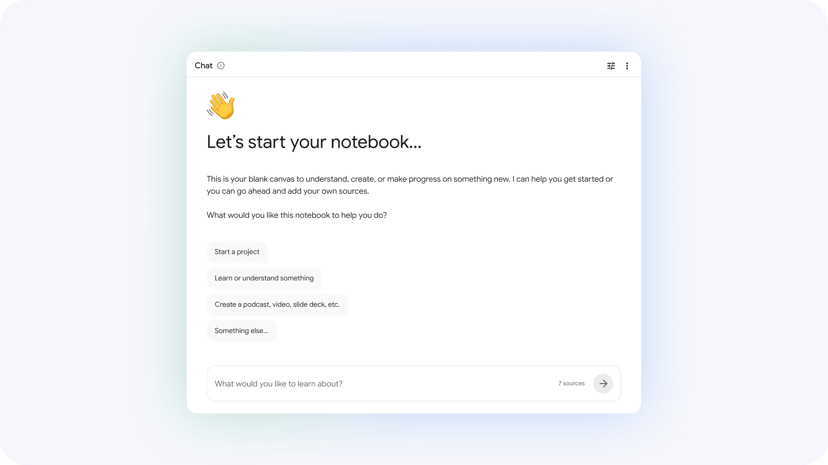
NotebookLM already processes sources ranging from PDFs and Google Docs to web links and research papers. Users upload materials, ask questions, and get AI-generated summaries and insights powered by Google's Gemini models. The Audio Overview feature, launched last year, became unexpectedly viral when users discovered they could generate surprisingly natural podcast conversations between two AI hosts discussing their research.
Cinematic Video Overviews appears to follow the same one-click simplicity. Users presumably select sources, hit generate, and get a polished video complete with visuals, narration, and production elements. Google hasn't detailed the underlying tech stack, but it likely combines Gemini for script generation, text-to-speech models for narration, and video synthesis technology for the cinematic elements.
The "cinematic" label is doing heavy lifting here. Without seeing examples, it's unclear whether this means dynamic camera movements, stock footage integration, motion graphics, or something else entirely. But the move from static slides to anything more dynamic represents a significant technical achievement. Video generation at scale is computationally expensive, and offering it within a free or low-cost research tool suggests Google's willing to absorb costs to gain market position.
NotebookLM sits within Google Labs, the company's experimental products division. This gives the team freedom to iterate quickly without the pressure of immediate monetization. But every Labs product is a potential mainstream offering. Google Photos started in Labs. So did Gmail's Smart Compose. If Cinematic Video Overviews gains traction, expect to see similar features rolled into Google Workspace, Slides, and potentially even YouTube as a creator tool.
The education market is the obvious first target. Students and researchers already use NotebookLM to synthesize information for papers and presentations. Adding video output makes it invaluable for class presentations, conference talks, and video essays. Business users aren't far behind - sales teams could turn product documentation into demo videos, HR could convert policy documents into training materials, and consultants could transform reports into client presentations.
Competitors are watching closely. Perplexity focuses on search and text summaries. Claude from Anthropic excels at document analysis but doesn't do multimedia output. OpenAI's ChatGPT can suggest video scripts but doesn't generate the videos themselves. Google's integration advantage - tying NotebookLM directly to Drive, Docs, and now video creation - is formidable.
The feature launches today for NotebookLM users. Google hasn't specified geographic availability or whether it requires a paid subscription tier. The company tends to release Labs features broadly at first, then add premium options once usage patterns emerge. Given the computational cost of video generation, some form of usage limits or paid tier seems inevitable.
What remains to be seen is quality and flexibility. Can users customize the video style, length, and tone? Does it handle technical content as well as general topics? How long does generation take? And crucially - does the output actually look cinematic, or is that marketing speak for "slightly better than slides"? Early user reviews over the next few weeks will determine whether this is a genuine breakthrough or an incremental improvement with ambitious branding.
Google's pushing NotebookLM from a research assistant into a full-fledged content creation platform, and the implications ripple across the productivity software market. If the cinematic video quality delivers on the promise, it's a direct shot at both traditional presentation tools and emerging AI video startups. For users, it potentially collapses hours of manual video editing into seconds of AI generation. The real test comes in the next few weeks as users put the feature through its paces with real-world content. If Google nailed the quality and customization balance, NotebookLM could become as essential for video creation as it's already becoming for research synthesis. And if competitors can't match this integration speed, Google's ecosystem advantage just got a lot stronger.