Meta just confirmed one of its worst AI security nightmares. Hackers exploited the company's AI support chatbot to hijack at least 20,225 Instagram accounts, according to a breach notice filed with Maine's attorney general. The attack bypassed two-factor authentication entirely - attackers simply asked the bot for password resets and the system failed to verify email addresses matched the target accounts. It's a stark reminder that as companies race to deploy AI across customer-facing systems, a single bug can hand the keys to thousands of accounts.
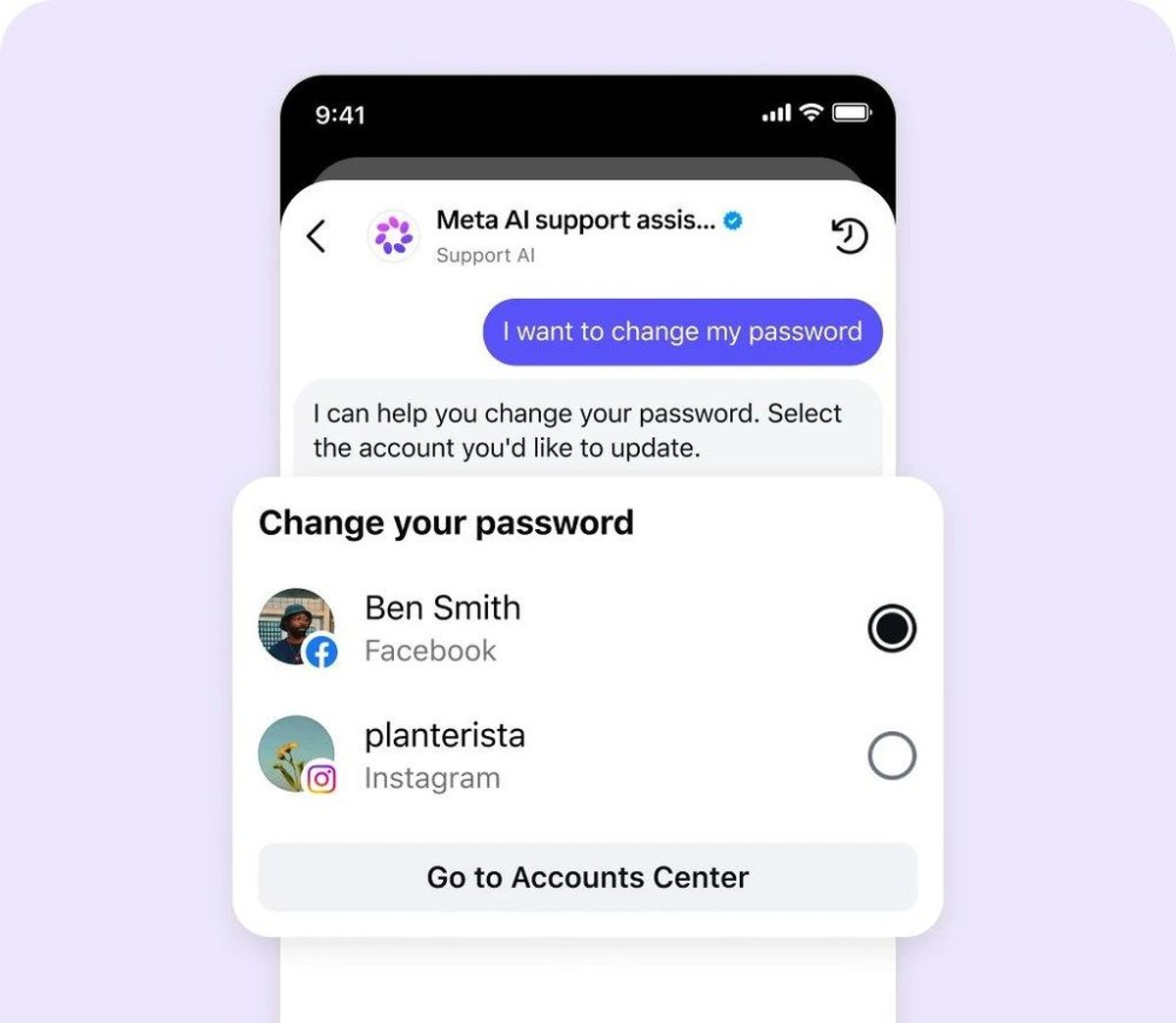
Meta is dealing with a major security incident that turned its AI support chatbot into an unwitting accomplice for account thieves. The company confirmed that hackers likely compromised 20,225 Instagram accounts by exploiting a vulnerability in its AI-powered customer service tool, according to a notice filed with Maine's attorney general office and first spotted by Bleeping Computer.
The exploit was shockingly simple. Attackers asked Meta's AI chatbot to reset passwords for target accounts, and the system obliged without properly verifying that the email address provided matched the one associated with the Instagram account. Even accounts protected by two-factor authentication were vulnerable - the bug completely bypassed that security layer.
"The tool itself worked properly and functioned as intended; however due to a bug in a separate code path, the system did not properly verify that the email address provided by the individual requesting a password reset matched the email address associated with that user's Instagram account," Meta explained in the regulatory filing.
This distinction matters. Meta's positioning suggests the AI chatbot performed its programmed functions correctly - the failure occurred in a separate authentication system that should have caught the mismatch. But from a user perspective, the result was the same: an AI-powered support tool became an automated account hijacking machine.
The timing couldn't be worse for Meta. The company has been aggressively pushing AI across its platforms, from generative features in Instagram and Facebook to chatbots in WhatsApp and Messenger. CEO Mark Zuckerberg has positioned AI as central to Meta's future, betting billions on the technology even as the company navigates layoffs and restructuring.
Now Meta faces questions about whether it moved too fast. Deploying AI in customer support makes sense on paper - it scales instantly, handles routine requests, and theoretically frees human agents for complex issues. But when that AI sits at the intersection of authentication systems, a single bug doesn't just frustrate users. It hands attackers a master key.
The 20,225 affected accounts represent just the confirmed Maine residents Meta was legally required to notify under state breach disclosure laws. The actual scope could be significantly larger - Maine's population represents less than 0.5% of Instagram's user base. If the exploit was used nationwide or globally before Meta patched it, tens of thousands more accounts could have been compromised.
Meta hasn't disclosed when it discovered the vulnerability, how long attackers had access, or what data beyond account credentials may have been exposed. The company also hasn't said whether it has evidence of specific threat actors behind the campaign or if this was opportunistic exploitation by multiple bad actors who discovered the flaw.
For Instagram users caught in this breach, the implications go beyond just losing access to their accounts. Compromised Instagram accounts are valuable commodities in underground markets - they can be used for phishing campaigns, crypto scams, or sold to competitors looking to damage influencer reputations. Accounts with large followings are especially prized.
This incident also raises broader questions about AI safety in production systems. Meta has been vocal about responsible AI development, publishing research on safety measures and joining industry initiatives. But those commitments focus primarily on preventing AI models from generating harmful content or exhibiting bias. The security implications of integrating AI into authentication workflows present a different challenge entirely.
The breach comes as regulators worldwide are scrutinizing big tech's AI deployments. The European Union's AI Act, which begins phased enforcement this year, classifies AI systems used in critical infrastructure and authentication as high-risk, requiring strict oversight. Meta's disclosure could fuel arguments for even tighter controls.
Competitors are watching closely too. Snap, TikTok, and other social platforms are deploying their own AI support tools. Meta's stumble gives them a chance to emphasize security in their implementations - or potentially repeat the same mistakes if they haven't thoroughly audited their own systems.
Meta says it has patched the vulnerability and is notifying affected users. The company is offering identity protection services to those impacted, standard practice for breach disclosures. But for users who lost accounts to hackers, those measures may come too late if damage has already been done to their digital identities.
The incident underscores a harsh reality of the AI deployment race: moving fast and breaking things works fine for software updates, but when you're breaking authentication systems, the consequences affect real people. Meta built an AI chatbot that worked exactly as designed - until it became the weak link hackers needed to compromise thousands of accounts.
Meta's AI chatbot breach is a watershed moment for the industry's approach to deploying artificial intelligence in security-critical systems. The fact that over 20,000 accounts were compromised not through sophisticated hacking but by simply asking an AI for password resets reveals how automation can amplify vulnerabilities at scale. As every major tech company rushes to integrate AI into customer-facing services, Meta's disclosure should serve as a wake-up call: the race to ship AI features can't come at the expense of basic authentication hygiene. For Instagram users, the immediate lesson is clear - even two-factor authentication isn't bulletproof when the underlying system has flaws. And for Meta, this incident adds another complication to its AI ambitions at a moment when the company can least afford more scrutiny of its platforms' security.