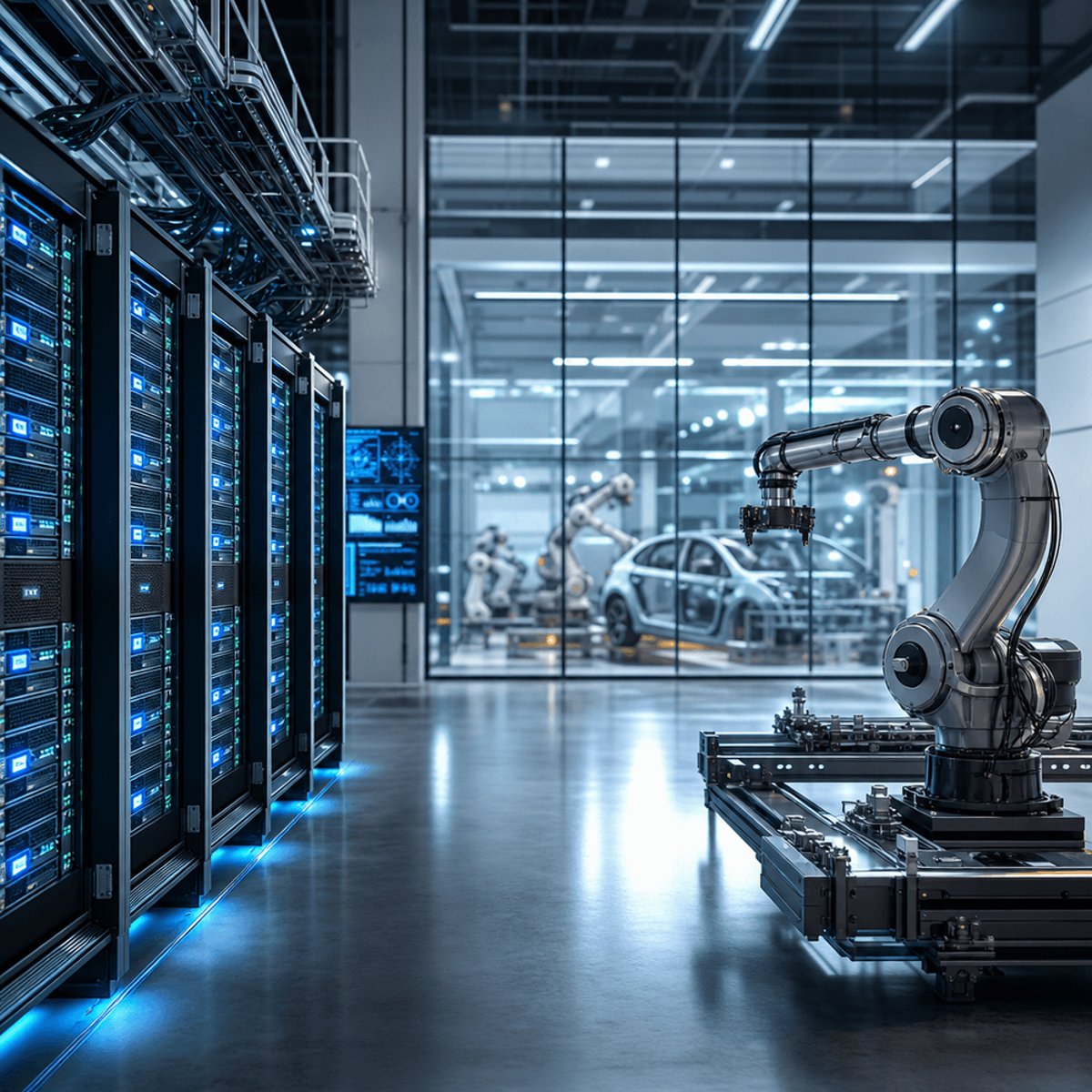
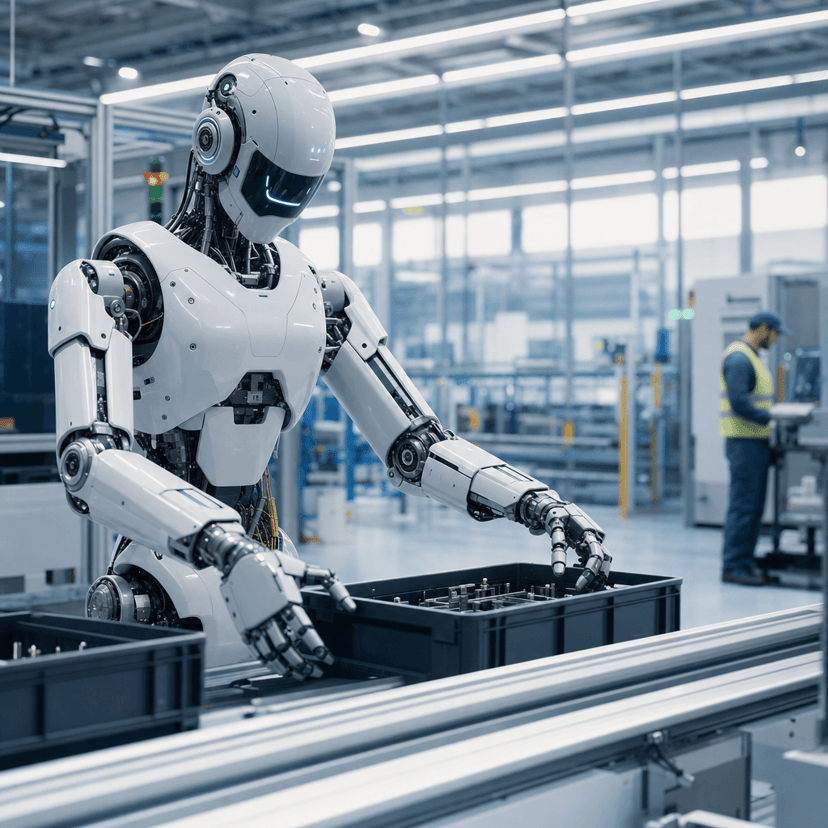
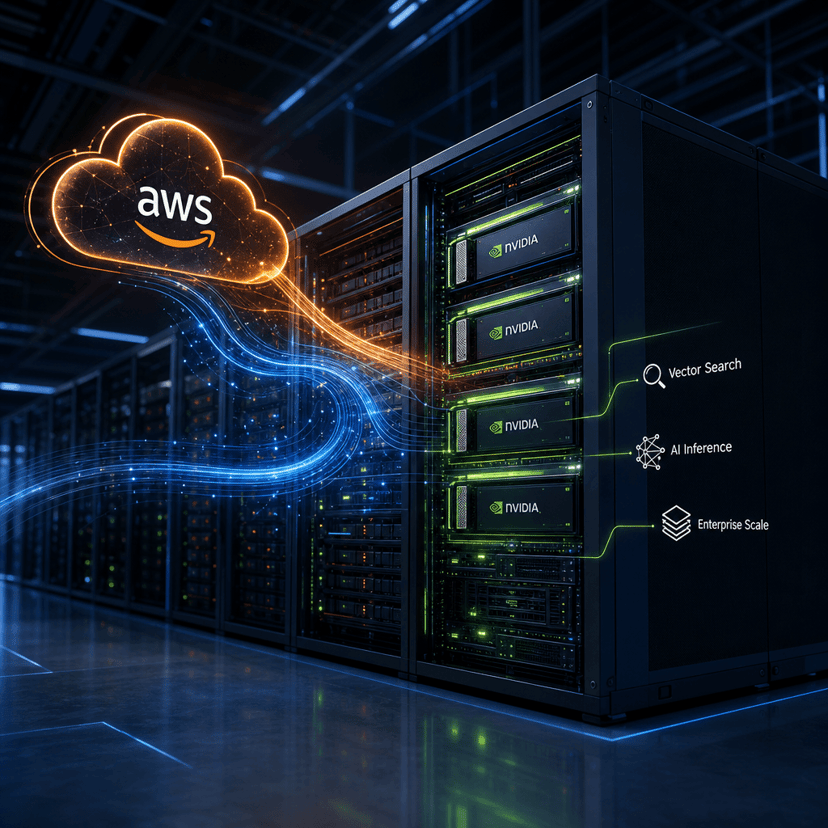
Nvidia is building an AI factory with LG Group to power the South Korean conglomerate's push into robotics, autonomous vehicles, and GPU cloud services. The partnership, announced today, marks Nvidia's latest move to embed its accelerated computing infrastructure directly into major manufacturing and mobility players. According to Nvidia's blog post, the facility will let LG train, simulate, validate, and deploy AI applications across its sprawling portfolio of businesses - from home appliances to electric vehicle components.
Nvidia just handed LG Group the keys to an AI supercomputer designed specifically for the messy, unpredictable world of physical AI. The two companies are building what they're calling an AI factory - essentially a dedicated computing facility packed with Nvidia's latest GPUs - to power LG's ambitions in robotics, self-driving cars, and cloud services.
The announcement comes as Nvidia doubles down on what CEO Jensen Huang calls the "physical AI" revolution - the shift from chatbots and image generators to AI systems that interact with the real world. While competitors focus on cloud-based AI assistants, Nvidia's betting that the real money lies in factories, warehouses, and highways where AI needs to manipulate objects, navigate spaces, and make split-second decisions.
For LG, the timing couldn't be better. The South Korean conglomerate has been quietly building out its autonomous vehicle component business through LG Magna e-Powertrain and pushing deeper into commercial robotics. But training AI models for physical tasks requires massive compute power - the kind that's been mostly locked up by tech giants like Google and Meta.
The AI factory will give LG dedicated access to Nvidia's full stack of tools, from GPU clusters for training massive neural networks to Omniverse simulation environments where robots and vehicles can rack up millions of virtual hours before touching real hardware. According to the partnership details, LG will use the infrastructure to validate AI systems across multiple business units simultaneously - a home robot learning to navigate cluttered spaces, an autonomous shuttle optimizing pickup routes, and data center cooling systems predicting thermal loads.
This isn't Nvidia's first rodeo in manufacturing AI. The company recently partnered with Doosan to bring physical AI to construction and industrial equipment. But the LG deal is different in scope and structure. Instead of integrating Nvidia's AI into existing products, LG is building ground-up infrastructure to become an AI-native manufacturer. It's the difference between adding cruise control to existing cars versus designing vehicles around autonomous driving from day one.
The strategic implications ripple beyond LG's factory floors. By embedding itself this deeply into a major conglomerate's operations, Nvidia locks in long-term GPU demand while competitors like AMD and Intel struggle to break into AI infrastructure. LG gets preferential access to Nvidia's latest chips and software updates - a significant advantage as GPU shortages continue plaguing the industry.
Industry observers note the partnership also signals a shift in how traditional manufacturers are thinking about AI investment. Rather than licensing cloud AI services from Microsoft Azure or Amazon Web Services, companies like LG are building owned infrastructure to protect proprietary training data and maintain competitive advantages. When your robot's navigation algorithms or your vehicle's decision-making systems contain years of refined training, you don't want that intellectual property floating in a shared cloud.
The GPU cloud services component is equally strategic. LG could eventually offer excess computing capacity to smaller manufacturers and startups, creating a new revenue stream while amortizing infrastructure costs. South Korea's push for AI sovereignty - keeping critical AI development onshore rather than dependent on foreign cloud providers - makes domestic GPU clouds increasingly attractive.
For autonomous driving specifically, the AI factory addresses one of the industry's biggest bottlenecks. Self-driving systems need to train on billions of miles of simulated driving scenarios, each requiring physics engines, sensor simulation, and AI models running simultaneously. Tesla built its own supercomputer for exactly this purpose. Now LG gains similar capabilities to accelerate its mobility ambitions.
The robotics angle is less obvious but potentially more transformative. LG has been shipping robot vacuum cleaners for years, but the company's quietly developing commercial robots for logistics, hospitality, and elder care. Japan and South Korea face acute labor shortages as populations age - robots aren't a luxury but an economic necessity. Training robots to handle the infinite variability of real-world tasks requires simulation at a scale that's been out of reach for most manufacturers.
What remains unclear is the financial structure. Nvidia hasn't disclosed whether this is a pure hardware sale, a revenue-sharing arrangement tied to LG's AI services, or some hybrid model. Given Nvidia's recent moves toward AI-as-a-service offerings, a recurring revenue component seems likely. That would align incentives - Nvidia succeeds when LG's AI businesses succeed, creating a true partnership rather than a vendor relationship.
The announcement also puts pressure on Samsung, LG's crosstown rival, to secure similar AI infrastructure partnerships. Samsung's already working with Nvidia on chips but lacks the integrated AI factory approach. In an industry where months of training time separate leading AI systems from also-rans, infrastructure advantages compound quickly.
The Nvidia-LG AI factory represents a blueprint for how traditional manufacturers are internalizing AI infrastructure rather than renting it from cloud providers. As physical AI moves from research labs into factories and vehicles, the companies that own their training infrastructure gain compounding advantages in speed, cost, and data protection. For Nvidia, it's another long-term customer locked into its ecosystem. For LG, it's a bet that controlling the AI stack from silicon to software will define competitive advantage in robotics and mobility over the next decade. Watch how quickly Samsung and other Korean manufacturers respond - the race to build domestic AI factories is just starting.