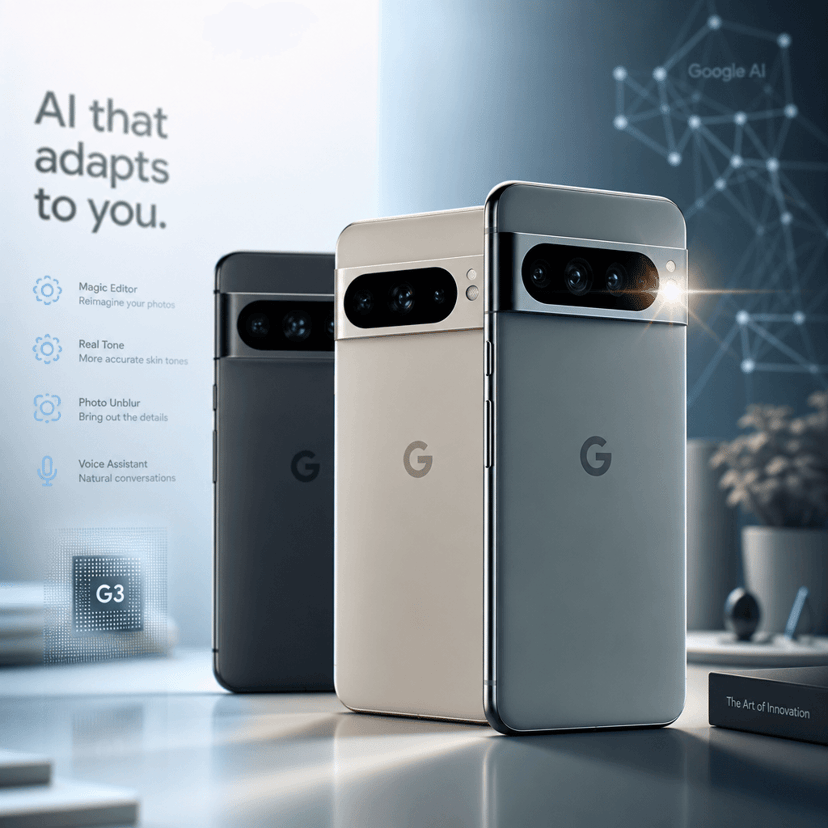
Google just launched the Pixel 10a, but there's barely anything new to talk about. With specs nearly identical to last year's Pixel 9a, the latest budget phone marks a surprising departure from the company's usual A-series innovation streak. According to a review by Wired, the device doesn't pack the punch that made previous A-series phones like the Pixel 6a and 7a category leaders. The move raises questions about Google's hardware strategy as competition in the mid-range smartphone market intensifies.
Google just threw a curveball at the budget smartphone market, and not in a good way. The newly launched Pixel 10a arrives with specs that look suspiciously similar to last year's Pixel 9a, marking what could be the company's least ambitious A-series release to date. For a product line that built its reputation on delivering flagship-adjacent experiences at mid-range prices, this feels like a missed opportunity.
The timing couldn't be more awkward for Google. While Apple reportedly prepares an aggressive push into the mid-range segment and Samsung continues refining its Galaxy A-series with meaningful annual improvements, Google appears to be coasting. Wired's Julian Chokkattu minced no words in his assessment, noting the device "doesn't pack as much of a punch as prior A-series smartphones."
This wasn't always the playbook. The Pixel 6a, released in 2022, stunned the industry by cramming Google's custom Tensor chip into a $449 package. The Pixel 7a followed with a 90Hz display upgrade and improved cameras, cementing the A-series as the go-to recommendation for budget-conscious buyers who refused to compromise on software experience. Each generation felt like a deliberate statement about democratizing premium features.
But the Pixel 10a reads more like a parts-bin special. Without access to the full spec breakdown due to extraction issues with the source article, what's clear from the available information is that Google chose iteration over innovation this cycle. That's a risky bet when competitors are actively hunting for market share in the $300-$600 smartphone battleground.
The broader context makes this launch even more perplexing. Google has been vocal about its AI ambitions, positioning Gemini as a key differentiator across its product ecosystem. The Pixel line seemed like the perfect vessel to showcase on-device AI capabilities that could justify incremental hardware specs. Yet if the 10a truly mirrors the 9a's internals, that AI advantage becomes harder to communicate to consumers weighing alternatives.
Market dynamics have shifted dramatically since the A-series glory days. Chinese manufacturers like OnePlus and Nothing have flooded Western markets with aggressively priced devices sporting impressive specs. Samsung's Galaxy A54 and A34 have found traction by offering long-term software support and brand familiarity. Even Apple is rumored to be prepping a refreshed iPhone SE that could redefine budget expectations.
For Google, the Pixel 10a represents more than just another phone launch. It's a signal about the company's hardware priorities and willingness to compete aggressively in segments outside the flagship tier. The A-series historically served as an entry point for Android enthusiasts and a proving ground for features that would eventually trickle up to premium models. A stagnant release disrupts that narrative.
The business implications extend beyond immediate sales figures. Google's hardware division has never been a massive revenue driver compared to its advertising empire, but the Pixel line serves strategic purposes around data collection, AI model training, and maintaining relevance in mobile conversations. A lackluster A-series phone risks ceding mindshare to competitors precisely when AI-powered smartphones are becoming the industry's next battleground.
What remains to be seen is whether this represents a temporary stumble or a broader strategic shift. Perhaps Google is consolidating resources for a bigger Pixel 11 push later this year, or maybe the company has decided the mid-range market no longer justifies heavy R&D investment. Either way, the Pixel 10a launch feels like Google left money and momentum on the table.
The Pixel 10a launch exposes a curious vulnerability in Google's hardware strategy. At a moment when the mid-range smartphone market is heating up with fierce competition from Apple, Samsung, and Chinese manufacturers, Google chose to play it safe with minimal upgrades. For a company betting big on AI differentiation, the decision to release a nearly identical successor to the Pixel 9a suggests either resource constraints or a fundamental miscalculation about what budget-conscious consumers expect. The real test won't be initial sales figures but whether Google can recapture the A-series magic that made previous generations category leaders. Right now, the momentum has stalled, and competitors are circling.