Ikea just unveiled 21 new Matter-over-Thread smart home devices that work across brands - a complete departure from its Zigbee-only past. The collection hits stores globally this month, marking the furniture giant's biggest smart home play yet and potentially reshaping how consumers think about affordable connected devices.
Ikea is betting big on the smart home's future, and it's not looking back. The Swedish furniture giant just dropped 21 new Matter-over-Thread devices that can talk to everything from Apple HomeKit to Google Nest - a dramatic shift from years of Zigbee-only isolation that left customers locked into Ikea's ecosystem.
The timing couldn't be better. After years of delays and beta testing, Ikea's Dirigera hub finally became a proper Matter controller earlier this year, letting users mix and match devices from any brand. Now the company's doubling down with hardware designed from the ground up for interoperability.
"We can connect with a wider range of devices and platforms, making it easier for customers to build a smart home across different brands," the company announced today. It's a fundamental strategy shift that puts Ikea ahead of most retailers still selling proprietary systems.
The new Kajplats smart bulb collection simplifies what was previously a confusing mess of product names. Eleven variations now cover everything from standard E27/E26 globes to compact P45 bulbs and GU10 spotlights, each available in dimmable white or full color-changing versions. The largest decorative bulbs stretch to 95mm but stick to white spectrum only. Pricing ranges from £4 to £9 ($5.21 to $11.73) in the UK, putting them squarely in budget territory.
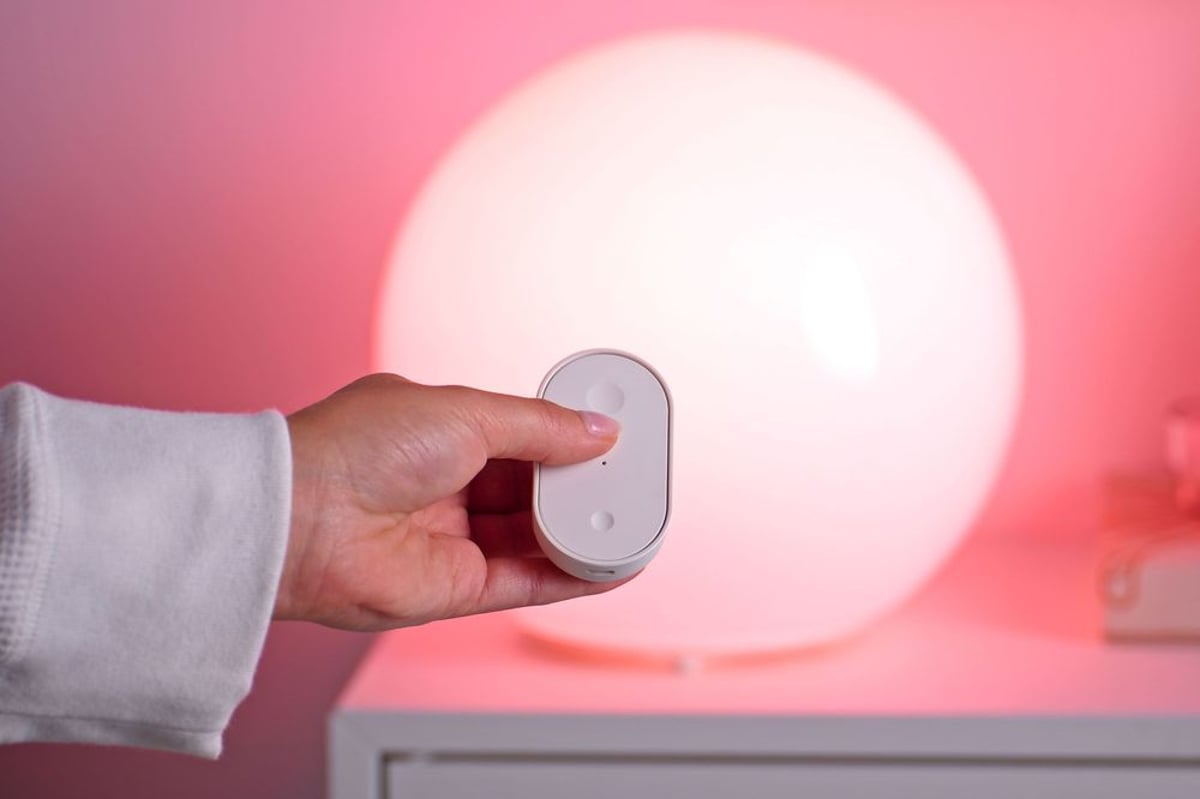
But the real game-changer might be the new Bilresa remotes. Unlike previous Ikea controllers designed for specific products, these generic two-button and scroll wheel versions can control any Matter device. The scroll wheel model switches between device groups using a bottom button - adjust speaker volume, then flip to control light colors. At £3 and £4 respectively ($3.90 and $5.20), they're positioned to become the universal remotes smart homes have been waiting for.
Ikea's expanding beyond lighting with five new sensors that address real home monitoring needs. The Myggspray motion sensor works indoors and outdoors, while Myggbett handles doors and windows with customizable notifications. Klippbok is a water sensor small enough to slide under appliances, complete with its own audible alarm for immediate leak detection.
The standout is definitely the Alpstuga air quality monitor. Despite looking like a desktop clock, it measures CO2, PM2.5 particles, temperature, and humidity while integrating with Ikea's existing air purifiers. At £25 ($32.50), it's the collection's priciest item but significantly cheaper than standalone air quality monitors from dedicated brands.
There's a catch for US customers, though. While global rollout begins this month, Americans won't see remotes and sensors until January 2026, with smart bulbs following in April 2026. The delay suggests supply chain complexities around Matter certification or manufacturing capacity constraints.
The move represents Ikea's most aggressive smart home expansion since launching its original Tradfri line. By abandoning Zigbee entirely for new products - while maintaining backward compatibility - the company's positioning itself as the first major retailer with a complete Matter ecosystem. That could pressure competitors like Amazon and Philips to accelerate their own Matter transitions.
Industry watchers have been expecting this shift since Matter's formal launch in 2022, but Ikea's the first to go all-in with a comprehensive product line. The company's retail footprint gives it unique advantages in smart home adoption - customers can see, touch, and test devices before buying, unlike online-only competitors.
The real test comes down to execution. Matter promises universal compatibility, but real-world performance varies wildly between implementations. Ikea's track record with the Dirigera hub's delayed Matter support doesn't inspire complete confidence, but the company seems committed to getting it right this time.
Ikea's Matter pivot represents more than just new products - it's a fundamental bet on smart home interoperability winning over proprietary ecosystems. With aggressive pricing and global retail presence, the company could finally make smart homes accessible to mainstream consumers who've been intimidated by complex setup processes and compatibility issues. The real question isn't whether these devices will work, but whether Ikea can execute the rollout smoothly enough to capitalize on its first-mover advantage in affordable Matter hardware.