Samsung is pushing the boundaries of consumer display technology with its Micro RGB TV, which just earned recognition from CES 2026 and TIME's Best Inventions list. The Korean tech giant is now expanding the lineup with a 130-inch model that combines microscopic LED backlighting with AI-powered picture processing. This marks a significant shift in how TVs handle color reproduction, bringing professional-grade standards into living rooms while setting new benchmarks for the industry.
Samsung Electronics just redefined what's possible in home entertainment displays. The company's Micro RGB TV - fresh off winning the CES 2026 Best of Innovation Award and landing on TIME's Best Inventions list - is expanding with a massive 130-inch model that brings professional color standards to consumer screens.
The achievement here isn't just about size. Samsung's engineering team accomplished something that's eluded the TV industry: hitting 100% coverage of the BT.2020 color gamut, the ultra-high-definition standard the International Telecommunication Union calls the "ultimate color gamut." Until now, that level of color accuracy lived exclusively in professional broadcast monitors.
"We felt a strong sense of responsibility, believing that the conditions we set could become the new standard for the market," Insang Hwang of Samsung's Visual Display Business Division told Samsung Newsroom. "That's why we set the ambitious goal of achieving 100% BT.2020."
The technical breakthrough centers on microscopic RGB LEDs used as the backlight unit. By shrinking red, green and blue light sources to the micro level, Samsung achieved color reproduction that surpasses traditional LED and quantum dot displays. But getting there meant creating an entirely new product category without any reference points.
"Because the mission was to create a category that didn't previously exist, every department - from development to sales and marketing - had to work together with a shared sense of urgency," Hwang recalled. The team couldn't benchmark against competitors or iterate on existing designs. They were building from scratch.
The real challenge wasn't just hardware. Having superior color capabilities means nothing if the content can't take advantage of it. That's where Samsung's AI integration becomes critical. The Micro RGB Color Booster Pro feature uses a high-performance neural processing unit to analyze content in real-time, enhancing color expression even in standard streaming video that wasn't mastered in wide color gamuts.
"While Micro RGB achieves one of the highest color gamuts available in TVs today, only a limited amount of content fully utilizes it," Hwang explained. Samsung's solution analyzes everything from Netflix shows to live sports, dynamically adjusting colors to showcase the display's capabilities without oversaturating or distorting the image.
For sports fans, the timing couldn't be better. Samsung introduced AI Soccer Mode Pro, which automatically detects football matches and enhances the grass and team uniform colors. "With the global football season kicking off in June, it's a feature worth noting for those seeking a more immersive viewing experience," Hwang noted.
The 130-inch model presents unique technical challenges. As displays scale up, maintaining sharpness and color accuracy becomes exponentially harder. Samsung equipped the ultra-large variant with Supersize Picture Enhancer, an AI-driven upscaling technology that prevents the pixelation and detail loss that typically plague oversized screens.
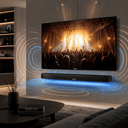
"Thanks to this, viewers can enjoy Micro RGB's rich colors and sharp image quality without distortion or pixelation," Hwang said. The system also includes a 160W 10.4.2-channel speaker array that eliminates the need for external soundbars - a critical consideration when you're mounting what's essentially a wall-sized display.
Speaking of mounting, Samsung developed a proprietary pocket structure and bracket system that lets the TV sit flush against the wall with virtually no gap. The design philosophy aims to transform the screen into an architectural element rather than a piece of furniture jutting into the room.
The Glare Free coating adds another layer of real-world optimization. Unlike some high-end displays that only perform well in darkened home theaters, Samsung's anti-reflective technology maintains color accuracy and contrast in bright rooms. "Whether in a dark room or a brightly lit space, viewers can stay fully immersed without reflections interfering," Hwang explained.
What's particularly telling is Samsung's positioning of this technology. Rather than limiting Micro RGB to a niche luxury product, the company is framing it as the foundation for next-generation TV experiences. The platform integrates with Samsung's broader ecosystem of services and AI-powered personalization.
"Samsung TVs are evolving into screens that seamlessly integrate into users' lifestyles and living spaces, understanding their preferences through data and enabling interactions," Hwang said. "They will go beyond content consumption to become powerful platforms that connect limitless experiences and services."
The industry implications extend beyond Samsung's product roadmap. By achieving 100% BT.2020 coverage and establishing measurable validation standards, Samsung is effectively setting the bar for premium TV performance. Competitors will now face pressure to match or exceed these specs, potentially accelerating the entire display industry's transition to wider color gamuts.
The micro LED approach also signals where premium displays are headed. Traditional LCD backlighting and even quantum dot enhancement have physical limitations. Microscopic RGB LEDs offer a path toward OLED-level per-pixel control with higher brightness and longer lifespan - a combination that's proven elusive in large-format displays.
Samsung's Micro RGB TV represents more than incremental improvement - it's a fundamental rethinking of consumer display capabilities. By achieving professional color standards, integrating AI-powered enhancement, and scaling to 130 inches without sacrificing quality, Samsung is establishing new expectations for premium televisions. As the technology matures and potentially trickles down to more affordable models, the gap between professional monitors and living room displays continues to narrow. For an industry that's struggled to deliver meaningful upgrades beyond resolution bumps, Samsung's approach of combining hardware innovation with intelligent software processing offers a compelling vision of where screens are headed.
![[Interview] The Future of Screen Experiences, Part ①: Inside Samsung’s Micro RGB TV, Setting a New Standard for Next-Generation Displays](/cdn-cgi/image/width=1200,quality=85,format=auto,fit=cover/https://charming-card-d91ad3487b.media.strapiapp.com/medium_Samsung_T_Vs_and_Displays_Micro_RGB_TV_100_BT_2020_Micro_RGB_Color_Booster_Pro_AI_Soccer_Mode_Pro_Interview_main1_6448e09a2c.jpg)