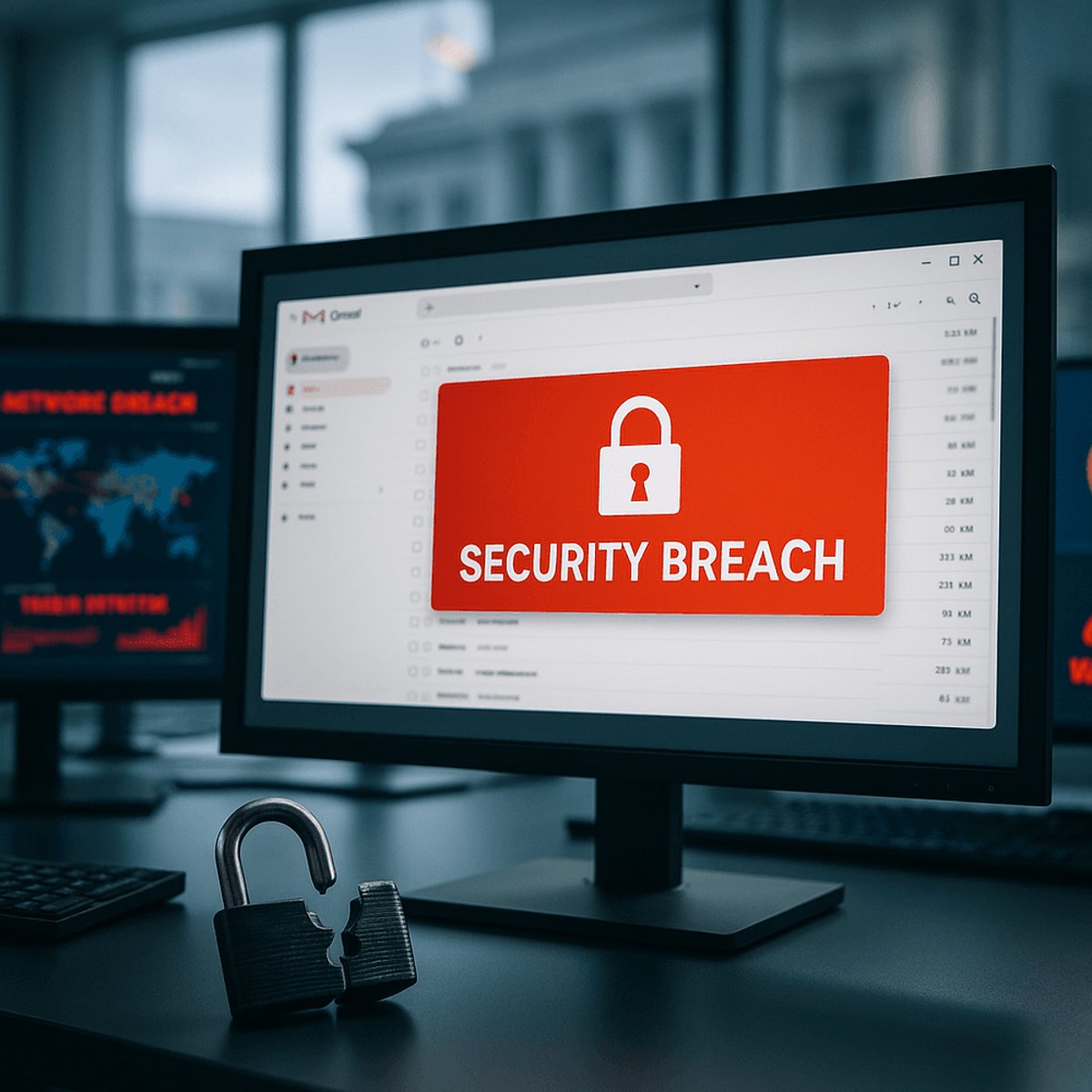
The personal Gmail account of FBI Director Kash Patel has been compromised by Handala, a pro-Iranian hacking group allegedly working for Iran's government. The group published emails they claim were taken from Patel's account, marking one of the most significant breaches of a senior U.S. law enforcement official in recent years. The incident raises serious questions about operational security at the highest levels of government and comes amid escalating tensions between the U.S. and Iran.
The head of America's top law enforcement agency just got hacked by the very adversaries his bureau is supposed to be tracking. Handala, a pro-Iranian hacking collective with suspected ties to Tehran's government, claims to have breached FBI Director Kash Patel's personal Gmail account and published stolen emails as proof.
The breach, first reported by TechCrunch, represents one of the most serious compromises of a senior U.S. government official in recent memory. While details about the contents of the leaked emails remain limited, the very fact that Iran-linked hackers gained access to Patel's personal communications raises alarming questions about operational security at the highest levels of American law enforcement.
Handala has emerged as one of the most aggressive pro-Iranian hacktivist groups over the past year, conducting operations that cybersecurity researchers believe are coordinated with or sanctioned by Tehran. The group has previously claimed responsibility for attacks on Israeli infrastructure and U.S.-allied targets throughout the Middle East. Now they've escalated to directly targeting the director of the FBI.
The choice of a personal Gmail account rather than official government systems tells its own story. Senior officials often use personal email for convenience, but this practice creates a massive security gap that sophisticated nation-state actors are eager to exploit. Unlike government systems protected by multiple layers of security protocols and monitoring, consumer email services like Google Gmail, while secure for everyday users, become high-value targets when they contain communications from people running America's intelligence and law enforcement apparatus.
Patel's tenure as FBI director has been marked by an aggressive posture toward foreign adversaries, particularly Iran and China. Before taking the helm at the bureau, he served in various national security roles where he gained a reputation as a hardliner on counterintelligence issues. That background makes this breach particularly embarrassing - the man tasked with protecting America from foreign spies just had his personal communications stolen by a foreign adversary.
The timing couldn't be worse. U.S.-Iran tensions have been running hot, with escalating cyber operations on both sides. Iranian hackers have ramped up attacks on critical infrastructure, while American cyber forces have conducted their own operations targeting Iranian networks. This breach of Patel's email suggests Iranian cyber capabilities are more sophisticated than many assumed, or at minimum, that their social engineering and targeting skills are sharp enough to compromise even high-profile figures who should know better.
Cybersecurity experts have long warned about the risks of government officials using personal email for sensitive communications. The practice gained notoriety during the 2016 presidential campaign, but it continues despite repeated warnings. Personal accounts lack the audit trails, security monitoring, and incident response capabilities that government systems provide. They're also more vulnerable to phishing attacks, credential stuffing, and other common compromise techniques.
What remains unclear is exactly what information Handala obtained and whether any classified or sensitive law enforcement material ended up in those personal emails. The FBI hasn't officially confirmed the breach or commented on the scope of the compromise. That silence is telling - if this were a minor incident affecting only personal correspondence, you'd expect a quick dismissal. The lack of immediate denial suggests the bureau is still assessing the damage.
For Google, this incident represents another black eye for consumer email security. While the company has invested heavily in security features like two-factor authentication and advanced phishing detection, those tools only work if users actually enable them. High-profile breaches like this one fuel ongoing debates about whether senior government officials should be allowed to use consumer services at all for any work-related communications.
The broader implications reach beyond one compromised account. If Iranian hackers can breach the FBI director's email, what other senior officials have they targeted? Are there ongoing compromises that haven't been detected yet? Intelligence agencies will now be scrambling to assess whether information from Patel's account could be used to identify sources, methods, or ongoing operations.
This breach cuts straight to the heart of a persistent vulnerability in government security - the gap between official protocols and personal convenience. Even as the FBI hunts foreign hackers and warns companies about nation-state threats, its own director apparently fell victim to the same vulnerabilities everyone faces. The incident will likely accelerate calls for stricter email policies for senior officials and renewed scrutiny of how high-ranking government figures handle sensitive communications. For now, Iranian hackers have scored a propaganda win and potentially gained intelligence value that won't be fully understood until the FBI completes its damage assessment. What we know for certain is that America's top law enforcement official just learned a hard lesson about email security that the rest of the government better take to heart.