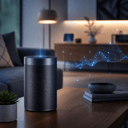
Marshall just jumped into the wireless audio hub game with the Heddon, a $299.99 device that's betting big on Bluetooth Auracast to change how you fill your home with music. Unlike traditional Bluetooth setups that force you through tedious pairing rituals, the Heddon broadcasts to multiple speakers simultaneously without the handshake dance - as long as your gear supports Auracast. It's a bold play in a category Sennheiser just entered this week, but Marshall's going all-in on music streaming while competitors focus on TV audio.
Marshall is making a play for your entire home audio setup with the Heddon, a Wi-Fi and Bluetooth streaming hub that promises to eliminate one of wireless audio's most persistent annoyances - the pairing process. The $299.99 device landed today with support for Bluetooth Auracast, a broadcasting standard that's been slow to catch on but is suddenly appearing in products across the industry.
The timing isn't accidental. Just days ago, Sennheiser announced its BTA1 TV Transmitter with the same Auracast technology, signaling the feature might finally be ready for mainstream adoption. But while Sennheiser focuses on TV audio with an HDMI port, Marshall's betting that music listeners are the real market hungry for multi-speaker setups without the setup headaches.
Here's how it works in practice. The Heddon connects directly to streaming platforms like Spotify Connect and Tidal over Wi-Fi, then broadcasts that audio to any Auracast-compatible device within range. No pairing menus, no Bluetooth discovery mode, no forgetting and re-adding devices when they act up. If your speakers support Auracast, they just see the broadcast and connect.
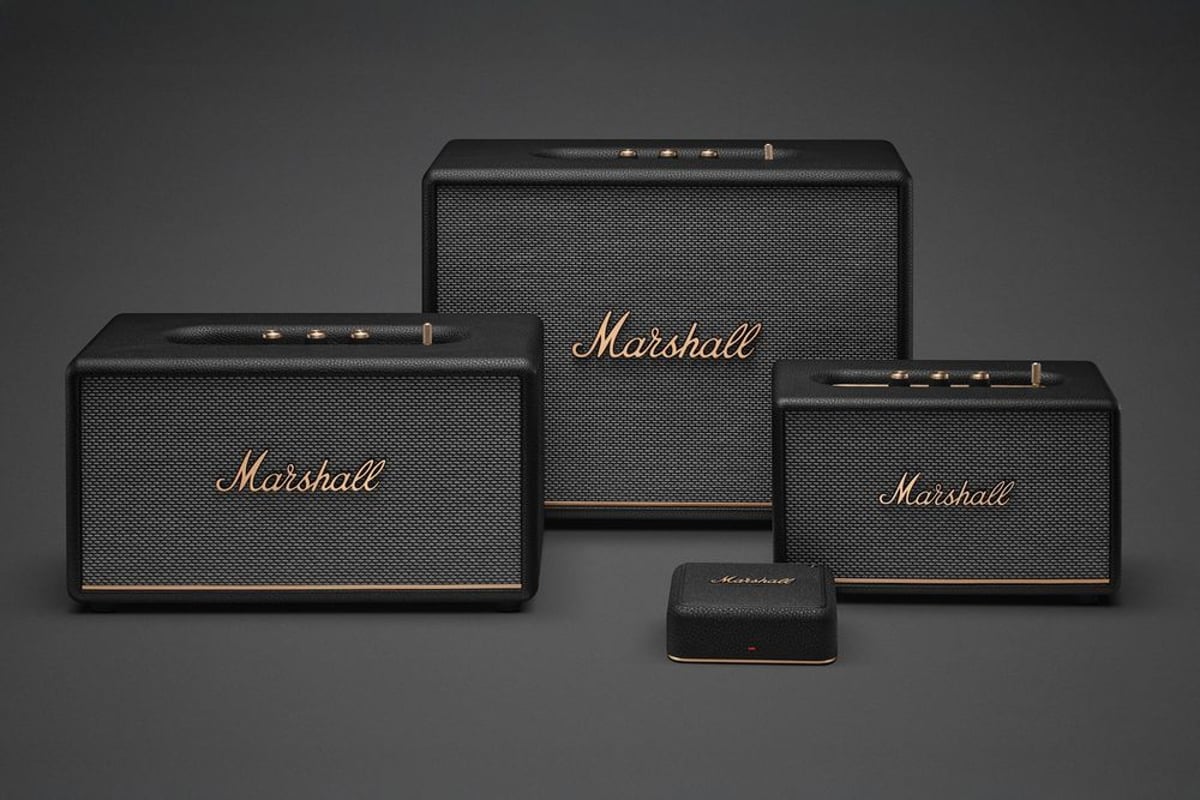
Marshall says the hub works with its Acton III, Stanmore III, and Woburn III Bluetooth speakers right out of the box. But the real promise is broader compatibility - assuming Marshall's using standard Auracast implementation and not some proprietary twist, any wireless speaker, headphones, earbuds, or even hearing aids with Auracast support should be able to tap into the stream.
The device includes Wi-Fi for direct connections to major streaming services, which keeps audio quality higher than Bluetooth-to-Bluetooth relay setups. Apple Music users get slightly less elegant treatment, needing to stream through their phone using AirPlay or Google Cast instead of direct integration. It's a notable gap given Apple Music's popularity, but not uncommon for third-party streaming hubs.
On the back, the Heddon includes two stereo pairs of RCA ports. One pair connects to a single speaker via RCA-to-AUX or RCA-to-RCA cables - useful for older Marshall models like the Acton II and Stanmore II that predate Auracast. The other pair serves as line-in ports for legacy devices like turntables, bridging analog audio into the wireless ecosystem.
The catch is price. At $299.99, the Heddon costs more than twice Sennheiser's $129.95 BTA1 transmitter. Marshall's clearly positioning this as a premium hub for owners already invested in its speaker ecosystem. The company's sweetening the deal with discounts - buy the Heddon with any compatible Marshall speaker and it drops to half price. Purchase two or more Acton III, Stanmore III, or Woburn III speakers and Marshall throws the hub in for free.
That bundling strategy reveals Marshall's real goal here. The company isn't just selling a hub - it's building a multi-speaker ecosystem to compete with Sonos and other whole-home audio platforms. By making the Heddon free with multi-speaker purchases, Marshall's effectively subsidizing the hub to lock customers into buying multiple units of its higher-margin speakers.
The bigger question is whether Auracast itself will gain traction. The technology has been part of the Bluetooth 5.2 spec since 2020, but adoption's been sluggish. Device makers haven't rushed to implement it, and consumers barely know it exists. But with both Sennheiser and Marshall now shipping Auracast products within the same week, and major brands like JBG, LG, and Samsung reportedly exploring the standard, momentum might finally be building.
For Marshall, the Heddon represents a strategic bet that music listeners specifically will drive Auracast adoption. While Sennheiser targets TV watchers who want to broadcast audio to headphones without disturbing others, Marshall's going after the house party crowd, the vinyl enthusiasts who want to pipe their turntable through multiple rooms, and the streaming subscribers who've grown tired of Bluetooth's limitations.
The device is available now through Marshall's website and authorized retailers at the full $299.99 price, with bundle discounts available for speaker purchases.
Marshall's Heddon arrives at a pivotal moment for Bluetooth Auracast, a technology that's been waiting years for its breakout moment. At $299.99, it's not an impulse buy, but the bundling discounts signal Marshall's long game - building a wireless speaker ecosystem that rivals Sonos without the premium pricing. Whether consumers bite depends on Auracast gaining critical mass across the industry. For now, Marshall's made the strongest case yet that pairing-free multi-speaker audio is worth paying for, especially if you're already invested in its vintage-styled hardware. The real test comes when competitors respond and Auracast either becomes ubiquitous or fades into the graveyard of promising wireless standards that never quite made it.