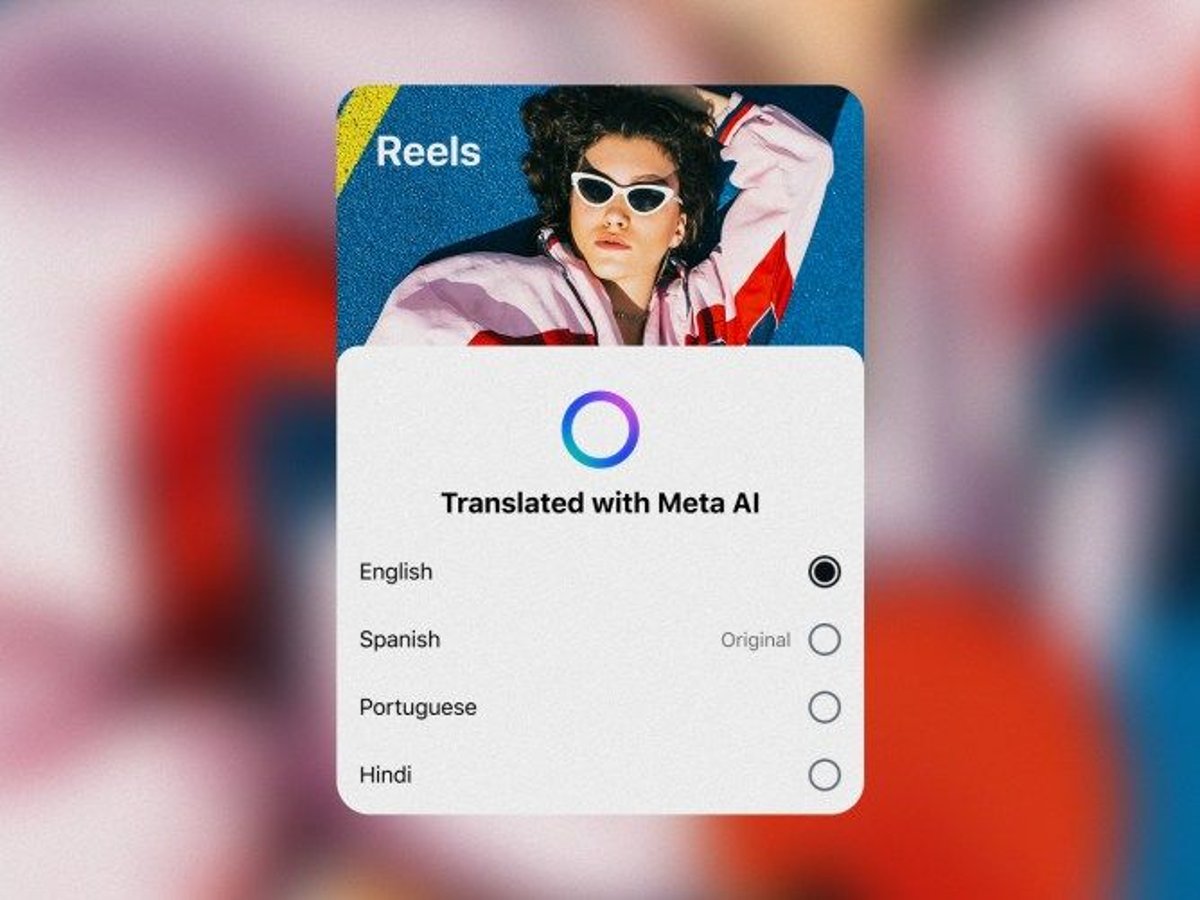
Meta just doubled down on its global expansion strategy by adding Hindi and Portuguese to its AI-powered Reels translation feature. The move targets two of the company's biggest markets - India and Brazil - where creators can now reach audiences across language barriers with automatic dubbing and lip-sync technology that launched with English and Spanish support just two months ago.
Meta is pushing deeper into global markets with a significant expansion of its AI translation capabilities. The social media giant just added Hindi and Portuguese support to its Reels translation feature, directly targeting its massive user bases in India and Brazil where content creators have been waiting for tools to break through language barriers.
The timing couldn't be more strategic. Meta has been aggressively promoting Reels across its platforms, recently making them the centerpiece of Instagram's experience on iPad and testing a Reels-first interface in India and South Korea. Now creators in these markets can tap into global audiences without worrying about language limitations.
"We believe there are lots of amazing creators out there who have potential audiences who don't necessarily speak the same language," Instagram head Adam Mosseri explained in an August post on Instagram. "And if we can help you reach those audiences who speak other languages, reach across cultural and linguistic barriers, we can help you grow your following and get more value out of Instagram and the platform."
The feature rollout represents Meta's most ambitious AI application for creator tools yet. When creators post a Reel, they can toggle on "Translate your voice with Meta AI" before publishing, then select specific target languages after reviewing the AI-generated dub with automatic lip-sync. Users watching content can enable automatic translation in their preferred language, making previously inaccessible content instantly understandable.
But Meta isn't stopping at voice translation. The company is building text translation capabilities for caption stickers and overlay text in Reels - a crucial feature for viewers watching videos without sound. Users will soon see a "Translate text on Reels" option that handles all on-screen text elements.
The technical sophistication goes deeper than basic translation. Meta is developing voice dubbing technology that preserves the creator's original vocal characteristics and tone, along with improved lip-sync algorithms that better match mouth movements to translated speech. Facebook Reels already support multi-speaker AI translations, with Instagram getting the same capability soon.
This puts Meta in direct competition with YouTube, which has been developing its own translation features for several years. Last month, YouTube rolled out lip-sync improvements to its auto-dubbing feature with support for 20 languages - significantly more than Meta's current four-language offering.
The language choices reveal Meta's geographic priorities. Hindi gives the company deeper reach into India's 1.4 billion population, while Portuguese opens up Brazil's 215 million users plus Portuguese-speaking communities in Africa and Europe. Combined with existing English and Spanish support, Meta can now automatically translate content for roughly 2.5 billion native speakers globally.
For creators, this represents a fundamental shift in content strategy. A Hindi-speaking creator in Mumbai can now produce content knowing it will be automatically accessible to English, Spanish, and Portuguese speakers worldwide. The same applies to Brazilian creators reaching Hindi and English markets - removing the traditional barriers that kept regional creators confined to local audiences.
Meta's broader AI strategy is becoming clearer through these incremental rollouts. Rather than launching headline-grabbing consumer AI products like chatbots, the company is quietly embedding AI capabilities into existing features that millions of creators already use daily. The translation feature first launched in August with English and Spanish support after being teased at the Meta Connect conference.
Meta's translation expansion signals the company's commitment to making AI work invisibly within existing creator workflows rather than launching standalone AI products. With Hindi and Portuguese support now live and advanced features like voice preservation coming soon, Meta is positioned to help creators break through language barriers that have historically limited their global reach. The real test will be whether this technical capability translates into meaningful creator adoption and cross-cultural content engagement across Meta's platforms.