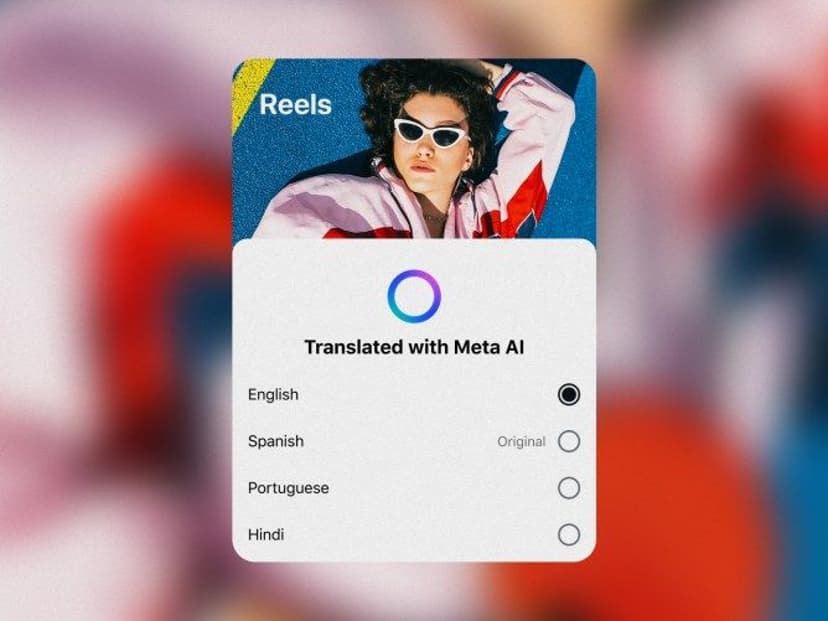
Meta just expanded its AI-powered translation feature for Reels to include Hindi and Portuguese, marking a strategic push into two of its largest markets - India and Brazil. The move comes as the company doubles down on Reels as its primary short-form video weapon against TikTok, with automatic dubbing and lip-sync technology that could unlock millions of cross-language viewers for creators.
Meta is making its biggest bet yet on breaking down language barriers for creators. The social media giant just launched Hindi and Portuguese support for its AI-powered translation feature across Instagram and Facebook Reels, directly targeting two of its most valuable markets.
The expansion builds on Meta's August launch that initially supported English and Spanish translations. "We believe there are lots of amazing creators out there who have potential audiences who don't necessarily speak the same language," Instagram head Adam Mosseri explained in a post announcing the original feature. The goal: help creators "reach across cultural and linguistic barriers" to grow their following.
The timing isn't coincidental. Meta has been aggressively pushing Reels as the centerpiece of Instagram, recently rolling out Reels-first interfaces in India and South Korea and launching dedicated iPad support. With India representing over 230 million Instagram users and Brazil boasting 120 million, these markets represent massive untapped creator economies.
The technology behind Meta's translation feature goes beyond simple voice-over work. Creators can enable "Translate your voice with Meta AI" before publishing, then review AI-generated versions complete with automatic dubbing and lip-sync matching. The system preserves the creator's original voice and tone while syncing mouth movements to match the translated audio - a technical challenge that's stumped many competitors.
Meta isn't stopping at voice translation. The company is rolling out text translation for caption stickers and on-screen text, crucial for viewers watching without sound. Facebook Reels already support multi-speaker translations, with Instagram getting the same capability soon.
The move puts Meta in direct competition with YouTube, which has been developing auto-dubbing features for years. Last month, YouTube rolled out lip-sync improvements supporting 20 languages, making this a direct features race.
What makes Meta's approach different is the integration across its entire family of apps. While YouTube's dubbing remains platform-specific, Meta's translation works seamlessly across Instagram and Facebook, potentially reaching the company's combined 3+ billion users.
For creators in India and Brazil, this represents a game-changing opportunity. A Hindi-speaking fitness instructor in Mumbai can now instantly reach Portuguese-speaking audiences in São Paulo, while Brazilian cooking creators can tap into India's massive foodie community - all without learning new languages or hiring expensive dubbing services.
The broader implications extend beyond individual creators. Meta's translation push could reshape how global content flows across social platforms, potentially giving it an edge in creator retention as the competition for short-form video creators intensifies. With TikTok facing regulatory challenges in various markets, Meta's language accessibility could become a decisive factor for international creators choosing platforms.
Meta plans additional translation features rolling out "soon," though the company hasn't specified timeline or additional languages. The current four-language support (English, Spanish, Hindi, Portuguese) covers roughly 2 billion native speakers globally, but major markets like French, Arabic, and Mandarin remain untapped.
Meta's Hindi and Portuguese translation launch represents more than a feature update - it's a strategic play for global creator dominance. By removing language barriers for content discovery, Meta could unlock new revenue streams for creators while strengthening its position against YouTube and TikTok. The real test will be whether the AI translation quality matches human dubbing standards and how quickly Meta can expand to additional languages. For creators in India and Brazil, this opens immediate opportunities to build truly global audiences without traditional barriers.