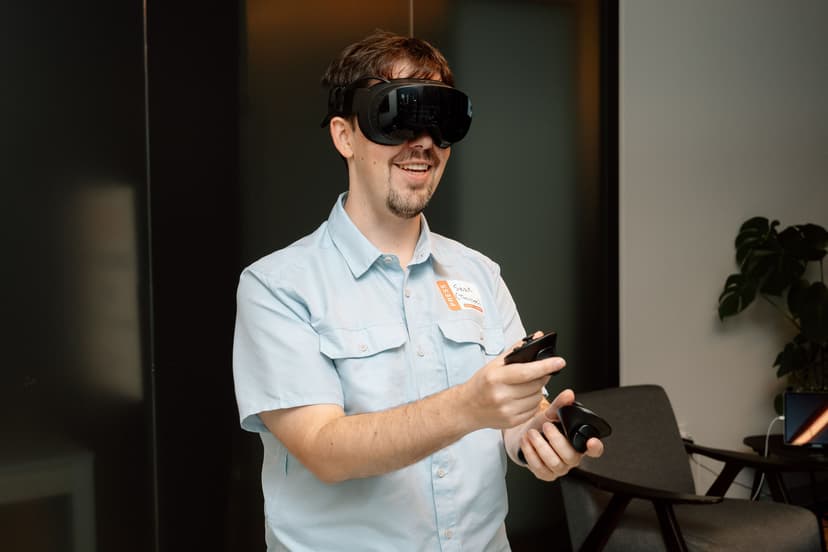
Meta just cracked open the door to its most ambitious social VR experiment yet. The company's photorealistic Hyperscape rooms - which scan real spaces like your living room or Gordon Ramsay's kitchen using Quest 3 cameras - can now host up to eight people simultaneously. What was once a lonely walk through virtual replicas becomes a shared hangout space, bringing Meta's metaverse vision closer to reality.
Meta just turned its most impressive VR tech into a party. The company's Hyperscape feature, which creates photorealistic digital twins of real spaces using Quest 3 cameras, now supports multiplayer hangouts for up to eight people. This marks a significant shift from what's been essentially a high-tech photo album to a genuine social platform.
The announcement, buried in a Meta blog post this week, signals the company's determination to make its metaverse vision stick. Users can now generate shareable links to their scanned spaces, letting friends join through Quest 3 headsets or the Meta Horizon mobile app. It's Meta's answer to the age-old question: what if you could hang out in someone's living room without actually being there?
The technical upgrades are substantial. Meta's moving rendering on-device and adding spatial audio to Hyperscape worlds, addressing two major limitations that kept these spaces feeling more like impressive tech demos than actual places to spend time. The quality remains striking - photorealistic environments that capture everything from furniture textures to lighting conditions with unsettling accuracy.
But there's a catch. Meta spokesperson Rachel Holm warns users to "please sit tight" if they don't see the feature yet. The company's rolling it out "gradually to all users over the next few months," a timeline that suggests either technical complexity or careful user testing. Given Meta's history with VR feature launches, both seem likely.
The move comes as Meta faces increasing pressure to justify its massive Reality Labs investments. The division burned through $13.7 billion in 2023 alone, while competitors like Apple entered the mixed reality space with Vision Pro. Hyperscape's social features represent Meta's bet that photorealistic shared spaces will differentiate its platform from Apple's more enterprise-focused approach.
Industry observers note the timing coincides with holiday shopping season, when VR headset sales traditionally spike. The ability to virtually "visit" family spaces during gatherings could prove compelling for Quest 3 adoption, especially as travel costs remain elevated.
Meta's positioning the update within its broader metaverse strategy, emphasizing what the company calls "a vibrant mix of experiences." According to their statement, users might want "otherworldly adventure" some days and "quality time with friends someplace a little closer to home" on others. It's a more grounded vision than Meta's earlier metaverse pitches, acknowledging that people might prefer their actual living room to a virtual boardroom.
The eight-person limit isn't arbitrary. Meta tested various group sizes and found eight balances technical performance with meaningful social interaction. The company plans to increase capacity "in the future," though no specific timeline was provided.
Competitive implications are significant. While Apple's Vision Pro emphasizes individual productivity and enterprise use cases, Meta's doubling down on social experiences that feel more like traditional hangouts than work meetings. This positioning could prove crucial as both companies vie for mainstream mixed reality adoption.
Meta's Hyperscape multiplayer launch represents more than a feature update - it's a strategic pivot toward practical social VR that people might actually use. By focusing on familiar spaces and genuine social interaction rather than fantastical metaverse worlds, the company's acknowledging that the path to mainstream VR adoption runs through living rooms, not virtual boardrooms. The gradual rollout suggests Meta's learned from past launches, but the real test will be whether eight-person virtual hangouts feel compelling enough to justify the technology's complexity. As the mixed reality market heats up, Meta's betting that shared photorealistic spaces will prove more appealing than Apple's solo productivity focus.