Meta is making a major push to revive its struggling metaverse platform with two powerful new tools announced at Connect 2025. The company unveiled the Horizon Engine for better graphics and performance, plus Meta Horizon Studio that lets creators build VR worlds using AI assistants. It's Meta's boldest attempt yet to make Horizon Worlds competitive with platforms like Roblox.
Meta just dropped its most significant metaverse update in years, and it's betting everything on AI to finally make Horizon Worlds stick. At Connect 2025, the company unveiled two game-changing tools that could reshape how people create and experience virtual worlds.
The star of the show is the new Horizon Engine, which Meta claims delivers "better graphics, faster performance, and more advanced" VR experiences with "much greater concurrency." Translation: more people can hang out in the same virtual space without everything falling apart. It's a critical technical leap for a platform that's been plagued by performance issues since launch.
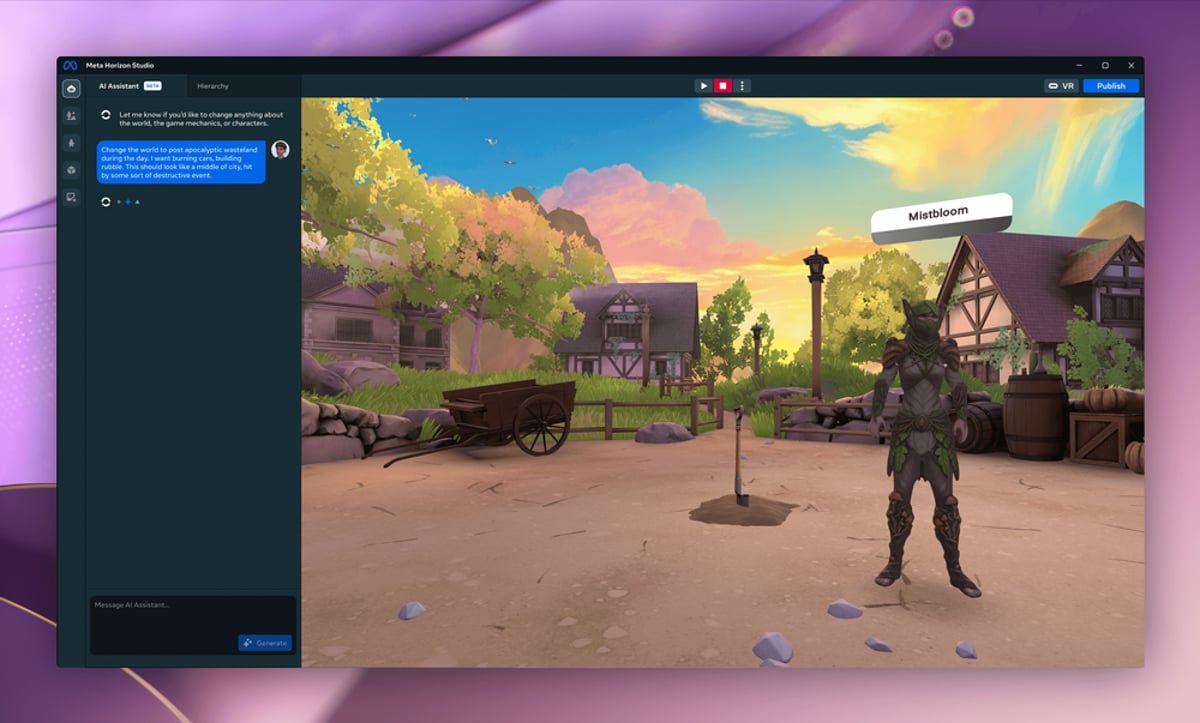
But the real breakthrough might be Meta Horizon Studio, the company's new world-building editor that puts AI front and center. Creators can already use generative AI tools to whip up textures and audio on the fly. Later this year, Meta's rolling out an AI assistant that'll let developers have actual conversations about their projects. The Verge's Jay Peters witnessed a demo where a developer chatted with an AI chatbot to request environment changes and tweak NPC personalities in real-time.
[Image: Meta's fantasy-themed Horizon Worlds environment showcasing the new engine's visual improvements]
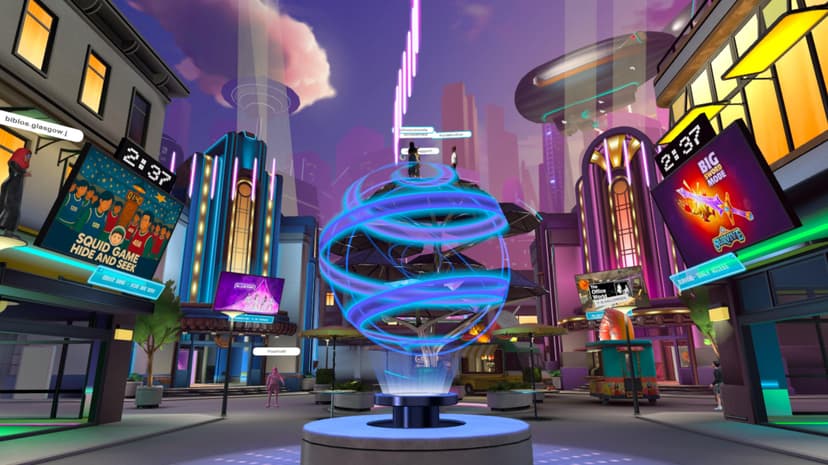
This isn't just about shinier graphics - it's Meta's answer to Roblox's massive success in user-generated content. While Roblox has built an empire on letting anyone create games and experiences, Horizon Worlds has struggled to gain traction despite expanding from VR to mobile last year.
The timing couldn't be more critical for Meta's metaverse ambitions. The company has poured billions into Reality Labs, its VR and AR division, while facing mounting pressure to show returns on that investment. Horizon Worlds was supposed to be the killer app that justified Meta's metaverse pivot, but it's been more of a ghost town than a bustling virtual society.
[Video iframe: Developer demo showing AI assistant conversation for world creation]
Meta tried throwing money at the problem earlier this year with a $50 million creators fund, but cash alone hasn't been enough to spark the creative explosion the platform needs. The new AI-powered tools represent a different approach - making world creation so easy that anyone can do it, not just experienced developers.
The competitive landscape has shifted dramatically since Meta first announced Horizon Worlds. Epic Games continues to dominate with Fortnite's Creative mode, while newcomers like Rec Room have carved out their own niches in social VR. Meanwhile, Apple's Vision Pro has entered the spatial computing space with a completely different vision of mixed reality.
What's particularly interesting is how Meta's doubling down on AI at a time when the company is also pushing hard into generative AI across its other products. The Horizon Studio AI assistant isn't just a novelty - it represents Meta's broader bet that AI will democratize content creation across all its platforms.
The "much greater concurrency" promise addresses one of Horizon Worlds' biggest technical limitations. Current VR social platforms often feel empty because they can't handle large groups of users without performance degrading. If Meta's new engine can actually deliver on this promise, it could finally enable the kind of massive virtual gatherings that make metaverse experiences feel truly social.
For creators, the AI-powered development tools could be a game-changer. Instead of learning complex scripting languages or 3D modeling software, they'll be able to describe what they want and watch an AI assistant build it. It's the kind of accessibility that made platforms like TikTok explode - lowering the barrier to entry until anyone can become a creator.
But Meta's track record with Horizon Worlds raises questions about execution. The platform has been available for years now, and despite multiple relaunches and feature updates, it hasn't achieved the viral adoption Meta hoped for. The new tools might be impressive, but they're only as good as Meta's ability to get people to actually use them.
The broader metaverse landscape is also evolving rapidly. While Meta focuses on VR-first experiences, other companies are exploring augmented reality, mixed reality, and even text-based virtual worlds. Meta's betting that better creation tools and AI assistance will be enough to differentiate Horizon Worlds in an increasingly crowded field.
Meta's new Horizon tools represent the company's most serious attempt yet to make the metaverse mainstream. The AI-powered creation tools could finally give Horizon Worlds the accessibility it needs to compete with Roblox, while the improved engine addresses long-standing performance issues. But with billions already invested and limited traction so far, these updates might be Meta's last shot at proving the metaverse is more than just an expensive experiment. The real test won't be the technology - it'll be whether creators and users actually show up.