Chinese AI startup Moonshot AI circumvented US export controls by accessing Nvidia's restricted GB300 chips through Thailand, according to a White House official. The revelation comes just a week after Moonshot released its powerful Kimi K3 model, raising questions about how Chinese companies are working around American semiconductor restrictions. This marks a significant escalation in the ongoing tech standoff between Washington and Beijing, exposing gaps in export enforcement.
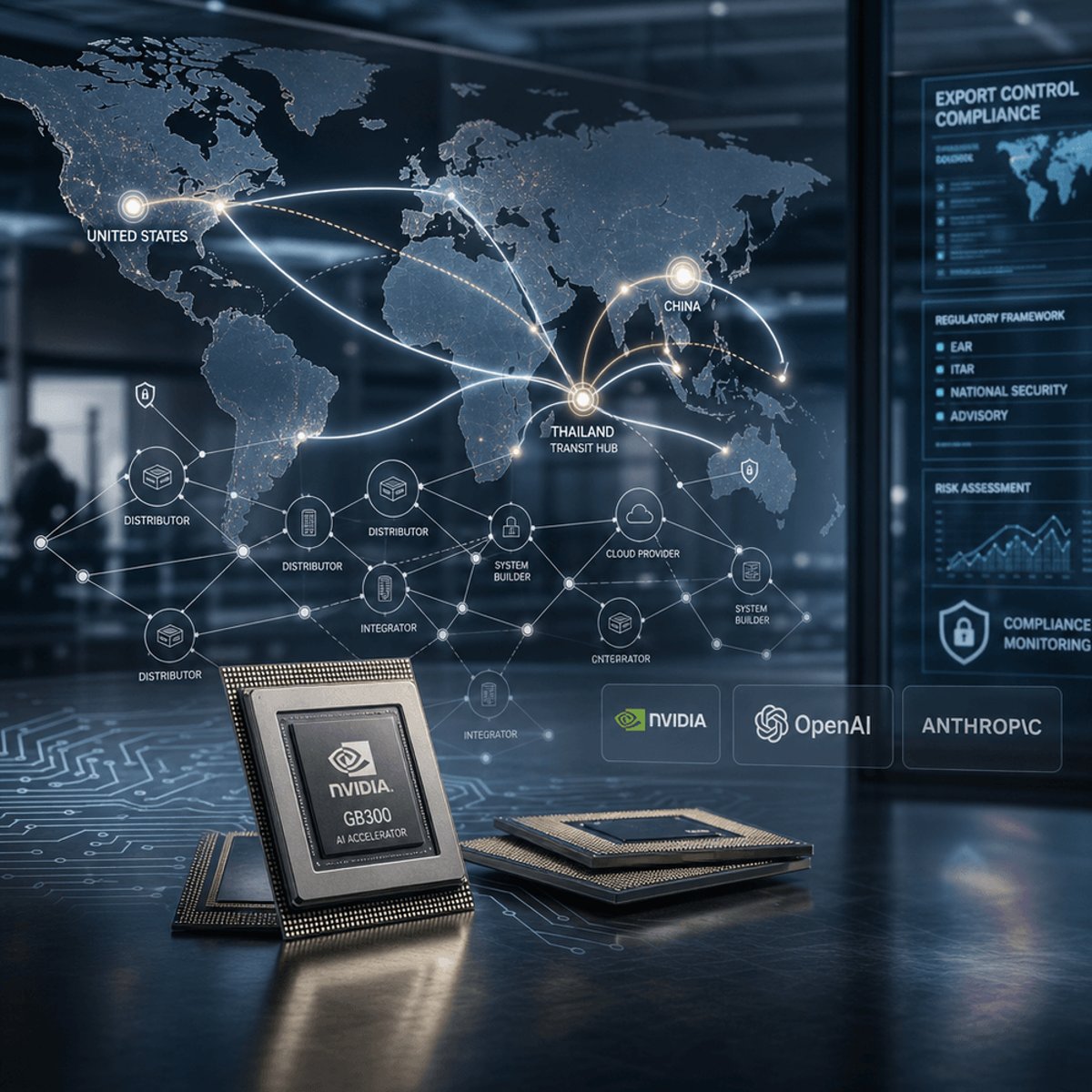
Moonshot AI, the Chinese startup behind the recently launched Kimi K3 language model, managed to get its hands on Nvidia's most advanced GB300 chips despite sweeping US export restrictions - by accessing them in Thailand. A White House official confirmed the circumvention to CNBC, marking a significant crack in America's semiconductor containment strategy.
The timing couldn't be more explosive. Moonshot unveiled its Kimi K3 model just last week, drawing immediate attention for its impressive capabilities. Now it's clear the company had access to hardware that was explicitly designed to be kept out of Chinese hands. The GB300 chips represent Nvidia's latest generation of AI accelerators, specifically targeted by export controls implemented to slow China's AI development.
Thailand appears to have become an unexpected backdoor. While the White House official didn't specify exactly how Moonshot accessed the chips - whether through cloud providers, shell companies, or direct purchases - the revelation exposes a glaring enforcement gap. Companies can apparently set up operations in third countries to access technology that's banned in their home market.
This isn't Moonshot's first brush with controversy this week. The company faced separate allegations of IP theft just days ago, though those claims centered on stolen model architectures rather than hardware access. The dual scandals paint a picture of a startup willing to push boundaries to compete with American AI giants like OpenAI and Anthropic.
For Nvidia, this creates a complicated mess. The company has been walking a tightrope - trying to comply with US restrictions while maintaining access to the massive Chinese market. CEO Jensen Huang has repeatedly emphasized Nvidia's commitment to following export rules, but the company has limited control over where its chips end up once they're sold to distributors or cloud providers in countries without restrictions.
The GB300 chips aren't just incremental upgrades. They're purpose-built for training massive language models, exactly what Moonshot needed for Kimi K3. Access to this hardware would have cut training times and costs dramatically compared to using older, export-compliant chips or Chinese-made alternatives from companies like Huawei.
Washington's export control regime, expanded significantly over the past two years, was supposed to create a technological moat around advanced AI development. The idea was simple - if you can't get the chips, you can't build frontier models. But Moonshot's Thailand workaround suggests Chinese firms are finding creative solutions faster than regulators can plug holes.
The discovery will likely trigger an immediate policy response. Expect tighter restrictions on chip exports to Southeast Asian nations, increased end-use monitoring requirements, and potentially new rules around cloud computing access. Some policy experts have already been warning that controls focused only on direct exports to China were doomed to fail without addressing third-country routing.
For other Chinese AI companies, Moonshot's exposure serves as both a roadmap and a warning. The playbook works - until you get caught. ByteDance, Baidu, and Alibaba are all racing to develop competitive AI models, and they're all facing the same chip access challenges.
The semiconductor supply chain is global and complex, making enforcement extraordinarily difficult. Nvidia sells to distributors, who sell to system builders, who sell to data centers, who rent compute to customers. At each step, the original buyer becomes harder to trace. Thailand, with its growing tech sector and business-friendly regulations, apparently offered enough opacity for Moonshot to operate.
This incident also raises questions about how many other Chinese AI firms are using similar tactics. Moonshot only got caught because a White House official went public - suggesting US intelligence has been tracking these shipments. How widespread is third-country chip access? The answer will determine whether America's export controls are a meaningful barrier or just an expensive inconvenience.
Moonshot's Thailand end-run around US chip restrictions exposes the fundamental challenge of controlling technology in a globalized economy. Export controls only work if they're enforceable, and right now they're not. Expect Washington to respond with broader restrictions that could affect legitimate tech business across Southeast Asia - but also expect Chinese firms to keep finding new workarounds. The chip wars just got more complicated, and companies like Nvidia are caught in the middle. For anyone tracking US-China tech competition, this won't be the last time we see this playbook.