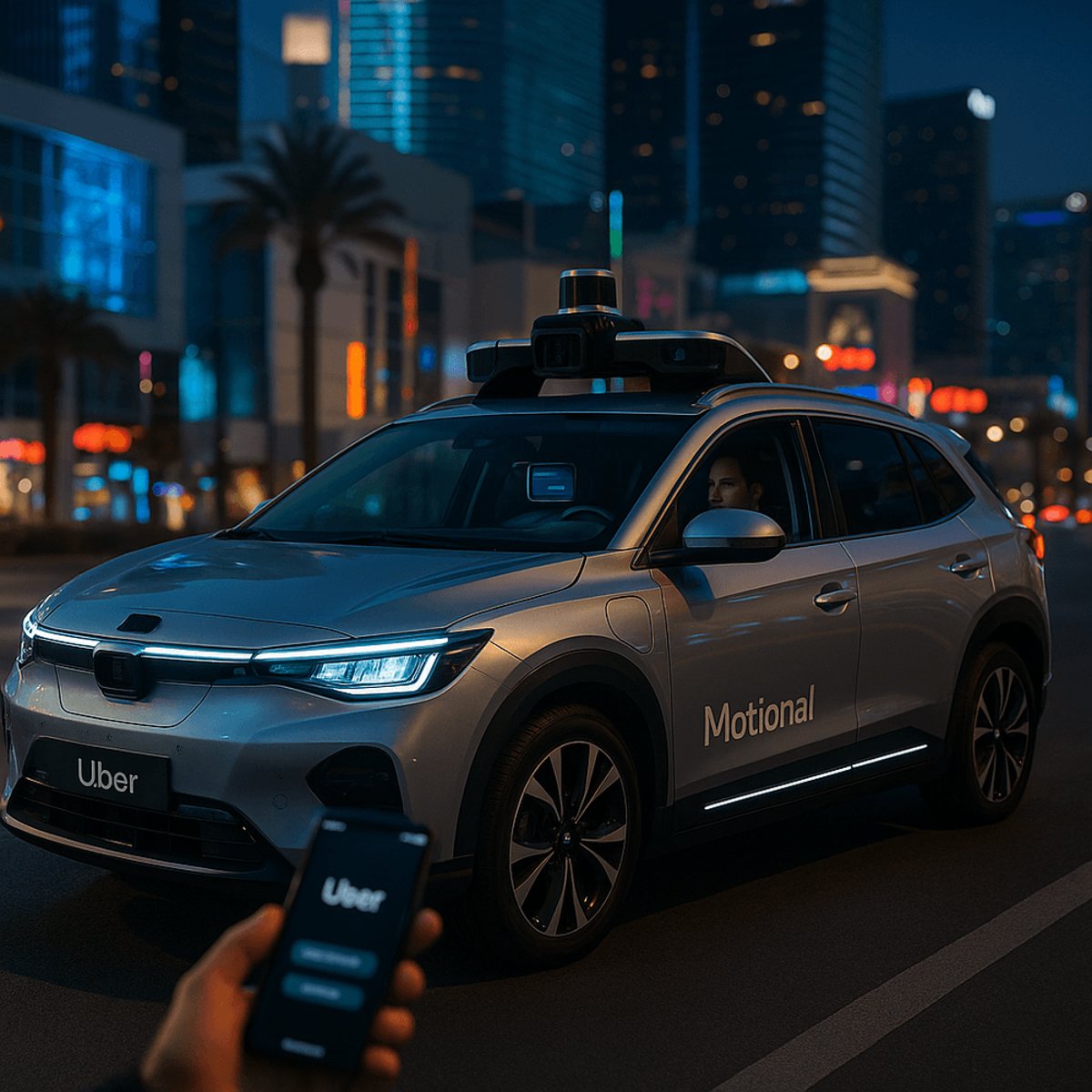
Two years after nearly collapsing, Motional is making its comeback official. The Hyundai-backed autonomous vehicle company just launched robotaxi service through the Uber app in Las Vegas, marking a critical milestone in one of the industry's most dramatic turnarounds. The service starts with safety drivers behind the wheel, but Motional's betting it can go fully driverless by December - a timeline that'll test whether the company's reset actually fixed what broke.
Motional passengers in Las Vegas can now hail autonomous rides through Uber's app, but there's a catch that reveals just how carefully the company's threading its comeback. Every ride includes a safety operator in the driver's seat, a precaution Motional insists is temporary. The company told TechCrunch it plans to remove the human monitors by year's end, setting up a high-stakes deadline that'll determine whether this launch is a true resurgence or just another false start.
The timing couldn't be more loaded. Just 24 months ago, Motional was hemorrhaging cash and talent after its partnership with Lyft imploded and Hyundai forced a brutal restructuring. The company slashed its workforce, shuttered operations in multiple cities, and watched competitors like Waymo and Cruise pull ahead in the robotaxi race. Industry insiders openly questioned whether Motional would survive at all.
But Hyundai's commitment never wavered. The Korean automaker doubled down on its autonomous ambitions, keeping Motional funded through the darkest months while the company rebuilt its technology stack and operational playbook. That bet's now being tested on Las Vegas streets, where Waymo already operates thousands of fully autonomous rides weekly and Cruise is plotting its return after its own safety crisis.
The Uber integration gives Motional something it desperately needed - instant distribution. Instead of building its own rider app and marketing machine, Motional plugs directly into Uber's massive user base. When Vegas riders request a trip, they might get matched with a Motional autonomous vehicle, seamlessly blending self-driving cars into the standard ride-hail experience.
It's the same strategy Waymo deployed when it partnered with Uber in Phoenix and Austin, cities where Google's self-driving unit now dominates the robotaxi market. Uber CEO Dara Khosrowshahi has made no secret of his platform's autonomous future, telling investors that self-driving cars represent the ultimate margin expansion since they eliminate driver costs entirely.
But Motional's safety-driver approach puts it a full generation behind Waymo, which has been operating completely driverless in multiple markets for years. That gap matters enormously in the economics of robotaxis. With a human safety operator earning wages and requiring breaks, Motional's current service can't achieve the unit economics that make autonomous vehicles transformative. The December deadline to go driverless isn't just a technical milestone - it's an existential business requirement.
The Vegas market itself is becoming the industry's proving ground. The city's grid layout, predictable weather, and tourist-heavy demand make it ideal for testing autonomous operations. Waymo has been steadily expanding its service area, while Cruise is eyeing a return after the California DMV suspended its operations following a pedestrian dragging incident that sent shockwaves through the entire sector.
Motional's launch also comes as the regulatory environment tightens. Federal and state officials are demanding more transparency from AV companies about safety incidents, with the National Highway Traffic Safety Administration investigating multiple crashes involving autonomous systems. The decision to start with safety drivers shows Motional learned from Cruise's mistakes - better to launch conservatively than face a shutdown after a preventable accident.
For Hyundai, the stakes extend far beyond Motional. The automaker's betting that autonomous technology will define the next era of mobility, investing billions while traditional rivals like Toyota and Honda pursue different strategies. If Motional succeeds, Hyundai positions itself as a leader in self-driving manufacturing. If it fails, those billions evaporate.
The partnership structure with Uber leaves questions about revenue sharing and long-term exclusivity. Uber has partnerships with multiple AV developers, playing the field rather than betting on a single horse. That gives riders options but creates fierce competition among robotaxi providers for Uber's algorithm to dispatch their vehicles.
What happens in Vegas over the next nine months will determine whether Motional's comeback story gets a triumphant ending or another painful chapter. The company's promising it'll shed the safety drivers by December. The industry's watching to see if Motional can actually deliver on that timeline - and whether the technology's truly ready for the unforgiving reality of full autonomy at scale.
This launch isn't just about putting autonomous cars on Vegas roads - it's about whether Motional can execute the kind of disciplined, measured deployment that builds public trust while advancing toward full autonomy. The safety-driver-to-driverless transition by December sets a clear benchmark the entire industry will measure Motional against. With Waymo already operating at scale and Cruise plotting its return, Motional's window to prove its comeback is real might be narrower than the timeline it's set for itself. The next nine months will show whether Hyundai's patience paid off or if the autonomous vehicle market has already moved on.