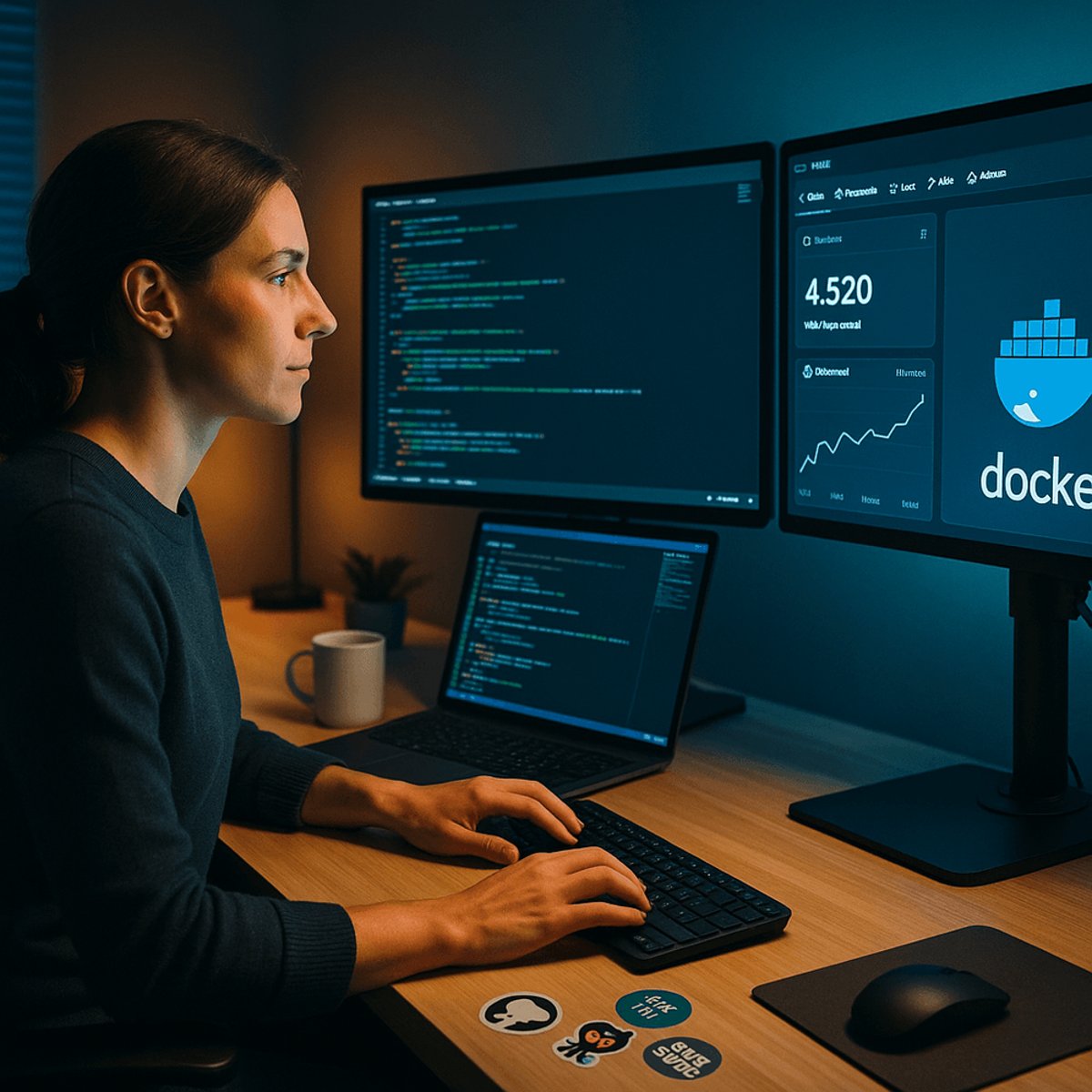
Gavriel Cohen just lived every open source developer's fever dream. Six weeks ago, he was an unknown developer tinkering with AI coding tools. Today, he's inking a partnership deal with Docker, the containerization giant used by millions of developers worldwide. His project NanoClaw - an AI-powered development environment that's been quietly gaining traction on GitHub - caught Docker's attention fast enough to make most startup founders jealous. It's the kind of meteoric rise that reminds us the best developer tools still spread through genuine utility, not marketing budgets.
Six weeks. That's all it took for Gavriel Cohen to go from indie developer to Docker partner. His open source project NanoClaw started as a side hustle - another AI coding assistant in a sea of similar tools. But something about Cohen's approach resonated differently with developers who were tired of bloated, corporate-backed alternatives.
The timeline is almost comically compressed. Cohen pushed the first commit to GitHub in late January. By mid-February, NanoClaw had cracked 10,000 stars on the platform. Developer communities on Reddit and Hacker News were buzzing about its lightweight architecture and surprisingly accurate code suggestions. Then Docker came calling.
"We've been preparing for this shift since Q2," Docker's VP of Product Strategy mentioned in recent earnings calls, though the company couldn't have predicted Cohen's project would be the catalyst. Docker's been watching the AI developer tools space heat up, with competitors like Microsoft's GitHub Copilot and Amazon's CodeWhisperer dominating mindshare. But NanoClaw offered something different - a containerized approach that fit perfectly into Docker's existing ecosystem.
The partnership isn't just a PR move. Docker plans to integrate NanoClaw's core technology directly into Docker Desktop, potentially putting Cohen's work in front of the platform's 20 million-plus developer user base. That's the kind of distribution most startups spend years and millions of dollars trying to achieve. Cohen did it with open source community building and what developers care about most: a tool that actually works.
What makes NanoClaw special isn't revolutionary technology. Cohen didn't invent a new AI model or discover some breakthrough algorithm. Instead, he focused on the unglamorous work of making AI coding assistance feel native to existing developer workflows. The tool runs locally, doesn't require constant internet connectivity, and integrates with popular IDEs without forcing developers to learn new interfaces. It's the coding equivalent of a well-designed kitchen knife - nothing fancy, just exactly what you need when you need it.
The open source model proved crucial. Cohen released NanoClaw under a permissive MIT license, inviting contributions from developers worldwide. Within weeks, contributors had added support for a dozen programming languages and integrated the tool with major version control systems. The community basically built half the product for him - exactly how open source is supposed to work but rarely does at this velocity.
Docker's interest makes strategic sense beyond just acquiring hot technology. The company's been under pressure to evolve beyond its core containerization business as cloud platforms like Amazon Web Services and Microsoft Azure build competing solutions directly into their infrastructure. AI developer tools represent a natural expansion - a way to stay relevant as the definition of "developer platform" shifts toward AI-assisted coding.
For Cohen, the partnership validates a bet that plenty of VCs passed on. According to sources familiar with his fundraising attempts, multiple investors told him the AI coding space was too crowded and that competing against well-funded incumbents was a fool's errand. Those investors are probably kicking themselves now. The Docker deal doesn't just provide distribution - it gives NanoClaw instant credibility and likely opens doors to enterprise customers who won't touch tools without big-name partnerships.
The deal structure remains under wraps, but industry observers speculate Docker acquired either a stake in Cohen's nascent company or secured exclusive rights to commercialize NanoClaw within containerized environments. Either way, Cohen's likely looking at a very different bank account than he had six weeks ago. The partnership also positions him as a potential acquisition target down the line if Docker decides to bring the technology fully in-house.
What's really interesting is the signal this sends about AI developer tools more broadly. The space is absolutely flooded with startups promising to make coding easier, faster, or more accessible. Most fail to gain traction because developers are notoriously skeptical of tools that promise too much. Cohen succeeded by promising less and delivering exactly what he advertised - a straightforward, lightweight coding assistant that doesn't try to replace developers or radically transform workflows.
The NanoClaw story also highlights tensions in the open source business model. Cohen gave away his core technology for free, betting he could build a business around it later. The Docker partnership vindicates that approach, but it also raises questions about what happens to the open source community that helped build NanoClaw. Will Docker keep the project truly open, or will the best features gradually migrate behind commercial licensing? These tensions have killed plenty of once-thriving open source projects.
For now, Cohen's riding high. His Twitter following exploded from a few hundred to over 50,000 in the past month. Conference organizers are begging him to keynote their events. Every VC who passed on his seed round is suddenly very interested in meeting for coffee. It's a master class in how technical credibility and community building can still trump traditional startup fundraising - at least for developers building tools for other developers.
Cohen's six-week journey from unknown developer to Docker partner is the kind of story that'll inspire a thousand Medium posts about "building in public" and "developer-led growth." But the real lesson is simpler: in a market drowning in AI hype, developers still reward tools that solve real problems without the BS. Docker gets a potentially transformative AI capability, Cohen gets distribution most founders can only dream about, and the open source community gets validation that their model still works. The question now is whether NanoClaw can scale from scrappy side project to enterprise-ready platform without losing the developer trust that got it here. That's the next six weeks.