The AI industry is taking a rare unified stance on biosecurity. OpenAI and Anthropic are leading a coalition of AI labs, executives, and scientists pushing lawmakers to establish stronger tracking systems for synthetic DNA sequences that could be weaponized with AI assistance. The letter, sent to Congress this week, marks one of the most direct acknowledgments yet that generative AI could accelerate biological weapons development.
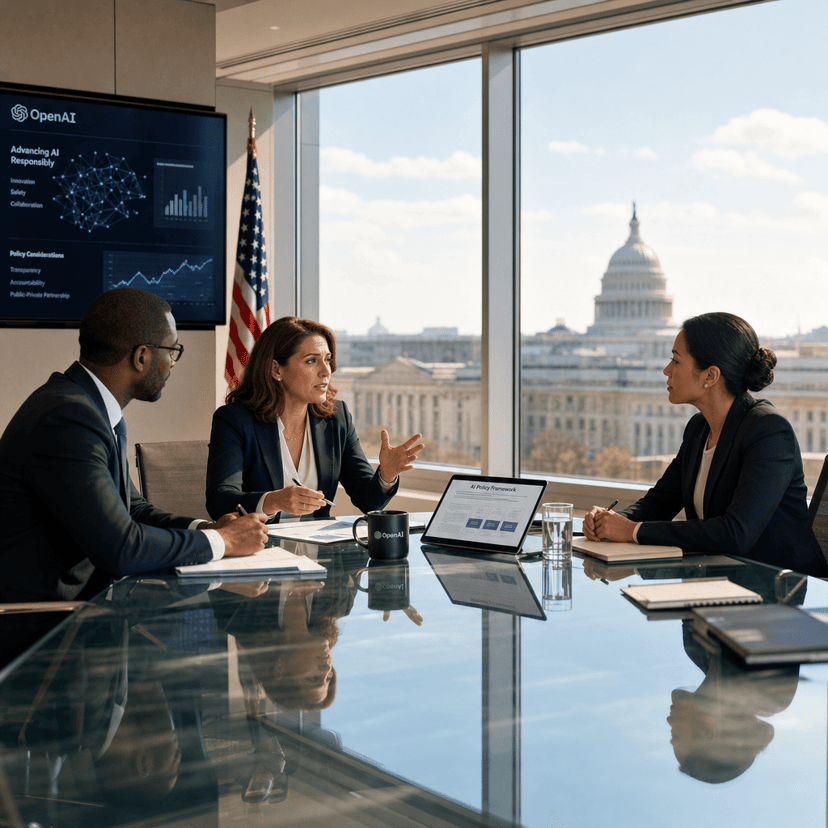
The warning signs have been building for months, but now the AI industry is putting its concerns in writing. OpenAI and Anthropic are spearheading a letter to federal lawmakers calling for enhanced oversight of synthetic DNA sequences that could be exploited to create biological weapons, particularly when combined with advanced AI systems.
The letter urges Congress to improve tracking mechanisms for DNA synthesis orders, a supply chain that's become increasingly accessible and difficult to monitor. With AI models now capable of designing novel proteins and predicting biological interactions, the barrier to engineering dangerous pathogens has dropped dramatically. What once required specialized lab expertise can now be guided by a conversation with a sufficiently advanced chatbot.
This isn't the first time AI companies have flagged biosecurity risks. Both OpenAI and Anthropic have published research on red-teaming their models for dangerous biological knowledge. But this letter represents something different - a direct policy ask with teeth, aimed at the infrastructure that could enable AI-assisted bioweapon creation.
The synthetic DNA market has exploded over the past decade, with dozens of companies offering custom gene synthesis services online. Current screening practices vary widely across vendors, and there's no centralized federal database tracking orders. That patchwork system made sense when designing dangerous sequences required deep expertise. But AI changes the equation entirely.
Large language models trained on scientific literature can already suggest modifications to existing pathogens, predict which genetic changes might increase transmissibility, and help troubleshoot synthesis problems. The concern isn't hypothetical - security researchers have demonstrated these capabilities in controlled settings, though the details remain classified.
What makes this letter particularly notable is the coalition behind it. OpenAI and Anthropic are fierce competitors in the race to build more powerful AI systems, yet they're united on biosecurity policy. That suggests the industry views this threat as existential enough to set aside competitive advantages.
The timing also matters. Congress is already grappling with how to regulate AI systems, from copyright issues to election interference. Adding biosecurity to that mix creates a new pressure point, one that could accelerate broader AI safety legislation. Unlike abstract concerns about superintelligence, the bioweapon scenario is concrete and urgent.
For DNA synthesis companies, stronger federal tracking requirements would mean significant operational changes. They'd need to screen orders against expanded databases, report suspicious requests, and potentially refuse service based on risk assessments. Some vendors already do this voluntarily, but mandatory standards would level the playing field.
The letter also highlights a broader tension in AI development. These same companies are racing to make their models more capable, including in scientific domains. OpenAI has partnerships with biotech firms, while Anthropic has emphasized its models' coding abilities - skills that transfer directly to biological engineering.
Critics might see this as having it both ways - building increasingly powerful systems while asking regulators to clean up the mess. But the companies would argue they're being responsible by flagging risks before incidents occur, rather than waiting for a disaster.
The policy ask itself is relatively narrow and achievable. Unlike proposals to pause AI development or impose model licensing, DNA sequence tracking builds on existing biosecurity frameworks. The U.S. already has export controls on dangerous pathogens and dual-use research oversight. Extending that to synthesis orders is a logical next step.
What happens next depends largely on congressional appetite for biosecurity legislation. The issue has bipartisan support in theory - nobody wants AI-designed bioweapons. But the details get complicated fast, involving questions about scientific freedom, commercial competitiveness, and enforcement mechanisms.
The letter from OpenAI, Anthropic, and their allies marks a turning point in how the AI industry approaches dual-use risks. Rather than waiting for regulators to catch up, leading labs are actively pushing for oversight of the infrastructure that could enable AI-assisted bioweapons. Whether Congress acts on these recommendations will set an important precedent - not just for biosecurity, but for how seriously lawmakers take AI safety warnings from the companies building these systems. The synthetic DNA tracking proposal offers a concrete, achievable step that could reduce catastrophic risks without stifling legitimate research. In an industry often criticized for moving fast and breaking things, this is what responsible development actually looks like.