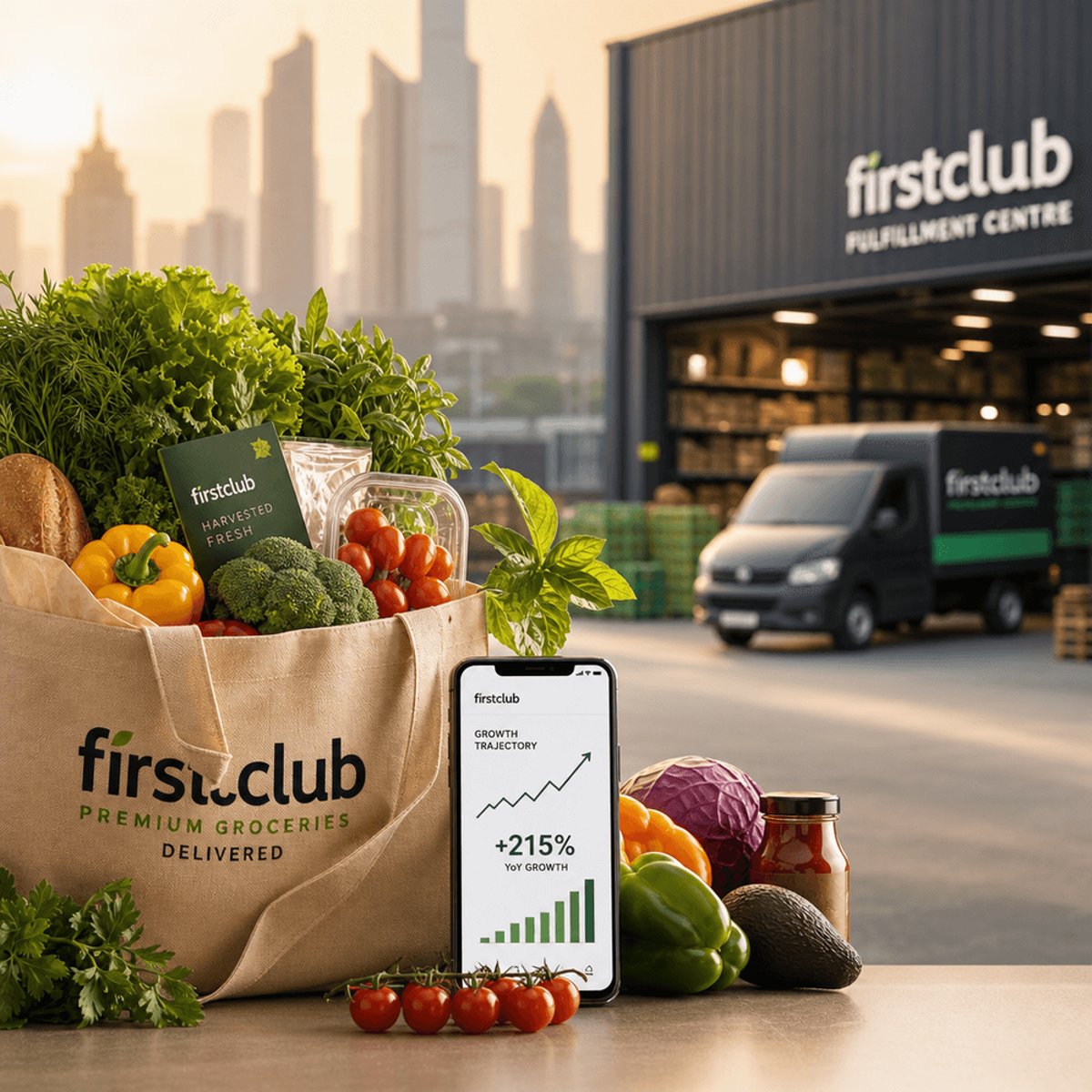
India's quick commerce battle just got a new heavyweight contender. Bengaluru-based FirstClub has doubled its valuation to $255 million in just nine months, according to exclusive reporting from TechCrunch. The quality-focused grocery startup has crossed 1 million orders and hit a $50 million annualized GMV run rate within its first year of operation, signaling that there's still room for differentiation in India's hyper-competitive instant delivery market dominated by players like Zepto, Blinkit, and Swiggy Instamart.
FirstClub is rewriting the playbook for India's quick commerce wars. While competitors race to deliver groceries in 10 minutes, the Bengaluru startup has doubled its valuation to $255 million in just nine months by betting that customers will pay a premium for quality over speed.
The numbers tell a compelling story. FirstClub has processed 1 million orders and hit a $50 million annualized GMV run rate within its first year of operations, according to TechCrunch's exclusive reporting. That's the kind of traction that's caught the attention of top-tier investors including Sofina and Peak XV Partners, who backed the company's recent funding round.
The valuation surge from roughly $127.5 million nine months ago marks one of the fastest appreciation rates in India's startup ecosystem this year. It's particularly notable given the challenging fundraising environment that's forced many growth-stage companies to accept flat or down rounds.
What's driving FirstClub's momentum? The startup has carved out a distinct position in India's $5 billion-plus quick commerce market by prioritizing product quality and selection over ultra-fast delivery times. While Zepto, Blinkit, and Swiggy Instamart battle over who can deliver fastest, FirstClub is targeting urban consumers willing to wait a bit longer for fresher produce, better meat selections, and premium groceries.
This quality-first approach appears to be resonating with India's growing middle class. The country's quick commerce sector has exploded over the past two years, with market leaders raising billions to build out dark store networks across major metros. But the sector's rapid expansion has also raised questions about unit economics and sustainability, as companies burn cash competing on delivery speed.
FirstClub's model suggests there's still white space for differentiation. Rather than competing directly with the 10-minute delivery giants, the startup is building a customer base that values product quality and reliability. That focus on retention over pure growth could prove more sustainable as the market matures.
The Indian quick commerce landscape has become increasingly consolidated, with Amazon and Flipkart also entering the instant delivery space. But investors clearly see room for multiple winners. Peak XV Partners, formerly Sequoia Capital India, has been particularly active in the sector, backing several quick commerce players as it bets on India's e-grocery penetration continuing to accelerate.
For Sofina, the Belgian investment firm known for backing companies like Delivery Hero and Swiggy, the FirstClub investment represents another bet on India's consumer internet opportunity. The firm has been steadily increasing its exposure to Indian startups, particularly in commerce and fintech.
The $50 million GMV run rate is especially impressive considering FirstClub is still primarily operating in select Indian metros. The startup has focused on building dense networks in Bengaluru and a handful of other tier-one cities rather than pursuing aggressive geographic expansion. That playbook mirrors the early strategies of successful quick commerce companies globally, which prioritized achieving strong unit economics in core markets before scaling.
FirstClub's rapid order growth to 1 million deliveries suggests strong repeat rates and customer satisfaction. In quick commerce, retention metrics often matter more than top-line GMV since the cost of acquiring customers through discounts can be punishingly high. Companies that can build loyalty without constant promotions tend to have healthier long-term economics.
The valuation jump also reflects growing investor confidence in India's digital grocery opportunity. Despite economic headwinds globally, Indian startups with strong fundamentals are still commanding premium valuations. The country's internet user base continues to expand, while rising disposable incomes in urban areas are driving demand for convenience services.
What FirstClub does with its elevated valuation and expanded war chest will be crucial. The company will need to prove it can scale its quality-focused model while maintaining margins. Quick commerce is notoriously capital-intensive, requiring continuous investment in inventory, dark stores, and delivery infrastructure. The question is whether FirstClub's premium positioning will generate enough margin to offset those costs as it grows.
FirstClub's meteoric rise proves there's more than one way to win in quick commerce. While the industry obsesses over delivery speed, this Bengaluru startup has found traction by targeting customers who care more about what's in the bag than how fast it arrives. The real test comes next: turning impressive early metrics into sustainable unit economics while fending off deep-pocketed rivals. If FirstClub can maintain its quality edge while scaling, its doubled valuation might look like a bargain in hindsight. For now, investors are betting that India's grocery market is big enough for multiple winners with different strategies.