Kevin Weil, the former Chief Product Officer at OpenAI who helped shape ChatGPT's meteoric rise, just joined the board of Stoke Space, a Seattle-based startup building fully reusable rockets. The move signals growing Silicon Valley interest in next-generation space hardware and marks another high-profile tech executive betting on the commercial space race. Weil's appointment comes as Stoke Space prepares to test its novel rocket design that promises to dramatically cut launch costs.
Stoke Space just landed one of Silicon Valley's most sought-after product minds. Kevin Weil, who spent the past few years as Chief Product Officer at OpenAI helping turn ChatGPT into a household name, is joining the aerospace startup's board of directors. The appointment, announced by TechCrunch, marks a notable crossover between the AI boom and the resurgent space industry.
Weil's track record speaks for itself. Before OpenAI, he led product development at Instagram during its explosive growth phase and held senior roles at Twitter. At OpenAI, he was instrumental in shipping ChatGPT's most successful features and navigating the complex product decisions around AI safety and accessibility. Now he's bringing that consumer tech sensibility to an industry that's historically been dominated by aerospace engineers and government contractors.
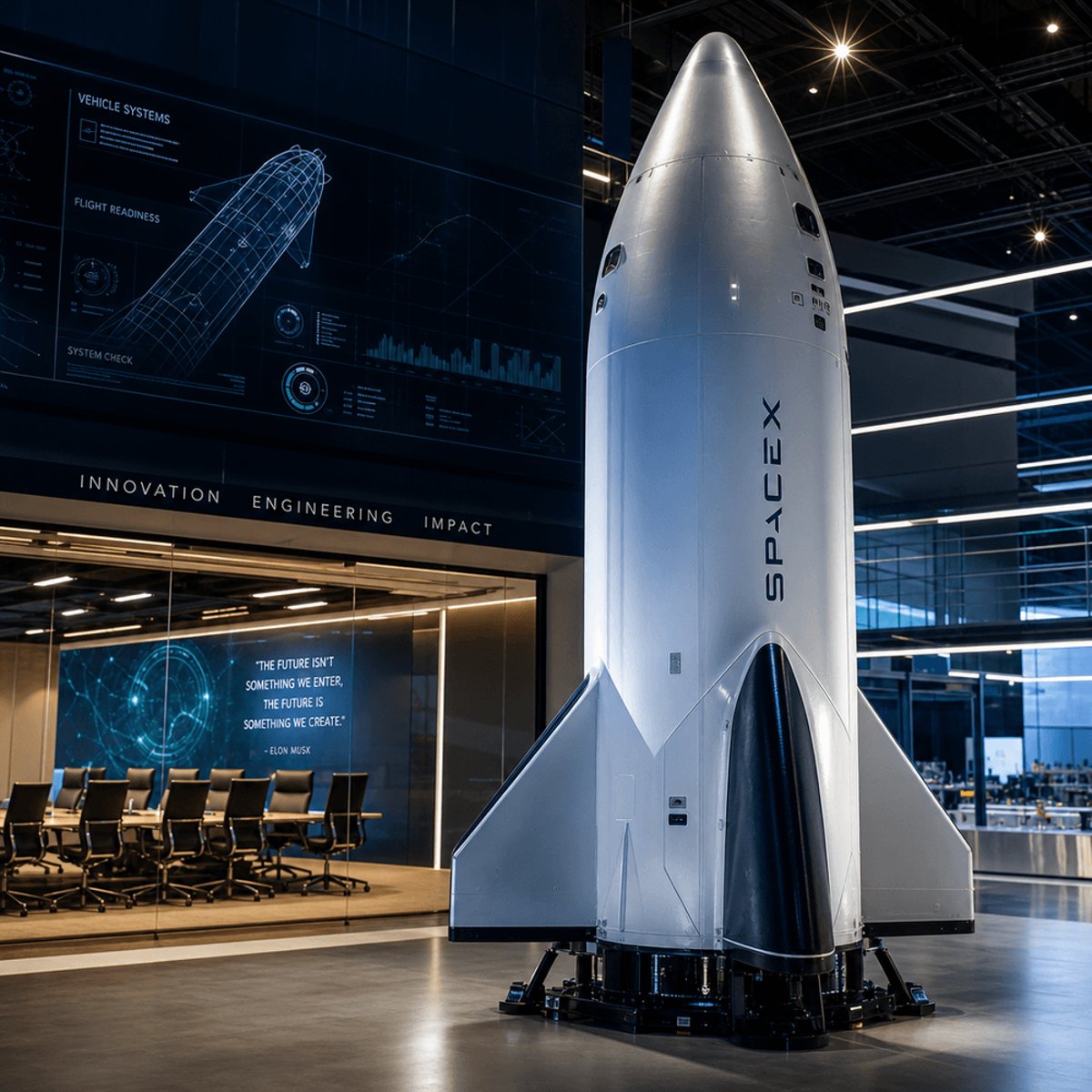
But Stoke Space isn't your typical rocket company. The Kent, Washington-based startup is pursuing what many consider the holy grail of spaceflight: a fully reusable rocket where both the first stage booster and upper stage return intact. While SpaceX revolutionized the industry by landing and reusing first-stage boosters, upper stages still burn up on reentry. Stoke's novel approach uses a heat shield integrated directly into the engine design, allowing the entire vehicle to be recovered and reflown.
The technical challenge is immense. Upper stages travel much faster than boosters and endure far more extreme reentry conditions. Stoke's solution involves cooling channels built into the rocket's exterior that circulate propellant to absorb heat, essentially turning the entire upper stage into a regeneratively cooled heat shield. If it works, the company claims it could reduce launch costs by another order of magnitude beyond what SpaceX has achieved.
Weil's appointment suggests the company is thinking beyond just hardware. Modern aerospace increasingly resembles software companies, with rapid iteration cycles, data-driven decision making, and customer experience at the forefront. Having someone who understands how to build products that scale and iterate quickly could prove invaluable as Stoke moves from test flights to commercial operations.
The timing is notable. The space industry is experiencing a fundamental shift as launch costs plummet and new markets emerge. Satellite internet constellations, space manufacturing, and lunar exploration are creating demand for cheaper, more frequent access to orbit. Venture capital has taken notice, with space startups raising billions in recent years. But the sector still lags behind consumer tech in product thinking and user experience.
Stoke Space has raised over $175 million to date from investors including Breakthrough Energy Ventures, founded by Bill Gates, and NFX. The company has been conducting test flights of its reusable upper stage at NASA's test facility in Washington state, with full orbital flights expected in the coming years. Competition is fierce, with several startups and established players racing to perfect reusable rocket technology.
Weil isn't the first tech luminary to wade into aerospace. Google co-founder Larry Page backed flying car startups Kitty Hawk and Opener. Amazon founder Jeff Bezos has poured billions into Blue Origin. And SpaceX itself was born from Elon Musk's tech fortune. But board appointments like Weil's represent a deeper integration between Silicon Valley's product culture and traditional aerospace engineering.
For Stoke Space, the addition brings credibility and connections in tech circles where the next wave of space industry funding will likely originate. For Weil, it's a chance to apply lessons from scaling AI products to an entirely different domain with potentially civilization-changing implications. If reusable rockets can truly slash costs to a fraction of today's prices, it opens possibilities from space-based solar power to asteroid mining that currently exist only in science fiction.
The cross-pollination between AI and space tech makes sense when you consider both industries are trying to solve extraordinarily complex engineering challenges at scale. AI companies need massive compute infrastructure and are already thinking about space-based data centers to overcome power and cooling limitations on Earth. Space companies need AI for autonomous operations, mission planning, and processing the torrents of satellite data flooding back to Earth.
What remains to be seen is whether consumer tech product principles actually translate to building rockets. The stakes are higher, development cycles longer, and regulatory hurdles steeper than anything Weil encountered shipping software updates. But if Stoke Space can bring even a fraction of Silicon Valley's move-fast mentality to aerospace while maintaining safety and reliability, it could reshape an industry that's been dominated by cost-plus government contracts for decades.
Kevin Weil's move from OpenAI to Stoke Space's board captures a broader trend: Silicon Valley's most ambitious minds are increasingly looking beyond software to tackle hard physics problems. Whether it's reusable rockets, fusion energy, or autonomous vehicles, the playbook that worked for scaling consumer apps is being tested against the real world's stubborn constraints. For the space industry, an influx of product-focused thinking could accelerate the transition from government-funded science projects to commercially viable businesses. And for tech executives who've conquered social media and AI, space represents the ultimate frontier where software meets hardware in the most unforgiving environment imaginable.