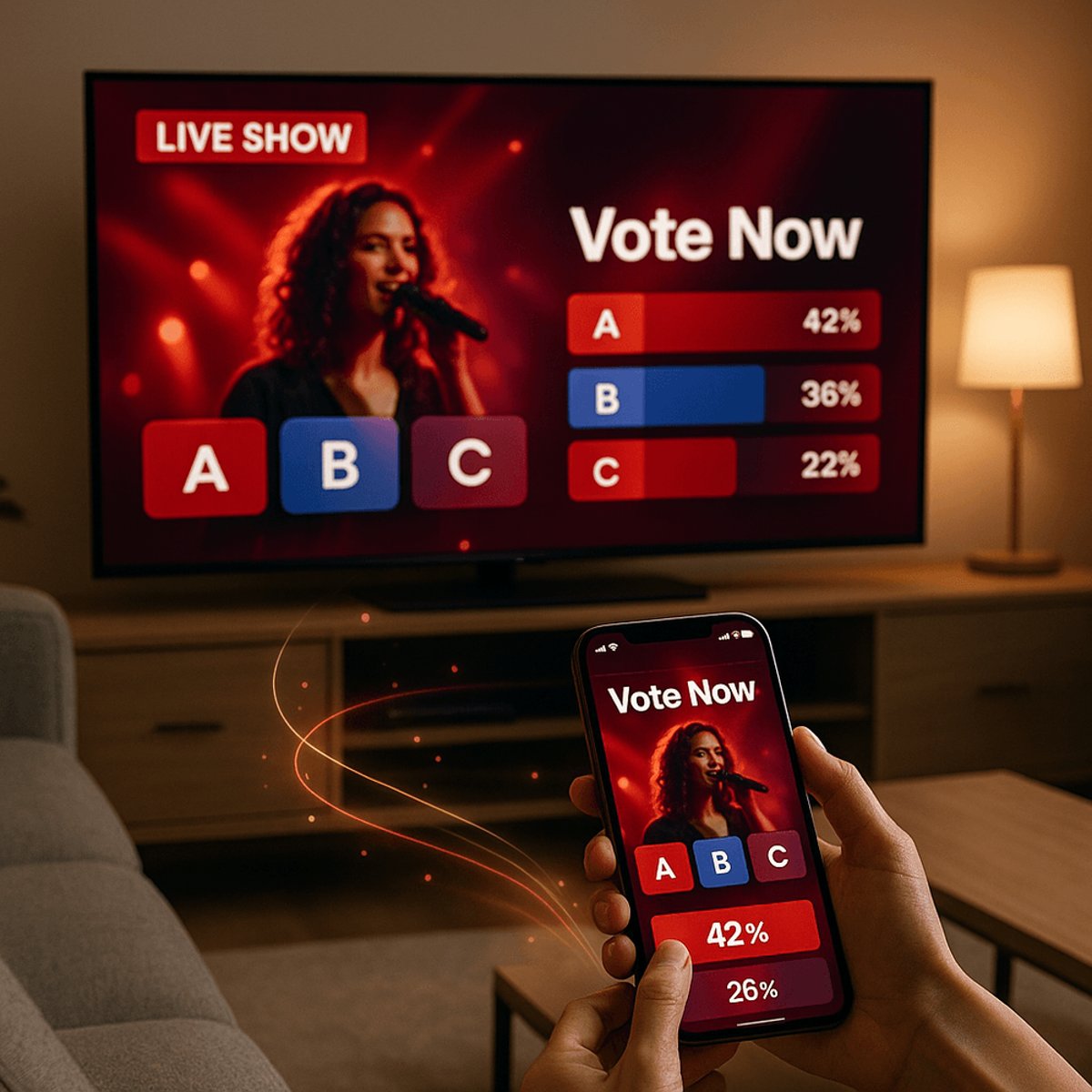
Netflix just unveiled its biggest push into interactive entertainment yet. CTO Elizabeth Stone announced at TechCrunch Disrupt 2025 that viewers can now vote in real-time to influence live show outcomes, starting with the "Star Search" reboot next year. The move signals Netflix's answer to mounting streaming competition through community-driven viewing experiences.
Netflix just changed the game for live streaming. The company's CTO Elizabeth Stone dropped the news at TechCrunch Disrupt that viewers can now vote in real-time to directly influence what happens on their screens - and it's already live.
The feature quietly launched during testing on "Dinner Time Live with David Chang" back in August, where viewers voted on everything from tuna vs. grilled cheese preferences to the eternal soup vs. salad debate. But the real test comes next year when Netflix brings back "Star Search" after a 20-year hiatus, complete with audience voting that can make or break contestants.
"If you're sitting at home watching 'Star Search' on your TV, you'll be able to either on the TV or your mobile phone actually put in a vote that advances or doesn't advance some of the contestants," Stone explained during her TechCrunch Disrupt appearance. The voting windows are time-limited, so if you're not caught up with the livestream, you miss your chance to influence the outcome.
This isn't Netflix's first dance with interactive content. The streaming giant previously tested viewer polls during reality shows like "Too Hot to Handle" and "Love Is Blind." But those were basic polls - this new system lets viewers actually change show outcomes in real-time.
The timing couldn't be more strategic. With streaming wars intensifying and subscriber growth slowing across the industry, Netflix needs fresh ways to keep viewers engaged. The company reports "consistent engagement episode to episode" during early testing, suggesting this community-driven approach might be the hook they need.
But voting is just the beginning. Stone also announced that Netflix is launching immersive homepage experiences with animations and dynamic effects, starting with a Halloween collection this month. A holiday collection drops in December, followed by IP-driven experiences like a "Bridgerton" immersive landing page.
The bigger play involves living room party games launching in Q4, including classics like Boggle that you can play on your TV using your phone as a controller. "It's another way to think about more immersive, fun, in-the-moment content," Stone noted, hinting at Netflix's broader strategy to own the entire entertainment experience.
This real-time responsiveness extends beyond just voting. Netflix is planning similar features for podcasts and cloud gaming, creating what Stone calls "interaction patterns" that keep viewers actively engaged rather than passively consuming.
The technical execution is surprisingly smooth. On-screen prompts appear with voting options, results display in real-time, and the interface works seamlessly across TV and mobile. It's the kind of cross-device functionality that Netflix has been perfecting for years, now applied to live content interaction.
What makes this move particularly savvy is how it leverages Netflix's existing infrastructure. The company already handles real-time streaming for millions of viewers - adding voting functionality is an elegant extension of that capability rather than a complete technological overhaul.
Netflix's real-time voting represents more than just a new feature - it's a fundamental shift toward participatory entertainment that could redefine how we think about live streaming. By turning viewers into active participants who can influence outcomes, Netflix isn't just competing on content anymore; they're creating entirely new types of shared experiences that other platforms will struggle to replicate. As the feature rolls out to major productions like "Star Search" next year, it could become the differentiator that keeps Netflix ahead in an increasingly crowded streaming landscape.