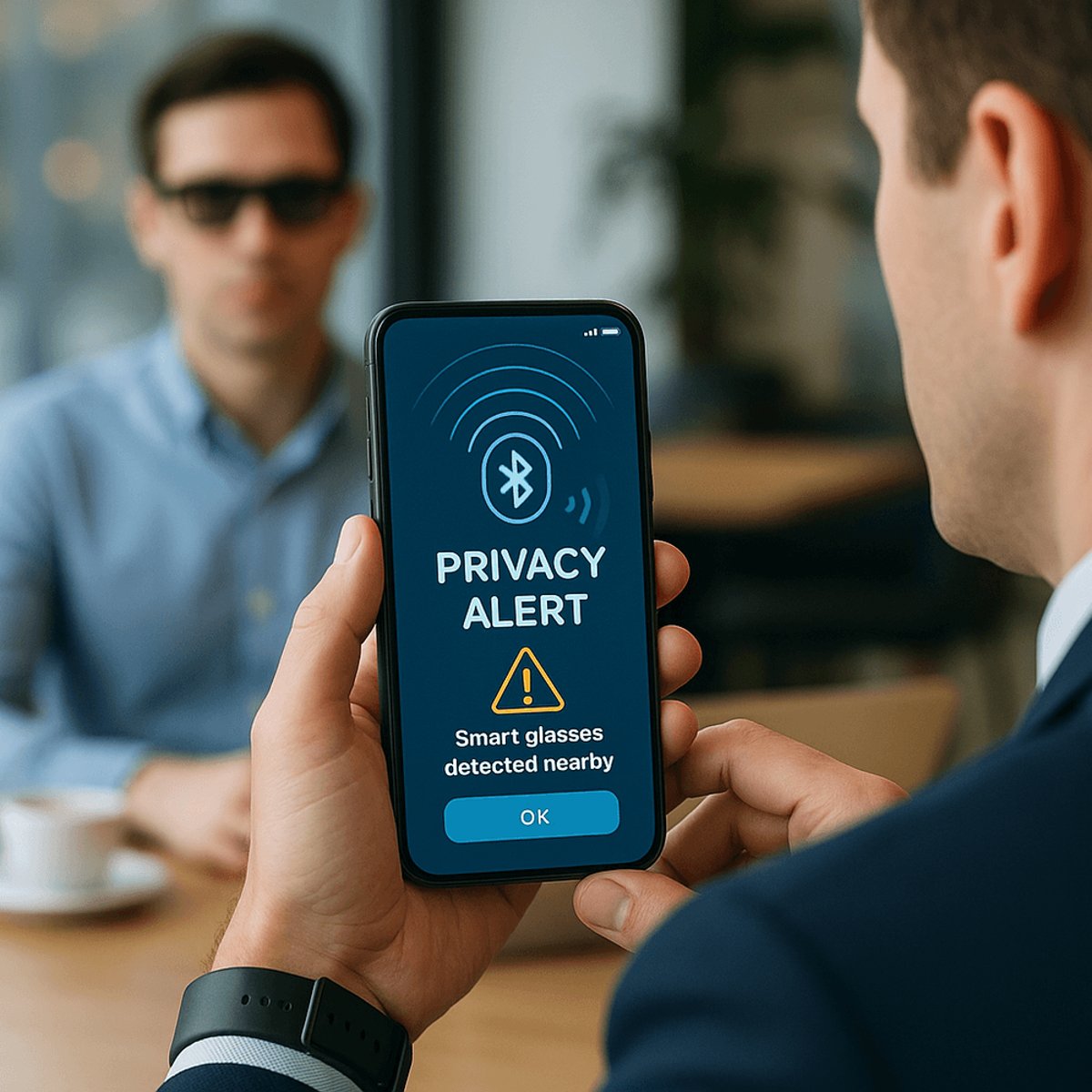
A new app that alerts you when someone nearby is wearing smart glasses just launched, and it's already reigniting the debate over always-on recording devices. The hobbyist-built detector uses Bluetooth signals to identify Meta Ray-Bans, Snap Spectacles, and similar wearables within range - a grassroots response to mounting concerns that camera-equipped eyewear is turning public spaces into surveillance zones. As tech giants push deeper into wearable AI, this DIY counter-surveillance tool reveals how uneasy people remain about being recorded without consent.
The app, which quietly scans for Bluetooth signals from smart glasses models, represents a new front in the battle over wearable surveillance. While Meta and Snap have poured billions into making camera-equipped eyewear mainstream, a solo developer just proved that detecting them is surprisingly straightforward.
The tool works by identifying the unique Bluetooth signatures that smart glasses broadcast to pair with phones and sync data. Meta's Ray-Ban Stories and the newer Ray-Ban Meta glasses, along with Snap's Spectacles, all emit detectable wireless signals that the app can recognize within typical Bluetooth range - roughly 30 feet in most environments.
What makes this particularly timely is the explosion in smart glasses adoption over the past year. Meta reportedly shipped over 700,000 Ray-Ban smart glasses in 2025, while Snap launched its fifth-generation Spectacles with AI-powered features last fall. The devices have moved from novelty to increasingly common sight on streets, in cafes, and at events.
But that ubiquity comes with a privacy cost that many people didn't sign up for. Unlike smartphones that people visibly hold up to record, smart glasses capture video and audio while looking indistinguishable from regular eyewear - at least from a distance. Sure, there's usually a small LED indicator when recording, but privacy researchers have repeatedly demonstrated how easy those lights are to miss, cover, or simply ignore in bright environments.
The developer behind the detection app told TechCrunch the project grew out of personal frustration with the lack of transparency around recording devices. The app doesn't block or interfere with smart glasses - it simply alerts users when one is detected nearby, leaving them to decide how to respond.
That decision might involve asking someone if they're recording, moving to a different location, or just being aware that their conversation could be captured. It's a low-tech solution to a high-tech problem, and it highlights a fundamental tension in how wearable devices are being deployed.
Meta has consistently argued that its smart glasses include visual indicators specifically to address privacy concerns. The company points to the white LED that illuminates during capture and claims its prominence meets regulatory requirements in multiple jurisdictions. But critics note that a tiny light doesn't constitute meaningful consent, especially when people nearby may not understand what it signifies.
The legal landscape remains murky. Some states require two-party consent for audio recording, potentially putting smart glasses users in violation when they capture conversations. Other jurisdictions treat public spaces as fair game for recording, creating a patchwork of rules that few consumers understand. Snap faced similar backlash when it launched Spectacles, eventually adding more prominent visual indicators after public pressure.
This detection app won't stop the march toward ubiquitous wearable cameras - that ship has sailed. But it does shift some power back to people who'd rather not be recorded without their knowledge. It's reminiscent of earlier efforts to detect hidden cameras in Airbnbs or hotel rooms, except now the threat is walking around on people's faces.
The broader question is whether society will normalize always-on recording or push back hard enough to force better consent mechanisms. Right now, we're in an awkward middle phase where the technology has outpaced social norms and legal frameworks. A hobbyist app that lets you know when you're potentially being surveilled feels like a Band-Aid, but it's the Band-Aid available while regulators and companies figure out what comes next.
For tech companies betting big on smart glasses as the next computing platform, this kind of grassroots resistance is a warning sign. If people feel they need detection tools to protect their privacy, it suggests the current approach isn't building the trust necessary for mass adoption. Meta and Snap have both emphasized that their devices are about capturing personal moments and enhancing experiences, not surveillance. But when the technology enables both uses equally well, it's hard to blame people for being skeptical.
This detection app won't resolve the fundamental tension between wearable tech innovation and privacy rights, but it does hand people a tool they clearly want. As smart glasses become more capable - with AI assistants, real-time translation, and continuous recording features - the gap between what's technically possible and what's socially acceptable keeps widening. Until companies and regulators establish clearer consent frameworks, expect more DIY countermeasures like this one. The message is pretty clear: people want to know when they're being watched, and they'll build their own solutions if tech companies won't provide them.