Onepot AI just emerged from stealth with $13 million in funding to tackle one of pharma's biggest bottlenecks: creating the chemical compounds needed for drug discovery. The startup's AI-powered synthesis lab promises to compress what takes human chemists months into just days, potentially accelerating the entire drug development pipeline.
Onepot AI just threw down the gauntlet in pharmaceutical manufacturing. The startup emerged from stealth Wednesday with $13 million in funding to solve what co-founder Daniil Boiko calls the industry's most frustrating problem: "The best ideas in drug discovery were often blocked not by biology, but by synthesis," he told TechCrunch.
The frustration runs deep. Boiko, a Ph.D. candidate studying machine learning in chemistry at Carnegie Mellon, watched drug hunters skip promising compounds simply because the molecules seemed too hard to make. "The compounds never even got a chance to be tested," he said. Meanwhile, co-founder Andrei Tyrin, who studied computer science at MIT, saw the same bottleneck from the computational side - AI models could generate drug ideas in hours, but labs took months to catch up.
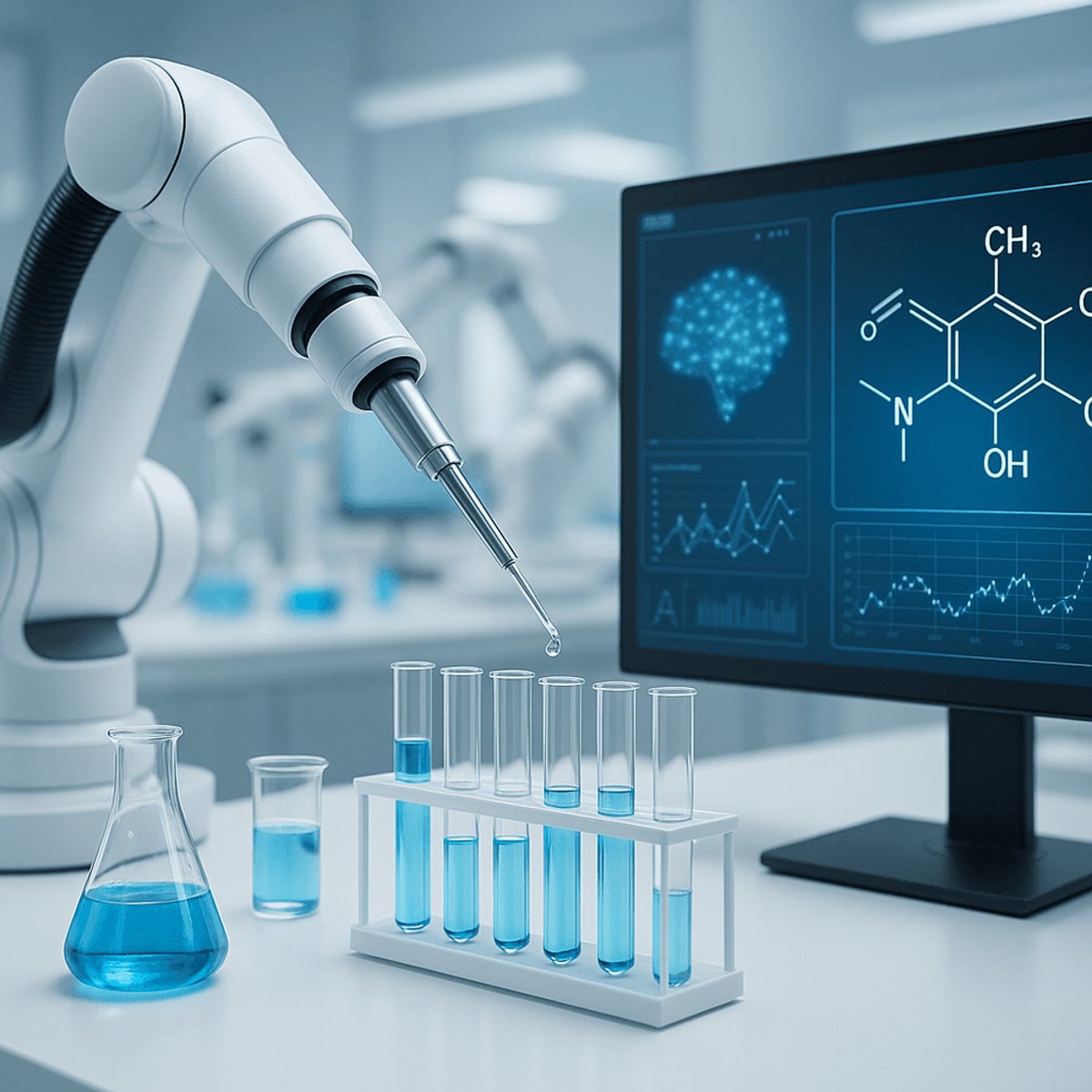
Their solution combines old-school chemistry with cutting-edge AI. Onepot's small-molecule synthesis lab POT-1 houses "Phil," an AI organic chemist that analyzes experimental data to speed up compound synthesis for biotech and pharma partners. The process is straightforward: clients browse Onepot's molecule catalog, place orders, and receive physical compounds shipped as dry powders or solutions within days.
But here's where it gets interesting - the backend is where Boiko and Tyrin are rebuilding chemistry from scratch. They're letting large language model agents access their "molecule recipes" for training, capturing every detail of the synthesis process including temperature, ingredients, and reaction conditions. "No information is lost, which makes experiences reproducible even if someone decides to run them in ten years from now," Tyrin explained.
The timing couldn't be better. Current pharma companies either build expensive in-house chemistry teams or outsource to contract research organizations overseas - often in China. With global supply chains becoming vulnerable and U.S.-China trade tensions escalating, Boiko saw an opportunity: "Small molecule synthesis needed to be rebuilt from the ground up in the United States."
The funding round, led by Fifty Years, includes heavyweights like Khosla Ventures, Speedinvest, OpenAI co-founder Wojciech Zaremba, and Google's Chief Scientist Jeff Dean. Boiko called the fundraising "hectic," recounting how what was supposed to be a short investor meeting turned into "a multi-hour whiteboard session about industrializing synthesis."
The market opportunity is massive. Human chemists currently spend months and thousands of dollars creating single compounds through trial and error - studying biological activity, tracking how drugs move through the body, analyzing toxicology reports. "The main limiting factor here is not testing these compounds, but making them in the first place," Tyrin said. "We aim to compress this down to days."
Onepot faces established competitors like WuXi AppTec and Enamine on the service side, but their AI-first approach sets them apart. Unlike traditional methods that rely on literature data mined from the internet, their agents generate hypotheses from real-world lab experiments, potentially unlocking what Boiko calls the "weird" chemistry scientists once thought impossible.
The fresh capital will fund a second lab in San Francisco to handle more customers, expand the team, and enhance their compound discovery engine. The bigger vision? Making drug discovery at least twice as fast while expanding the design space for what's possible in pharmaceutical development.
"You're not just speeding up drug discovery, you're expanding the design space for what drugs and materials can be," Boiko said. "That drug that we haven't discovered yet, might be out there, waiting for us to find it."
Onepot AI's emergence signals a broader shift toward AI-powered laboratory automation in drug discovery. By attacking the synthesis bottleneck that has long frustrated pharmaceutical researchers, the company could unlock entirely new categories of drugs that were previously too complex to manufacture. With geopolitical tensions pushing for domestic manufacturing capabilities and AI models becoming increasingly sophisticated, Onepot is positioning itself at the intersection of multiple powerful trends. The real test will be whether their AI chemist Phil can deliver on the promise of days-not-months synthesis at the scale needed to transform an industry built on decades of traditional lab work.