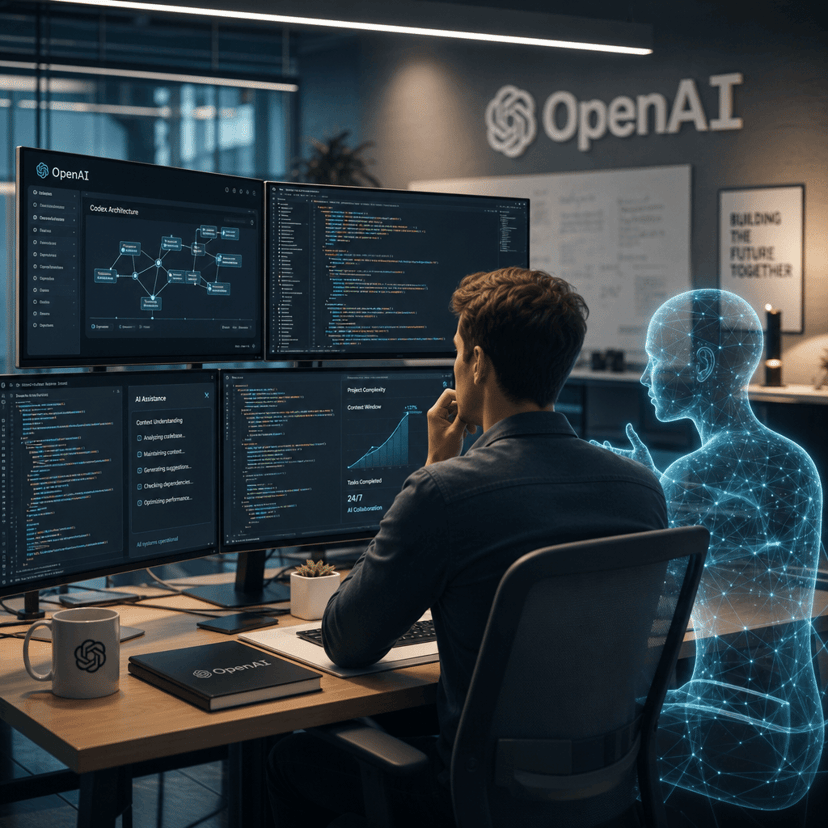
OpenAI is acquiring Ona, a strategic move designed to transform its Codex AI coding assistant into a more powerful enterprise development tool. The acquisition will enable Codex to handle longer-running, more complex programming tasks - addressing one of the biggest limitations in AI-assisted software development. This marks OpenAI's latest push to dominate the rapidly growing AI developer tools market, where it faces stiff competition from Microsoft's GitHub Copilot and emerging startups.
OpenAI just made a calculated play for the enterprise developer market. The company announced it's acquiring Ona, a startup whose technology promises to solve one of the thorniest problems in AI-assisted coding - getting these tools to handle tasks that stretch beyond simple code snippets into complex, multi-step workflows.
The acquisition comes as the AI coding assistant space heats up into a full-blown arms race. Microsoft's GitHub Copilot has been racking up millions of subscribers, while startups like Cursor and Replit are pulling developers away from traditional IDEs with AI-native experiences. OpenAI's Codex, the model that originally powered Copilot before Microsoft built its own infrastructure, has been somewhat sidelined in the conversation - until now.
According to CNBC, Ona's technology will specifically allow Codex to take on "longer-running tasks," addressing what developers have consistently identified as the Achilles' heel of current AI coding tools. Most can autocomplete a function or generate a quick script, but they stumble when asked to refactor an entire codebase, debug complex systems, or architect multi-file features that require sustained context.
The timing isn't coincidental. Enterprise adoption of AI coding tools has exploded over the past year, with companies reporting 20-40% productivity gains for developers using these assistants. But that productivity hits a wall when tasks require more than a few minutes of sustained AI attention. Current models lose context, forget earlier decisions, or simply can't maintain the thread of a complex debugging session.
Ona's approach apparently solves this through what industry insiders call "agentic" coding - AI systems that can break down large tasks, maintain state across multiple steps, and even self-correct when they hit dead ends. It's the difference between an autocomplete tool and a genuine AI pair programmer.
For OpenAI, this acquisition isn't just about making Codex better. It's about reclaiming territory in a market the company essentially created but has watched others dominate. When OpenAI first released Codex in 2021, it sparked the entire AI coding revolution. But by focusing on ChatGPT and consumer AI, the company left an opening for competitors to build the infrastructure and distribution that now controls the developer tools market.
The enterprise angle matters here too. While ChatGPT prints money through consumer subscriptions, the real long-term value in AI is almost certainly in B2B applications. Developers are the perfect enterprise wedge - they adopt tools bottom-up, create internal champions, and eventually drive company-wide deployments. A Codex that can handle real, sustained development work becomes a genuine replacement for junior developers and a force multiplier for senior ones.
Financial terms of the deal weren't disclosed, and OpenAI declined to comment on Ona's team size or whether this counts as an acqui-hire or a technology acquisition. What's clear is that OpenAI is moving fast to plug gaps in its enterprise strategy before competitors lock up the market.
The competitive landscape is only getting more crowded. Google has been quietly improving its own AI coding tools through both Gemini and specialized models. Amazon rolled out CodeWhisperer with deep AWS integration. Even Meta open-sourced Code Llama, letting smaller players build their own specialized tools.
What developers want isn't just better autocomplete - they want AI that can genuinely collaborate on complex problems. They want tools that understand their entire codebase, remember architectural decisions, and can work on issues that take hours or days to resolve. That's the promise Ona brings to Codex.
The acquisition also signals where OpenAI thinks the AI coding market is headed. It's not about replacing developers - it's about extending what they can accomplish. A senior engineer who can delegate complex refactoring work to an AI assistant while focusing on architecture and business logic becomes exponentially more valuable. That's the product OpenAI is betting on.
OpenAI's Ona acquisition represents more than just a product upgrade - it's a strategic repositioning in the enterprise AI race. By solving the long-running task problem, OpenAI is betting it can transform Codex from a clever autocomplete tool into genuine AI infrastructure that companies build their development workflows around. With competitors already entrenched and the market moving fast, this acquisition might be exactly the catalyst OpenAI needs to turn its first-mover advantage in AI coding into lasting market dominance. Watch how quickly they integrate Ona's technology and whether enterprise developers start switching back to Codex from whatever they're using now.