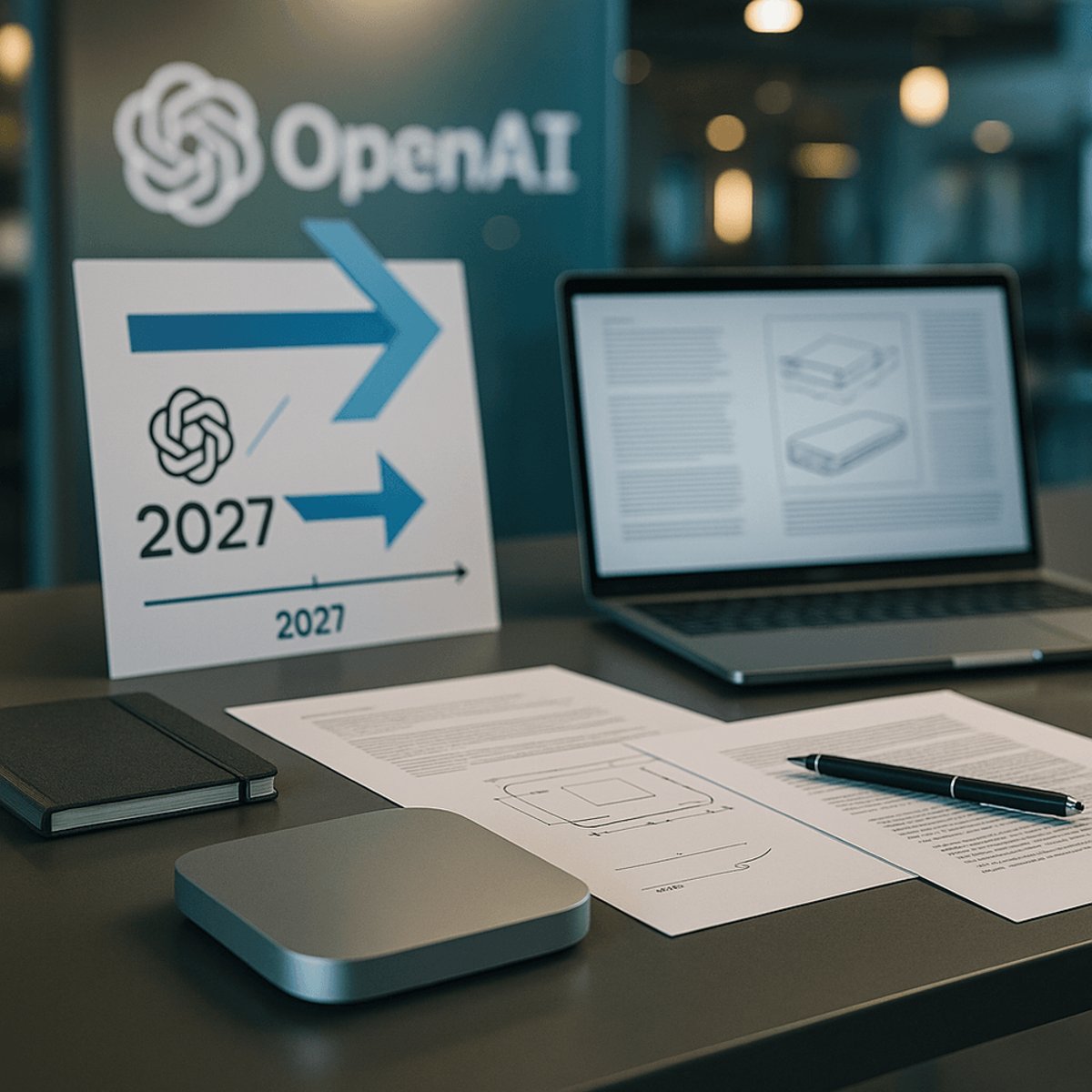
OpenAI is backing away from the "io" branding for its first consumer hardware device, according to a court filing uncovered in an ongoing trademark dispute. The reveal comes as the AI giant pushes deeper into physical products, with the device now not expected to ship until 2027. The legal disclosure offers a rare glimpse into OpenAI's hardware strategy, which has been shrouded in secrecy since whispers of the project first surfaced last year.
OpenAI just pulled the plug on "io" as the name for its secretive AI hardware device, and the news came through the most unexpected channel: a trademark lawsuit.
According to court documents obtained by Wired, the company confirmed it's abandoning the "io" branding entirely. More importantly, the filing reveals the device won't make it into consumers' hands until 2027, a timeline that pushes OpenAI's hardware ambitions significantly further out than many in the industry expected.
The disclosure is notable because OpenAI has been playing its hardware cards close to the chest. While CEO Sam Altman has hinted at the company's interest in creating AI-powered devices, concrete details have been scarce. This legal filing represents one of the first official confirmations of both the project's existence and its timeline.
The trademark dispute itself centers on another company's existing use of the "io" name. Rather than fight it out in court, OpenAI appears to be cutting its losses and moving on to different branding. It's a pragmatic move that avoids drawn-out legal battles, but it also suggests the project is fluid enough that a complete rebrand won't derail development.
What's less clear is what the device actually does. OpenAI hasn't publicly detailed the product's features or use cases. Industry speculation has ranged from AI-powered smart speakers to more ambitious wearable devices that could compete with emerging products from startups like Humane and Rabbit, both of which launched AI hardware with mixed reception in 2024 and 2025.
The 2027 ship date is telling. It puts OpenAI's hardware debut three years out, giving the company considerable runway to refine whatever it's building. But it also means OpenAI will be entering a market that's already taking shape. Apple continues to integrate more AI capabilities into iPhones and other devices, while Google is pushing AI features across its Pixel lineup and Nest products. Meta has also been experimenting with AI-enabled smart glasses through its partnership with Ray-Ban.
For OpenAI, hardware represents both opportunity and risk. The company built its reputation on software and AI models, particularly ChatGPT, which has become nearly synonymous with generative AI. Moving into hardware means competing on manufacturing, supply chain management, retail distribution, and all the other messy realities of physical products.
But there's upside too. Owning the hardware stack gives OpenAI more control over user experience and opens up new revenue streams beyond API access and software subscriptions. It's a playbook Amazon used successfully with Alexa and Echo devices, turning voice AI into a tangible product line.
The trademark issue and subsequent name change might actually be a blessing in disguise. "io" is a crowded namespace in tech, used by everyone from game developers to blockchain projects. A more distinctive name could help OpenAI carve out clearer brand identity for whatever device emerges in 2027.
What the court filing doesn't reveal is how far along development actually is. A 2027 launch could mean the product is still in early prototyping, or it could indicate a more polished device that simply needs time for manufacturing ramp-up and regulatory approvals. OpenAI hasn't commented beyond what's in the legal documents.
The timing is interesting for another reason: it comes as OpenAI faces increased competition and scrutiny. The company is dealing with leadership questions, partnership complexities with Microsoft, and a rapidly evolving competitive landscape. Adding hardware to the mix raises the stakes considerably.
The "io" name is dead, but OpenAI's hardware ambitions are very much alive. The 2027 timeline gives the company breathing room to get it right, but it also means entering a market that will be three years more mature and crowded. Whether OpenAI can translate its software dominance into hardware success remains the big question. For now, the most concrete thing we know is what the device won't be called.