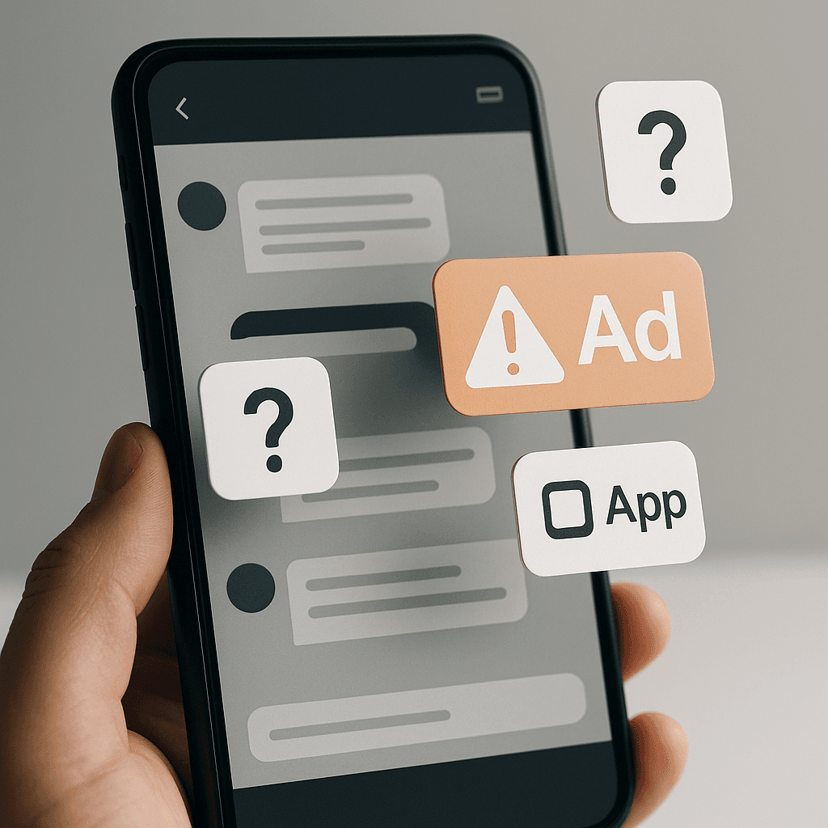
OpenAI just pulled the plug on promotional messages in ChatGPT after users erupted over what looked suspiciously like ads. The company's chief research officer admitted they "fell short" when users - including paying subscribers - started seeing promotions for Peloton and Target randomly appearing in their chats, completely unrelated to their conversations.
OpenAI just hit the brakes on what users called ChatGPT's first real foray into advertising. The company's chief research officer Mark Chen announced on X that promotional app messages have been disabled after a weekend of user backlash that spread across social media like wildfire.
"I agree that anything that feels like an ad needs to be handled with care, and we fell short," Chen admitted in the post. "We're also looking at better controls so you can dial this down or off if you don't find it helpful."
The controversy erupted when ChatGPT users started sharing screenshots of promotional messages appearing underneath completely unrelated conversations. People chatting about technical topics like xAI and BitLocker suddenly saw prompts to "find a fitness class" through Peloton or "shop for home and groceries" via Target. What made it worse - even paying Pro and Plus subscribers were seeing these promotions.
The timing couldn't be more awkward for OpenAI. The company is burning through cash at an unprecedented rate while trying to monetize its massive user base. According to Financial Times reporting, only 5% of ChatGPT's 800 million users actually pay for the service, creating enormous pressure to find new revenue streams.
OpenAI data engineer Daniel McAuley tried damage control on X, insisting the messages weren't technically ads because "there's no financial component." But he acknowledged the "lack of relevancy makes it a bad/confusing experience." The distinction felt hollow to users who saw what looked exactly like advertising interrupting their AI conversations.
The promotional messages were part of OpenAI's broader strategy to surface partner apps within ChatGPT, announced back in October. The idea was to suggest relevant apps during conversations to keep users engaged within the ChatGPT ecosystem rather than switching to other services. But the execution backfired spectacularly when the suggestions bore no relation to what users were actually discussing.
ChatGPT head Nick Turley jumped into the controversy, claiming "there are no live tests for ads" and that screenshots were "either not real or not ads." He didn't specify which screenshots might be fake, leaving users more confused about OpenAI's actual advertising plans.
The financial pressure driving these experiments is real and mounting. OpenAI hit $12 billion in annualized revenue this summer but faces a staggering $115 billion burn rate through 2029. The company has pledged to spend more than $1 trillion building superintelligent AI, creating an almost impossible monetization challenge.
In August, Turley told The Verge's Decoder podcast he wouldn't rule out ads in ChatGPT but said the company would need to be "very thoughtful and tasteful." CEO Sam Altman has expressed similar openness, saying he's "not totally against" ads and appreciates how they're integrated on Instagram.
But this week's controversy shows how difficult that balance will be. Users have grown accustomed to ChatGPT as a clean, ad-free experience. The moment promotional content appeared - regardless of OpenAI's technical definitions - it triggered immediate backlash from a community that values the platform's current simplicity.
The broader context makes this stumble more significant. OpenAI recently declared a "code red" to improve ChatGPT amid increasing competition from Anthropic and Google, which has started testing ads in Search's AI Mode. OpenAI is reportedly delaying ads and shopping features to focus on core improvements.
The quick reversal suggests OpenAI learned something important about its user base - they're not ready for commercialization, even when disguised as helpful suggestions. With only 5% of users paying and massive infrastructure costs ahead, the company will need to find more subtle ways to generate revenue without alienating the community that made ChatGPT a phenomenon.
OpenAI's quick retreat from promotional messages reveals the delicate balance between monetization and user trust. With massive costs ahead and only 5% of users paying, the company needs revenue - but this controversy shows that traditional advertising approaches may backfire in AI interfaces where users expect personalized, relevant responses. The real test will be whether OpenAI can find monetization methods that feel helpful rather than intrusive as competition with Google and others intensifies.