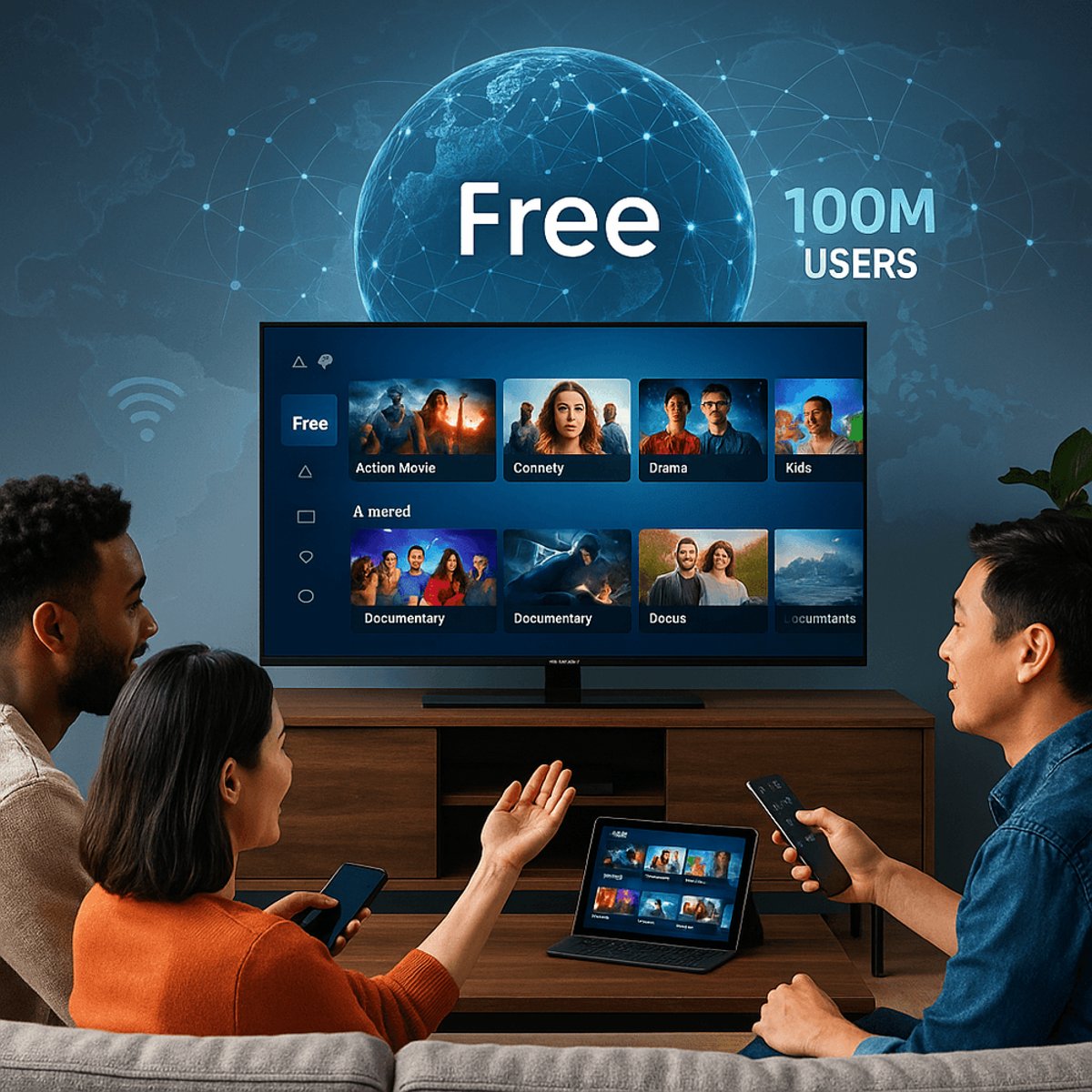
Samsung just revealed that its free streaming platform, Samsung TV Plus, has grown to around 100 million monthly active users worldwide - putting it on par with major global broadcasters in scale. The FAST (free ad-supported streaming TV) service now spans 30 countries with approximately 4,300 channels and more than 66,000 video-on-demand titles, signaling how connected TV is reshaping the media landscape without subscription fees. The milestone comes as streaming fatigue pushes viewers toward free alternatives and brands hunt for new ways to reach audiences on the big screen.
Samsung is making a serious play in the streaming wars, but it's doing it without asking viewers for a dime. The company's Samsung TV Plus platform has quietly scaled to around 100 million monthly active users worldwide, according to an editorial published by Samsung Newsroom. That's not just a vanity metric - it's a user base that rivals major global broadcasters and positions the free service as a legitimate alternative in an increasingly crowded market.
The numbers tell a compelling story about where streaming is headed. Samsung TV Plus now operates in 30 countries with approximately 4,300 channels and more than 66,000 video-on-demand titles. Unlike the subscription fatigue plaguing services like Netflix and Disney+, Samsung's betting that free, ad-supported content will win over viewers tired of juggling multiple monthly bills. It's a strategy that's working - the FAST (free ad-supported streaming TV) category is one of the fastest-growing segments in connected TV.
What makes Samsung TV Plus different from just another streaming app is how deeply it's baked into Samsung's hardware ecosystem. The service comes pre-installed on Samsung smart TVs and serves as what the company calls "a global hub connecting services and programming." That means it's often the first thing viewers see when they turn on their TV, giving Samsung a massive distribution advantage over standalone streaming apps fighting for attention.
The platform isn't just replicating traditional TV - it's adding interactive features that blur the line between passive viewing and active participation. Samsung highlighted how viewers can watch a favorite artist's performance while simultaneously participating in live voting, creating what the company describes as "a seamless media environment" where programming and brand engagement converge. It's the kind of feature that sounds modest but signals where connected TV is heading - toward experiences that traditional linear TV and subscription streaming can't easily replicate.
Behind the scenes, Samsung's leveraging vast amounts of viewing data to power recommendation systems that help users discover content without endless scrolling. The company frames this as moving "beyond a content delivery device into a platform that actively connects viewers with what they watch." That language might sound like marketing speak, but it reflects a real shift in how TV works - from scheduled programming to personalized discovery powered by algorithms.
The growth of FAST services like Samsung TV Plus is reshaping the digital advertising landscape too. Connected TVs combine the immersive scale of the big screen with the targeting precision of digital platforms, creating new opportunities for brands to reach audiences. As Samsung notes in its editorial, these platforms are "transforming digital advertising by combining the immersive scale of the big screen with the precision of digital platforms to create a new viewing experience."
Samsung's timing couldn't be better. As consumers cut back on subscription services amid economic uncertainty, free alternatives are having a moment. Services like Tubi, Pluto TV, and Roku Channel have all reported surging viewership over the past year. But Samsung has a structural advantage - it controls the hardware, the operating system, and the content platform, creating a vertically integrated experience that pure-play FAST services can't match.
The company's positioning this as part of what it calls "the accelerated AI era," where content consumption patterns are changing faster than ever. Samsung TV Plus is incorporating AI-powered personalization to surface relevant content, though the editorial stops short of detailing specific AI features. What's clear is that Samsung sees connected TV as the next battleground for AI deployment - moving beyond recommendation engines to more sophisticated ways of matching viewers with content.
At 100 million monthly users, Samsung TV Plus is approaching the scale of mid-tier subscription services. For context, Peacock reported 36 million paid subscribers in its last earnings, while Paramount+ hit 72 million. The difference is Samsung's users aren't paying anything directly - they're the product being sold to advertisers, a business model that's proven remarkably durable as subscription fatigue sets in.
The question now is whether Samsung can maintain growth as competition intensifies. Amazon is pushing its Freevee service, Google has YouTube's free content, and every major TV manufacturer is launching or partnering with FAST services. But Samsung's installed base of smart TVs gives it a built-in advantage - as long as it can keep viewers engaged with compelling content and features that justify choosing Samsung TV Plus over the dozens of other streaming options clamoring for attention.
Samsung TV Plus hitting 100 million monthly users isn't just a milestone for one company - it's a signal that free, ad-supported streaming has become a viable alternative to the subscription model dominating the past decade. As viewers juggle mounting subscription costs and advertisers chase connected TV audiences, Samsung's vertically integrated approach - controlling the hardware, software, and content platform - gives it a structural advantage in the FAST wars. The real test comes next: whether Samsung can keep users engaged as every tech giant and TV manufacturer piles into free streaming, and whether its AI-powered personalization can create sticky enough experiences to fend off competitors with deeper content libraries.