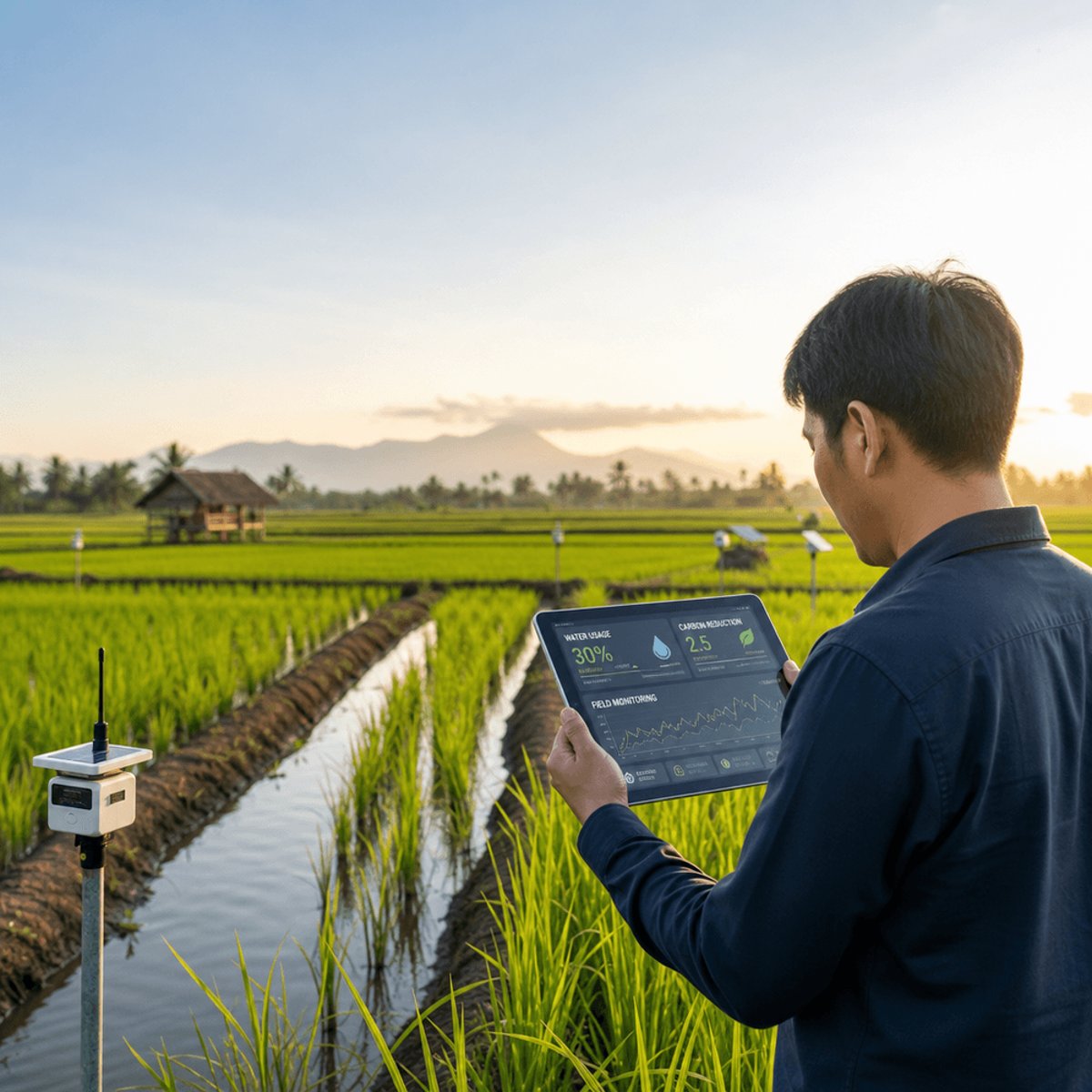
Indian agritech startup Mitti Labs just secured a strategic investment from Saudi Aramco's venture arm, marking a notable bet on climate-resilient agriculture in Asia's water-stressed rice belts. The funding comes as the company prepares to expand beyond India into the Philippines and Indonesia, bringing its water-saving rice farming technology to regions where traditional cultivation methods are colliding with severe water scarcity. For Aramco, it's a strategic move into agricultural sustainability at a time when food security and carbon credits are becoming intertwined markets.
Mitti Labs is betting it can transform how Asia grows rice, and now it has Saudi Aramco backing that vision. The Indian climate tech startup just closed a funding round led by Aramco Ventures, the oil giant's investment arm, with participation from existing backers Lightspeed and Cisco. The deal wasn't just about the money - it's a strategic play that connects Middle Eastern energy interests with Asian agricultural innovation at a time when water scarcity is becoming as critical as energy security.
The funding arrives as Mitti Labs prepares to scale beyond its Indian base into two of Asia's largest rice producers: the Philippines and Indonesia. Both countries are grappling with the same challenge that birthed Mitti's technology - traditional rice farming is a water hog in regions where water is increasingly scarce. Conventional paddy cultivation uses roughly 40% of the world's irrigation water, according to agricultural research, creating an unsustainable model as climate patterns shift and aquifers deplete.
Mitti's approach centers on helping farmers transition to water-efficient rice cultivation methods that can cut water usage dramatically while maintaining yields. But the company isn't just selling farming advice - it's building a carbon credits business around the practice. When farmers reduce flooding in rice paddies, they slash methane emissions, one of agriculture's biggest climate impacts. Those emission reductions can be monetized as carbon credits, creating a revenue stream that makes the transition financially attractive.
The Aramco connection might seem unlikely at first glance - an oil company investing in agricultural climate tech. But it reflects how energy giants are positioning themselves in carbon markets and sustainability infrastructure. Aramco Ventures has been steadily building a portfolio beyond traditional energy, and agricultural carbon credits represent a massive, largely untapped market. For Mitti Labs, the partnership opens doors across Middle Eastern markets where food security is a national priority and governments are willing to pay for solutions.
"We've been preparing for this regional expansion since we proved the model worked in India," the company's growth trajectory suggests, though specific statements weren't immediately available. The startup has been quietly validating its technology with Indian farmers, collecting agricultural data that feeds both its carbon credit verification and its broader ambitions to become a data platform for sustainable agriculture.
That data angle is crucial. Mitti isn't just measuring water savings - it's building detailed profiles of how different rice varieties, soil types, and farming practices interact under water-stressed conditions. That information becomes valuable to seed companies, agricultural input providers, and increasingly, to institutional investors trying to quantify climate risk in food systems. The agricultural data business could eventually rival the carbon credits as a revenue source.
The Philippines and Indonesia represent logical next markets. Both are top-10 global rice producers, both face serious water challenges, and both have governments actively seeking climate solutions. The Philippines has been experimenting with alternate wetting and drying techniques for years, creating a receptive environment for Mitti's more comprehensive approach. Indonesia, meanwhile, is dealing with the dual challenge of feeding 270 million people while meeting ambitious climate commitments.
Lightspeed's continued backing signals confidence in the business model. The venture firm, which has backed climate tech companies across multiple sectors, sees agricultural carbon credits as reaching an inflection point where corporate demand is starting to match supply. Cisco's involvement, meanwhile, hints at potential technology integrations - the networking giant has been investing in IoT and data infrastructure for agriculture, areas where Mitti's platform could plug in.
The climate tech investment landscape has been rocky lately, with many companies struggling to scale beyond pilot projects. Mitti's ability to attract follow-on funding, especially from a strategic investor like Aramco, suggests it's cleared some critical validation hurdles. The company's focus on rice - a staple crop with massive environmental impact - gives it a clearer path to scale than more experimental climate solutions.
What's notable is the timing. Asian governments are under increasing pressure to address both food security and climate commitments simultaneously. Traditional approaches treat these as competing priorities, but technologies that reduce agricultural emissions while maintaining or improving yields are becoming strategic assets. That's creating space for companies like Mitti Labs to operate at the intersection of agriculture, climate, and data.
The carbon credit component also positions Mitti to benefit from evolving compliance markets. As more countries implement carbon pricing and corporations face pressure to offset emissions, agricultural credits from verified emission reductions are gaining credibility. Rice methane reduction, in particular, offers some of the most measurable and verifiable agricultural carbon credits available.
Aramco's bet on Mitti Labs reflects a broader shift in how investors view agricultural technology - not just as a farming efficiency play, but as critical infrastructure for carbon markets and food security. As the startup moves into the Philippines and Indonesia, it's testing whether its model can work across different regulatory environments and farming cultures. If it succeeds, the playbook could extend across Asia's rice belt, potentially transforming one of agriculture's most resource-intensive practices while creating a new asset class in agricultural carbon credits. The next 18 months will show whether water-resilient rice farming can scale from Indian validation to regional transformation.