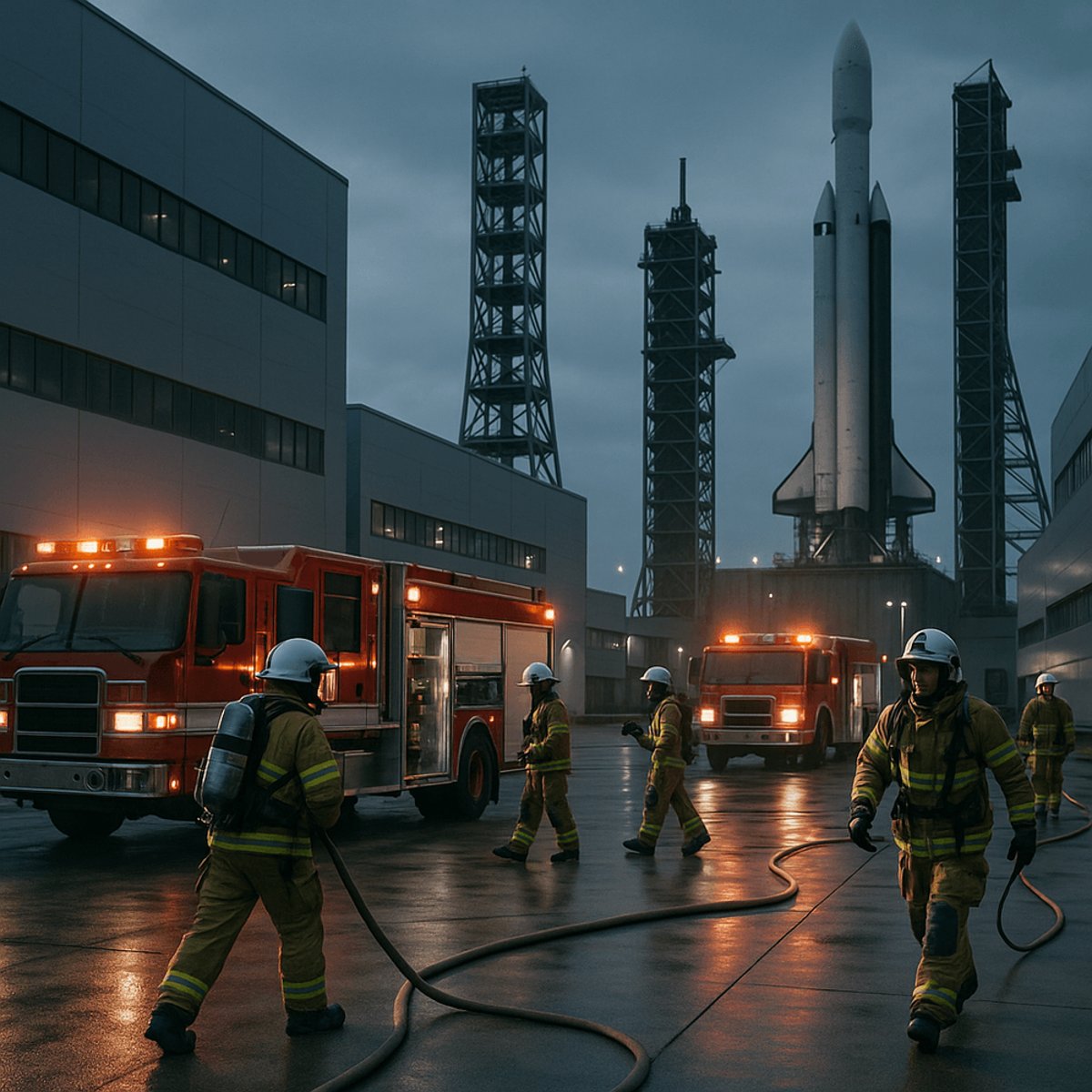
SpaceX is quietly building its own volunteer fire department at Starbase, marking another step in the company's quest for total control over its Texas launch complex. The move comes as the newly incorporated city shifts away from relying on county emergency services, raising questions about corporate governance in America's newest company town.
SpaceX is taking emergency response into its own hands at Starbase, establishing a volunteer fire department that puts the company in direct control of firefighting at its sprawling Texas rocket facility. The move represents the latest step in CEO Elon Musk's vision of corporate self-governance, extending far beyond rocket launches into the basic infrastructure of municipal services.
A certificate of formation filed with Texas on June 30 officially created the Starbase Volunteer Fire Department, with two of its three directors being SpaceX employees. Cody Dye, the company's environmental health and safety manager, and Kevin Bagnall, in-house counsel, now oversee an organization tasked with "fire prevention and suppression services" at the site where SpaceX regularly tests its massive Super Heavy boosters.
The timing isn't coincidental. This summer's filing came just months after Starbase gained official city status in Texas, and coincided with SpaceX ending its funding arrangement for a Cameron County fire marshal position. "There was a position that was being funded through an agreement for services with SpaceX. That contract is terminating," deputy county administrator Xavier Villarreal told commissioners during an August meeting, according to TechCrunch's reporting.
The shift reflects SpaceX's broader strategy of minimizing external oversight at a facility known for spectacular failures. In June, a malfunction during Super Heavy testing triggered a dramatic fireball visible for miles, flooding local dispatch with panicked calls from residents. Such incidents underscore why fire response capability matters at Starbase - and why SpaceX wants direct control.
What's emerging is a two-tier approach to municipal services that favors corporate control where possible. While Starbase contracts with Cameron County for policing at $1.3 million annually, it allocated just $60,000 for its volunteer fire department in fiscal 2026. The disparity suggests SpaceX itself covers most firefighting equipment and operational costs, maintaining tighter oversight over emergency response than law enforcement.
"But they can't hire police officers? Interesting," one county commissioner noted during discussions about SpaceX ending the fire marshal funding. The comment highlights local frustration with the company's selective approach to municipal partnerships.
Starbase has also appointed fire safety oversight to SAFEbuilt, a private vendor the city selected, rather than working with county officials. Cliff Nevins serves as fire marshal while Wade Cain handles building inspections, creating a closed loop where Starbase controls both emergency response and fire code compliance through company-chosen entities.
This corporate municipalization extends beyond emergency services. Starbase announced a deal in September to take partial control of the nearby beach from Cameron County, and installed gates in June to restrict public access to city streets. The volunteer fire department represents another piece in SpaceX's effort to create a fully controlled environment for its operations.
The approach differs markedly from traditional aerospace facilities, which typically rely on existing local emergency services and regulatory oversight. But then again, few aerospace companies have attempted to create their own incorporated cities. Starbase represents an unprecedented experiment in corporate governance, where a private company exercises municipal authority over territory it effectively controls.
For SpaceX, the volunteer fire department makes operational sense. The company's rapid prototyping philosophy means frequent testing of experimental hardware that sometimes fails spectacularly. Having dedicated, company-trained firefighters who understand the specific hazards of rocket fuel and pressurized systems could improve response times and effectiveness compared to relying on county departments less familiar with aerospace risks.
Yet questions remain about integration with broader emergency response systems. It's unclear whether the Starbase Volunteer Fire Department connects to the county's 911 dispatch system, and as a volunteer department, it operates outside the regulatory oversight of the Texas Commission on Fire Protection, which only governs municipal fire departments.
The development comes as SpaceX accelerates Starship testing toward eventual Mars missions. The company recently received approval for increased launch frequency and is expanding manufacturing capacity at Starbase. More activity means more potential for accidents - and more reasons why SpaceX wants firefighting capabilities tailored specifically to its operations rather than generic municipal services.
What's happening at Starbase could preview how other major corporations approach infrastructure as they expand beyond traditional business boundaries. When companies become large enough to effectively govern territory, the lines between corporate and municipal authority blur in ways that challenge conventional notions of democratic oversight and public accountability.
SpaceX's creation of its own fire department at Starbase represents more than just practical emergency planning - it's a blueprint for corporate self-governance that could reshape how major companies interact with local governments. As the space industry expands and more private facilities handle dangerous operations, the Starbase model of corporate municipalization may become the template for companies seeking maximum operational control. For residents and regulators, it raises fundamental questions about accountability when private corporations exercise public authority.