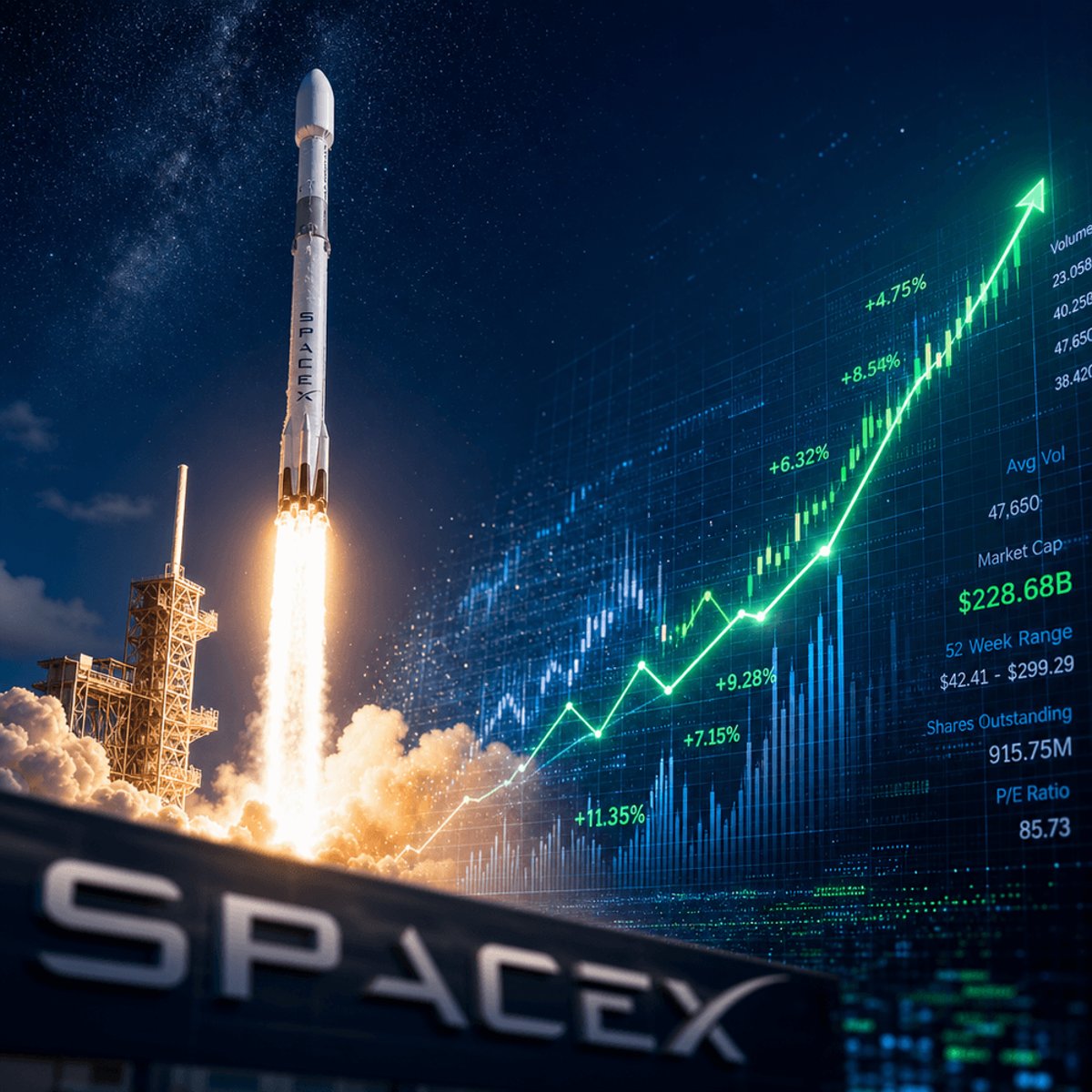
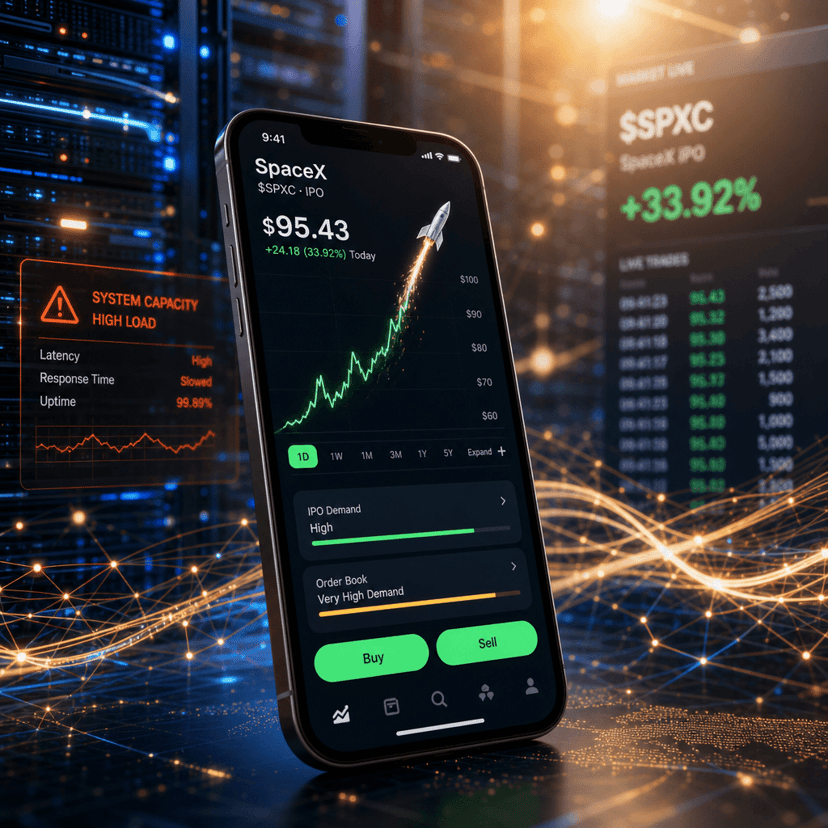
SpaceX just pulled off one of the most explosive stock market debuts in history. Shares of Elon Musk's rocket company soared 30% by midday Friday, catapulting the company into the ranks of the six most valuable U.S. companies and validating years of hype around commercial space. The surge from its $135 IPO price signals that investors are betting big on SpaceX's dominance in satellite launches, government contracts, and its ambitious Starship program.
SpaceX shares exploded out of the gate Friday, surging 30% by midday and instantly cementing the rocket maker's place among America's corporate giants. The stock opened well above its $135 IPO price and kept climbing, pushing the company's valuation past $200 billion and into rarified air alongside tech titans like Apple, Microsoft, and Nvidia.
The debut represents a massive payday for early backers and employees who've watched the company transform from a scrappy startup into the world's dominant launch provider. It also marks a personal triumph for Elon Musk, who now helms two publicly traded juggernauts after Tesla's own meteoric rise over the past decade.
Investors are clearly buying into SpaceX's stranglehold on the launch market. The company has captured roughly 60% of global commercial satellite launches and holds multi-billion dollar contracts with NASA and the U.S. Department of Defense. Its reusable Falcon 9 rockets have fundamentally changed the economics of getting to orbit, slashing launch costs and forcing competitors like United Launch Alliance and Blue Origin to scramble for alternatives.
But the real bet here is on Starship, SpaceX's fully reusable super heavy-lift vehicle that Musk envisions as the key to Mars colonization. The company has poured billions into developing the massive rocket, conducting multiple test flights over the past year with increasing success. If Starship reaches operational status, it could unlock entirely new markets from point-to-point Earth cargo delivery to lunar bases and deep space exploration.
The timing of the IPO comes as commercial space enters a new phase. Satellite internet constellations like SpaceX's own Starlink are becoming viable businesses, while NASA's Artemis program is funneling billions toward lunar infrastructure. Private space stations are in development, and asteroid mining ventures are attracting serious capital. SpaceX sits at the center of this ecosystem as the critical infrastructure provider.
Wall Street analysts had projected strong demand for the offering, but the 30% first-day pop suggests they underestimated investor appetite. The IPO was oversubscribed multiple times, with institutional investors and retail traders alike clamoring for shares. Some observers compared the frenzy to tech IPOs of the late 1990s, though SpaceX's actual revenue and profit margins are far more substantial than many of those dot-com darlings.
The company's financials, disclosed in its S-1 filing, revealed annual revenue approaching $15 billion with healthy profit margins driven by its launch services and Starlink subscriber growth. Unlike many space ventures that burn cash indefinitely, SpaceX has achieved sustainable profitability while still investing heavily in R&D.
Not everyone is convinced the valuation makes sense. Short-sellers have already begun circling, arguing that SpaceX's dominance could face pressure from emerging competitors in China and from well-funded rivals like Jeff Bezos's Blue Origin. Regulatory risks loom large too, particularly around Starlink's orbital debris concerns and the environmental reviews required for Starship launches from Texas.
The IPO also raises questions about Musk's ability to manage multiple public companies. He's already CEO of Tesla and owner of X (formerly Twitter), while running Neuralink and The Boring Company on the side. Critics wonder whether SpaceX will get the attention it needs, particularly as the company navigates the scrutiny that comes with being publicly traded.
For now, though, investors are voting with their wallets. The 30% surge puts SpaceX's market cap in the neighborhood of $210 billion, ahead of stalwarts like Berkshire Hathaway and Johnson & Johnson. That's a stunning achievement for a company that nearly went bankrupt in 2008 and had to beg investors for survival funding.
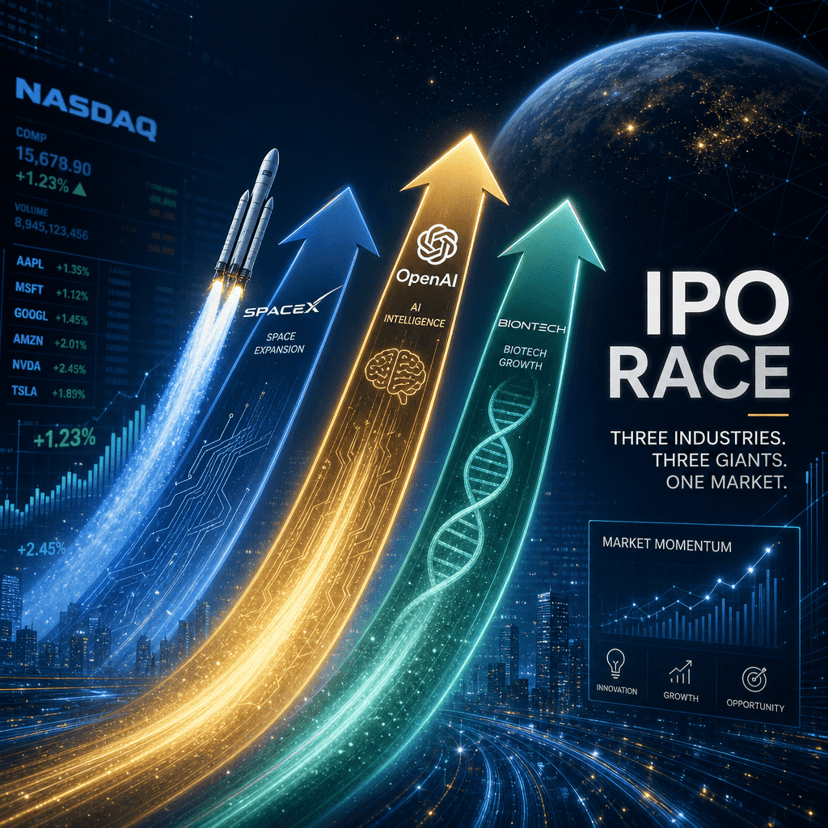
The debut also validates the broader thesis that space is becoming a legitimate investment sector. For years, venture capitalists poured money into space startups with little to show for it. SpaceX's public market success could open the floodgates for other space companies to follow, from rocket makers like Rocket Lab to satellite operators and lunar logistics providers.
Trading volume Friday was massive, with billions of dollars changing hands as momentum traders piled in alongside long-term institutional investors. Options markets showed heavy call buying, suggesting traders expect the rally to continue. But with the stock already up 30% from the IPO price, some strategists warned that a pullback could come quickly if early enthusiasm fades.
SpaceX's explosive IPO debut isn't just a win for Elon Musk or early investors - it's a signal that space has arrived as a serious sector for public market capital. The 30% surge validates the company's dominance in launch services while betting big on Starship's potential to unlock entirely new markets. But sustaining this valuation will require SpaceX to deliver on ambitious promises while navigating regulatory hurdles, emerging competition, and the scrutiny that comes with being one of America's most valuable companies. For investors, the question now isn't whether SpaceX can reach orbit - it's whether the stock can maintain its own trajectory.