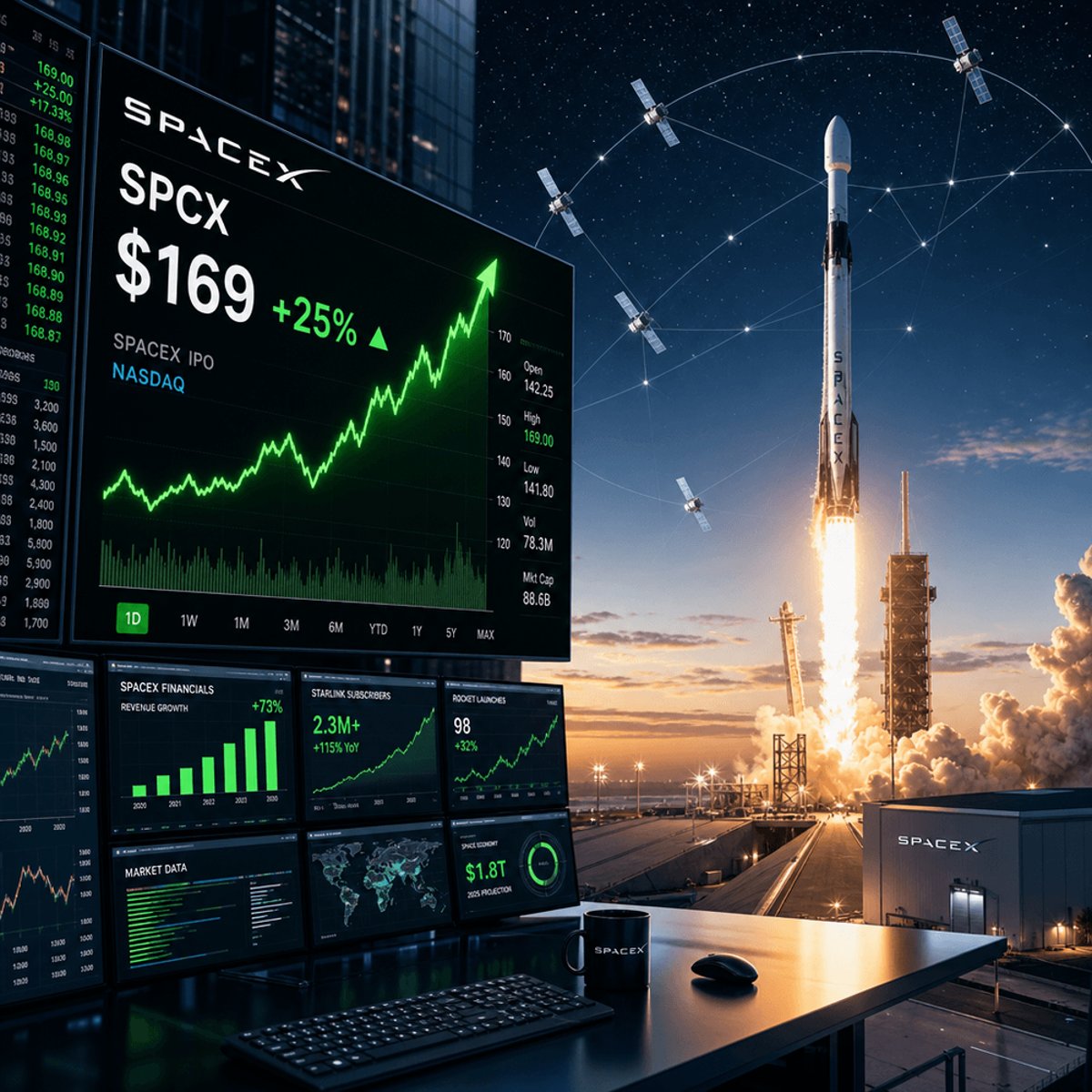
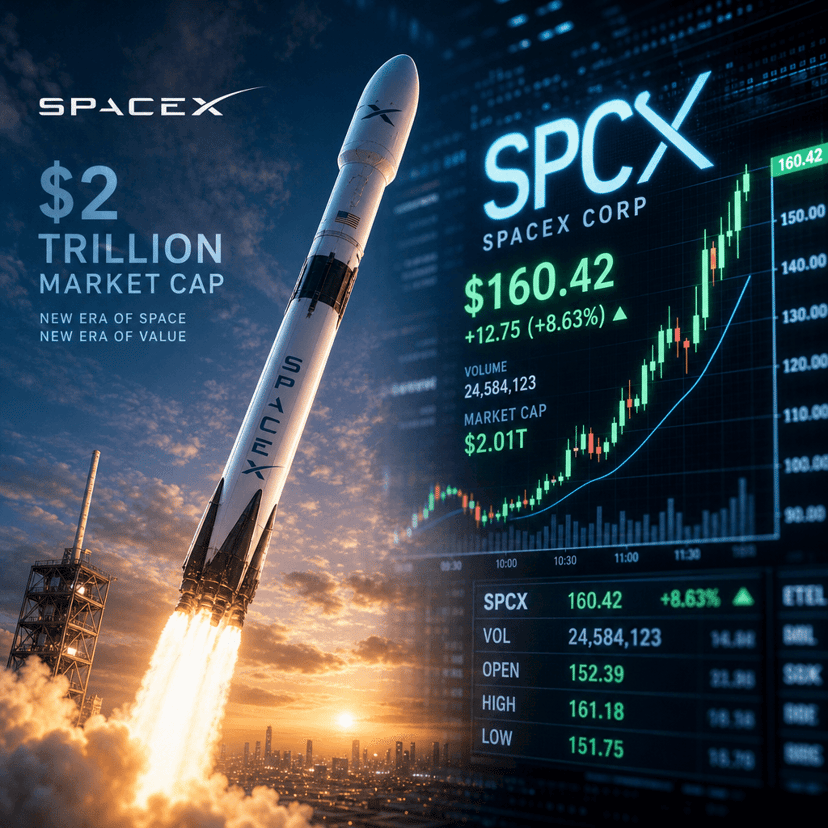
SpaceX shares are trading at around $169 in their first indications ahead of the official market open, marking a stunning 25% jump from the company's $135 IPO price set just yesterday. The rocket and satellite internet giant's public debut is shaping up to be one of the most anticipated market events of 2026, with investors scrambling for exposure to Elon Musk's space empire. The premium reflects overwhelming demand for what's become the world's most valuable private company before going public.
SpaceX is making a spectacular entrance to public markets. The company's shares are indicated to open around $169, a sharp 25% premium to the $135 IPO price that already valued Elon Musk's rocket venture at over $200 billion. According to live trading data from CNBC, the opening indication shows the kind of investor frenzy typically reserved for the hottest tech IPOs.
The surge reflects years of pent-up demand from investors who've watched SpaceX transform from an ambitious rocket startup into a sprawling space infrastructure company. While private market investors got in during earlier funding rounds, retail and institutional buyers have been locked out until now. That's changing today, and the market's responding with enthusiasm that's pushing the stock well above its already-ambitious pricing.
SpaceX priced its IPO at $135 per share yesterday, selling roughly 10% of the company to public investors while Musk retained majority control through a dual-class share structure. The pricing came at the high end of the expected range, but even that wasn't enough to satisfy demand. Underwriters had to turn away orders, and now those same buyers are chasing the stock in early trading.
The company's appeal isn't hard to understand. SpaceX dominates commercial space launch with its reusable Falcon 9 and Falcon Heavy rockets, capturing roughly 60% of the global market. But it's the Starlink satellite internet business that's really got investors excited. The constellation of over 5,000 satellites is generating billions in recurring revenue from subscribers worldwide, particularly in underserved rural markets where traditional broadband doesn't reach.
Wall Street analysts have been bullish heading into the debut. The dual revenue model provides unusual stability for a space company, with launch contracts offering steady cash flow while Starlink scales into what some project could become a $50 billion annual business by 2030. The company's also sitting on a backlog of launch contracts worth billions, including NASA missions and commercial satellite deployments.
But the $169 opening price isn't without risk. SpaceX faces mounting competition in both businesses. Amazon is building Project Kuiper, its own satellite internet network, while traditional aerospace giants and new startups are chipping away at launch market share. The company also burns cash developing Starship, its next-generation heavy-lift rocket that's critical to Musk's Mars ambitions but remains in testing.
Regulatory pressures are mounting too. The Federal Communications Commission has questioned some of Starlink's expansion plans, while international regulators are scrutinizing the company's satellite operations. Environmental groups have raised concerns about the impact of thousands of satellites on astronomy and space debris. These challenges could slow growth or increase costs.
Still, for today at least, investors are betting on Musk's track record of execution. The same entrepreneur who took Tesla from near-bankruptcy to the world's most valuable automaker is now bringing his space company public at a moment when it dominates its industry. The 25% first-day pop suggests the market thinks SpaceX's IPO was actually underpriced, despite the lofty valuation.
The trading debut is also a watershed for the space economy more broadly. While satellite operators and aerospace contractors have long been public, SpaceX represents the first pure-play space infrastructure company to hit major markets at this scale. Success here could open the door for other space startups to pursue public listings, potentially accelerating capital flows into the sector.
Brokers report heavy retail interest alongside institutional buying. Individual investors are particularly drawn to the Starlink story, seeing parallels to early internet infrastructure plays that generated massive returns. Options trading is expected to be heavy once contracts become available, with both bulls and bears positioning for volatility in the stock's first weeks of trading.
SpaceX's 25% opening pop validates the company's position as the dominant force in commercial space, but it also sets high expectations for execution. Investors are paying premium prices for exposure to both the launch business and Starlink's growth potential. The real test comes in the months ahead as the company reports quarterly earnings and demonstrates it can deliver on the ambitious projections that justify today's valuation. For now, the market's message is clear: investors believe Musk's space bet is worth the premium, and they're willing to chase the stock even after a substantial IPO pricing. Whether that enthusiasm holds will depend on SpaceX's ability to maintain its competitive edge while scaling both businesses simultaneously.