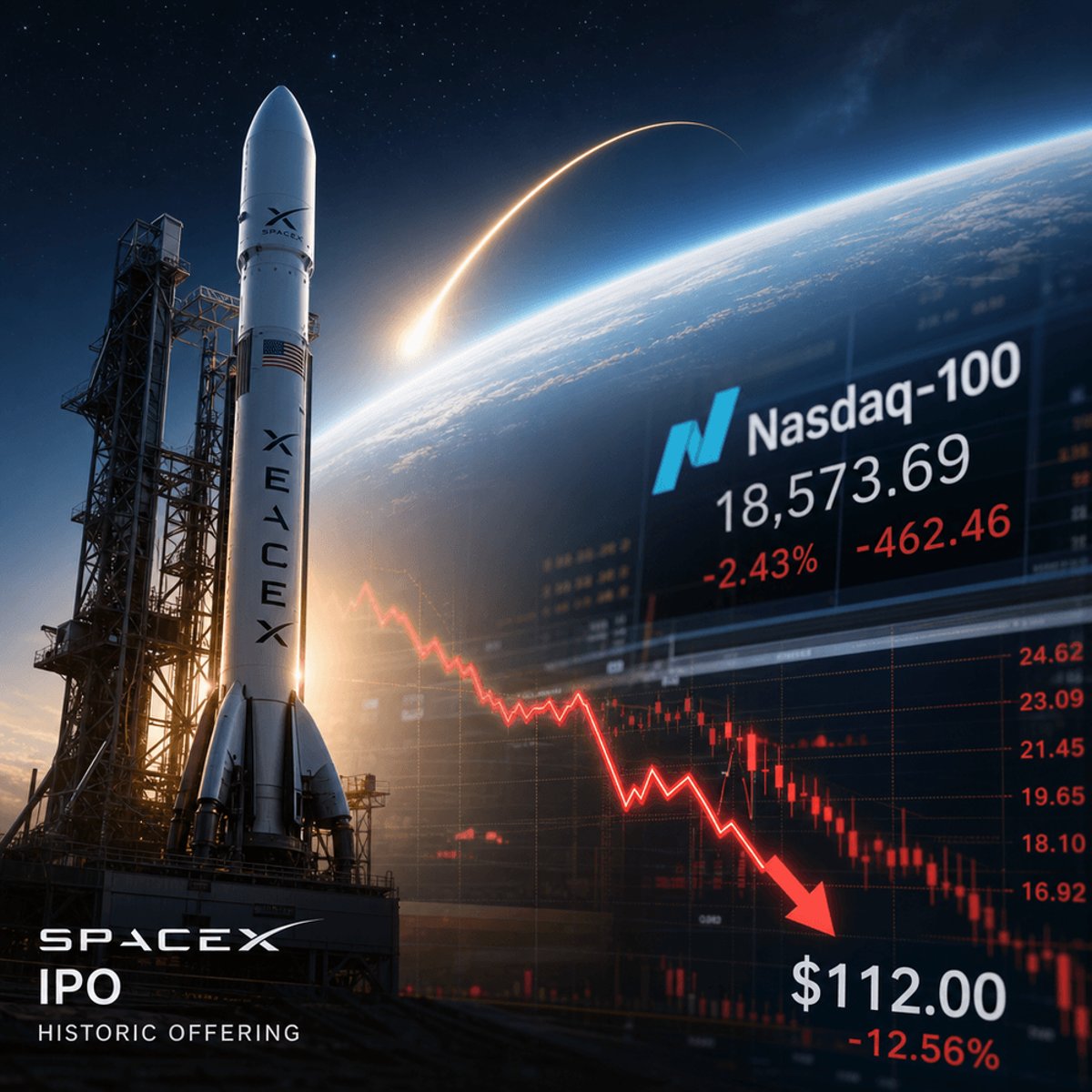
SpaceX's triumphant entrance to public markets is hitting turbulence. The rocket company's shares closed at $148 on Wednesday, sliding below its debut price in just two days of trading after completing the largest IPO in U.S. history. The $85.7 billion offering, which included the full greenshoe option exercised by underwriters, marked a watershed moment for the space industry - but early investors are already feeling gravity's pull.
SpaceX just proved that even rocket ships can fall back to Earth. Elon Musk's space transportation giant closed at $148 per share on Wednesday, dipping below its highly anticipated debut price after just two trading sessions. The stumble comes despite the company pulling off the largest IPO in American history, raising $85.7 billion after underwriters exercised their full greenshoe overallotment option.
The immediate selloff caught many by surprise. SpaceX entered public markets with unmatched credentials - a near-monopoly on commercial satellite launches, a thriving Starlink internet business, and NASA contracts stretching years into the future. Yet the stock's swift retreat below its offering price signals that even blue-chip space companies aren't immune to market skepticism about lofty valuations.
The timing of the decline is particularly notable given SpaceX's simultaneous inclusion in the Nasdaq-100 index. That designation typically brings a flood of institutional money from index funds required to hold constituent stocks. Instead, the two-day slide suggests active selling pressure is overwhelming passive buying, a rare dynamic for newly minted index members.
The $85.7 billion raise reshapes the IPO landscape entirely. According to Renaissance Capital, the previous U.S. record holder was Alibaba at $25 billion back in 2014. SpaceX's offering was more than three times that size, reflecting both the company's sprawling operations and the premium investors initially placed on owning a piece of humanity's multi-planetary future.
Underwriters exercising the full greenshoe option - an additional 15% of shares beyond the base offering - indicated strong initial demand. This overallotment mechanism lets banks sell extra shares if appetite exceeds expectations, then buy them back in the open market to stabilize the price. But that stabilization clearly hasn't materialized yet, with shares trading through the debut level despite potential support buying.
The aerospace and defense sector has been watching this IPO with intense interest. Boeing and Lockheed Martin have seen their space divisions lose ground to SpaceX's reusable rocket technology over the past decade. A successful public offering would have validated the new space economy's business models and potentially opened the IPO window for competitors like Blue Origin and Rocket Lab.
Instead, the early price action raises questions about whether public market investors truly understand - or believe in - the unit economics of space transportation. SpaceX's Starship development costs remain substantial, and while Starlink shows promise, it's burning cash to build out its satellite constellation. The company's path to profitability at public market expectations remains unproven.
Market analysts point to broader headwinds beyond SpaceX's fundamentals. Tech IPOs have faced a brutal reception over the past year, with many recent offerings trading below their debut prices within weeks. The Nasdaq-100's own volatility hasn't helped, with the index swinging on mixed economic data and Federal Reserve policy speculation.
What happens next will set the tone for the entire commercial space sector. If SpaceX can stabilize and climb back above its offering price, it proves the public markets are ready to fund the final frontier. If the slide continues, it suggests space companies may need to stay private longer - or accept more modest valuations when they do go public. Either way, these first few trading days are writing the playbook for space IPOs for years to come.
SpaceX's rocky start as a public company isn't just about one stock's performance - it's a litmus test for whether Wall Street can stomach the capital-intensive, long-term bets required to build a space economy. The next few weeks of trading will determine if this is just normal post-IPO volatility or a fundamental repricing of space sector ambitions. For Elon Musk, who's navigated Tesla through years of public market drama, it's familiar territory. For the dozens of space startups watching from the sidelines, it's a cautionary tale about the gap between private market hype and public market reality.