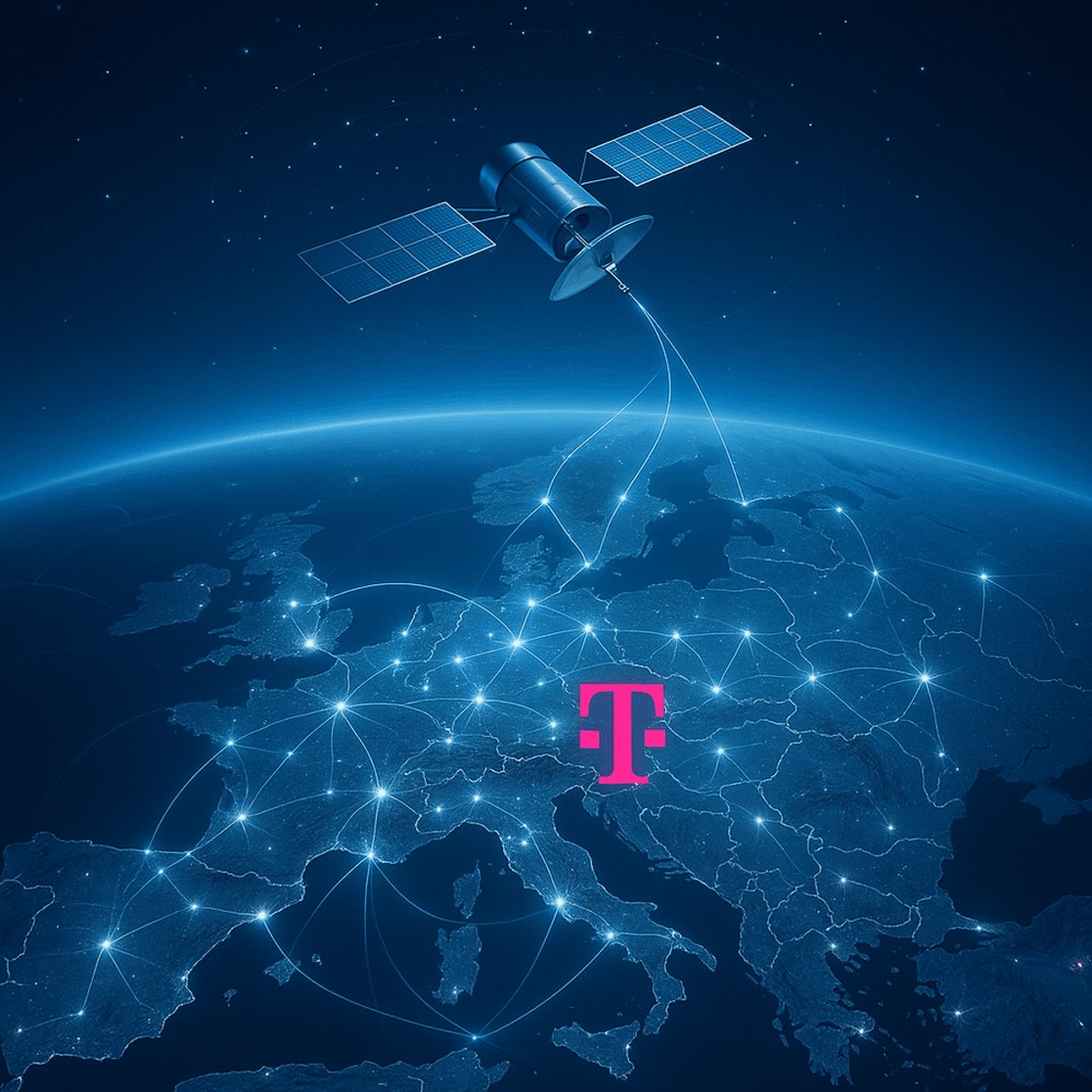
Starlink just locked in its first major European telco partner. The SpaceX satellite internet division announced a partnership with Deutsche Telekom to bring direct-to-cell service across Europe by 2028, marking a significant push into the continent's mobile market. The timing is strategic - SpaceX is gearing up for an IPO, and this deal could help justify a massive valuation by proving Starlink can crack traditional telecom partnerships.
Starlink is making its boldest move yet into mainstream telecommunications. The satellite internet provider announced it's teaming up with Deutsche Telekom, Europe's largest telco by revenue, to launch direct-to-cell service across the continent by 2028. The partnership marks a turning point for SpaceX as it transitions from niche satellite broadband to competing directly with established mobile carriers.
The deal's timing isn't coincidental. SpaceX has been quietly preparing for an IPO, and partnerships like this one help demonstrate that Starlink isn't just a consumer broadband play - it's infrastructure that traditional telcos need. Deutsche Telekom operates networks across Germany, Poland, Austria, the Netherlands, and beyond, serving more than 220 million mobile customers. That's instant distribution for Starlink's satellite-to-phone technology without the regulatory headaches of going it alone in Europe's fragmented telecom market.
Deutsche Telekom has been watching the satellite-to-smartphone space heat up. AST SpaceMobile already inked deals with AT&T and Verizon in the U.S., while Amazon's Project Kuiper is racing to launch its own constellation. By partnering with Starlink, Deutsche Telekom gets access to SpaceX's proven track record - the company already has more than 5,000 satellites in orbit and has been testing direct-to-cell capabilities with T-Mobile in the United States since 2023.
The 2028 launch timeline gives SpaceX room to deploy its next-generation satellites with enhanced cellular capabilities. Current Starlink satellites can provide basic text messaging to standard smartphones, but the company has been developing larger satellites with more powerful antennas to support voice calls and eventually data services. These upgraded satellites are expected to start launching in 2027, setting the stage for the Deutsche Telekom rollout.
For European consumers, the partnership promises connectivity in areas where traditional cell towers don't reach - remote valleys in the Alps, rural farmland across France and Spain, and maritime coverage in the North Sea and Mediterranean. Deutsche Telekom has struggled with the economics of building towers in these low-density areas. Starlink's satellites could fill those gaps without requiring ground infrastructure.
The competitive implications run deep. Apple already offers emergency satellite messaging through Globalstar on its iPhone lineup, setting user expectations that phones should work anywhere. Vodafone has been exploring its own satellite partnerships, while Orange and Telefónica are watching closely. If Deutsche Telekom's deployment succeeds, every major European carrier will face pressure to match the capability.
SpaceX's IPO preparations add another dimension. The company was valued at $210 billion in its last private funding round, making it one of the world's most valuable startups. But going public requires proving sustainable business models beyond NASA contracts and Starship development. Starlink represents SpaceX's best path to recurring revenue, and enterprise partnerships with companies like Deutsche Telekom demonstrate that telcos will pay for access to the constellation rather than compete against it.
The announcement also signals how satellite internet is evolving from a backup solution to core infrastructure. When Starlink launched in 2020, it primarily targeted rural customers who lacked broadband alternatives. Now it's positioning itself as wholesale infrastructure that existing carriers can white-label to their subscribers. That's a much larger addressable market - and one that investors understand.
Regulatory approval across the European Union will be the next hurdle. Satellite spectrum coordination is complex, and the EU has been cautious about allowing non-European companies to dominate critical infrastructure. But Deutsche Telekom's involvement as a local partner could smooth the path. The telco has deep relationships with regulators across the continent and understands how to navigate the EU's various national telecom authorities.
What happens in 2028 will determine whether satellite-to-cell becomes standard or remains a premium feature. If Deutsche Telekom's deployment works seamlessly and customers actually use the service in meaningful numbers, the entire telecom industry will need to rethink network architecture. If technical limitations or high costs keep it niche, traditional tower-based networks will remain dominant for another decade.
This partnership is about more than filling coverage gaps in the Alps. It's SpaceX proving that Starlink can become essential infrastructure for the telecom industry rather than just a competitor to it. With Deutsche Telekom's 220 million customers as the proving ground and an IPO on the horizon, the 2028 launch timeline suddenly looks less like a distant promise and more like a deadline that could reshape how Europeans think about mobile connectivity. Every other carrier in Europe is now on the clock to figure out their own satellite strategy.