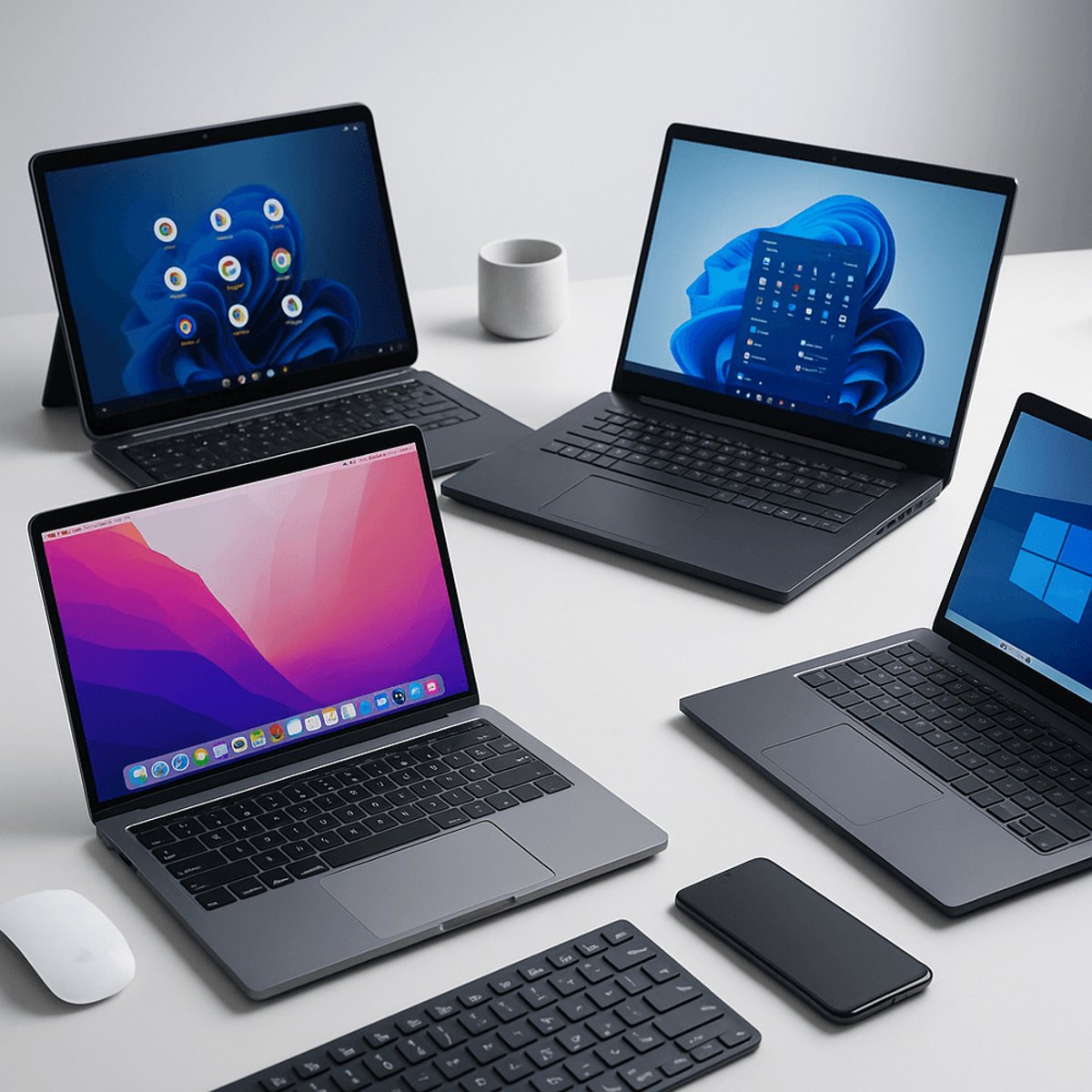
WIRED just dropped its updated 2025 laptop buying guide, and the landscape looks dramatically different than even a year ago. The comprehensive roundup of 16 top machines reveals a three-way CPU war that's reshaping what we expect from portable computing, with battery life becoming the new battleground that matters most to buyers.
The laptop market just got a major reality check. WIRED's latest comprehensive buying guide reveals an industry in the middle of a fundamental shift, where the old Intel-dominated order is facing serious challenges from both Apple's M-series silicon and Qualcomm's surprise ARM uprising.
Luke Larsen, who's been reviewing laptops for a decade, doesn't mince words about what's happening. "All three companies have good options but it really depends on the type of laptop," he writes, but the data tells a more dramatic story. Qualcomm made what he calls "a huge entrance in 2024" with Snapdragon X chips that emphasize efficiency over raw power - and it's working.
The numbers back up this tectonic shift. According to Mordor Intelligence market data, the average laptop purchase now sits at $750, landing squarely in midrange territory. But that's just the starting point for what's become a three-tier market that's forcing buyers to make harder choices than ever.
Apple continues to set the premium standard with its M4-powered MacBook Air, now starting with 16GB of RAM as the new baseline. But the real surprise is how Microsoft's Surface Laptop with Qualcomm chips has earned a spot as WIRED's third-best overall pick, beating out traditional Intel machines on battery life alone.
"These ARM-based chips, like Apple's M-series chips, emphasize efficiency, which drastically improves battery life," Larsen explains. "This has been a game-changer for Windows laptops across a wide range of price points." The Snapdragon X Elite delivers flagship performance while the base Snapdragon X shows up in budget machines, creating an efficiency advantage that Intel is scrambling to match.
Intel isn't going down without a fight, despite what Larsen diplomatically calls the company's "financial woes." The Core Ultra Series 2 chips, particularly the Lunar Lake V-series, represent Intel's strongest battery life response yet. "The company put out a surprisingly strong release," he notes, though admits Intel's chip lineup has become "convoluted and horribly confusing" with three different architectures released in the past year.
The gaming laptop space tells its own story of disruption. AMD has carved out dominance with its Ryzen 9 9950X3D and 9900X3D processors described as "the most powerful gaming hardware you'll find on a laptop." Meanwhile, Nvidia's RTX 50-series GPUs, including the new RTX 5090, are pushing gaming performance to new heights - but at a cost that makes $1,500 the minimum serious gaming budget.
What emerges from WIRED's testing methodology is a clear picture of market fragmentation. The publication puts every laptop through what Larsen calls "a gauntlet of tests," including over 20 synthetic benchmarks and real-world usage across days or weeks. Their approach reveals compromises that spec sheets hide - like budget laptops under $700 consistently failing on display quality and touchpad precision.
The Chromebook category deserves special attention in this landscape. Lenovo's Chromebook Plus 14 with MediaTek's Kompanio Ultra processor earned a top-six spot, showing how ARM-based efficiency translates beyond traditional Windows and Mac categories. These machines now regularly hit 8-10 hour battery life marks while costing under $500.
Brand dynamics are shifting too. Lenovo maintains its position as the world's largest PC maker by global shipments, while Asus has "quickly become a favorite" for its aggressive innovation pace. Dell and HP both executed major rebranding strategies - HP introducing "Omnibook" to replace Spectre and Envy lines, while Dell completely removed sub-brand names like Inspiron and XPS.
The guide's most telling insight might be its warning about what to avoid. "Amazon is filled with laptops you shouldn't buy," Larsen writes, specifically calling out Windows machines under $500 that use "CPUs from three or four generations ago." The recommendation reflects a market where the floor for acceptable performance keeps rising, even as chip efficiency improvements create new value categories.
For buyers navigating this complexity, WIRED's core advice remains unchanged: 16GB of RAM has become the new standard, discrete Nvidia graphics remain essential for gaming, and battery life expectations now routinely exceed 10 hours for productivity machines. The difference is that achieving these benchmarks now requires choosing between three viable processor ecosystems rather than just picking between Intel and AMD.
The implications extend beyond individual purchase decisions. This three-way competition is forcing laptop makers to optimize for different strengths - battery life, raw performance, or cost efficiency - rather than trying to excel at everything. That means buyers need clearer priorities than ever, but also have more genuinely differentiated options once they know what matters most.
WIRED's updated laptop guide captures an industry at an inflection point where the old Intel monopoly has fractured into a genuine three-way race. For consumers, this means better battery life and more specialized options, but also more complex decisions about which chip ecosystem aligns with their priorities. The $750 average spending point reflects a market where good enough has gotten genuinely good, while premium experiences require clearer tradeoffs between performance, efficiency, and price than ever before.