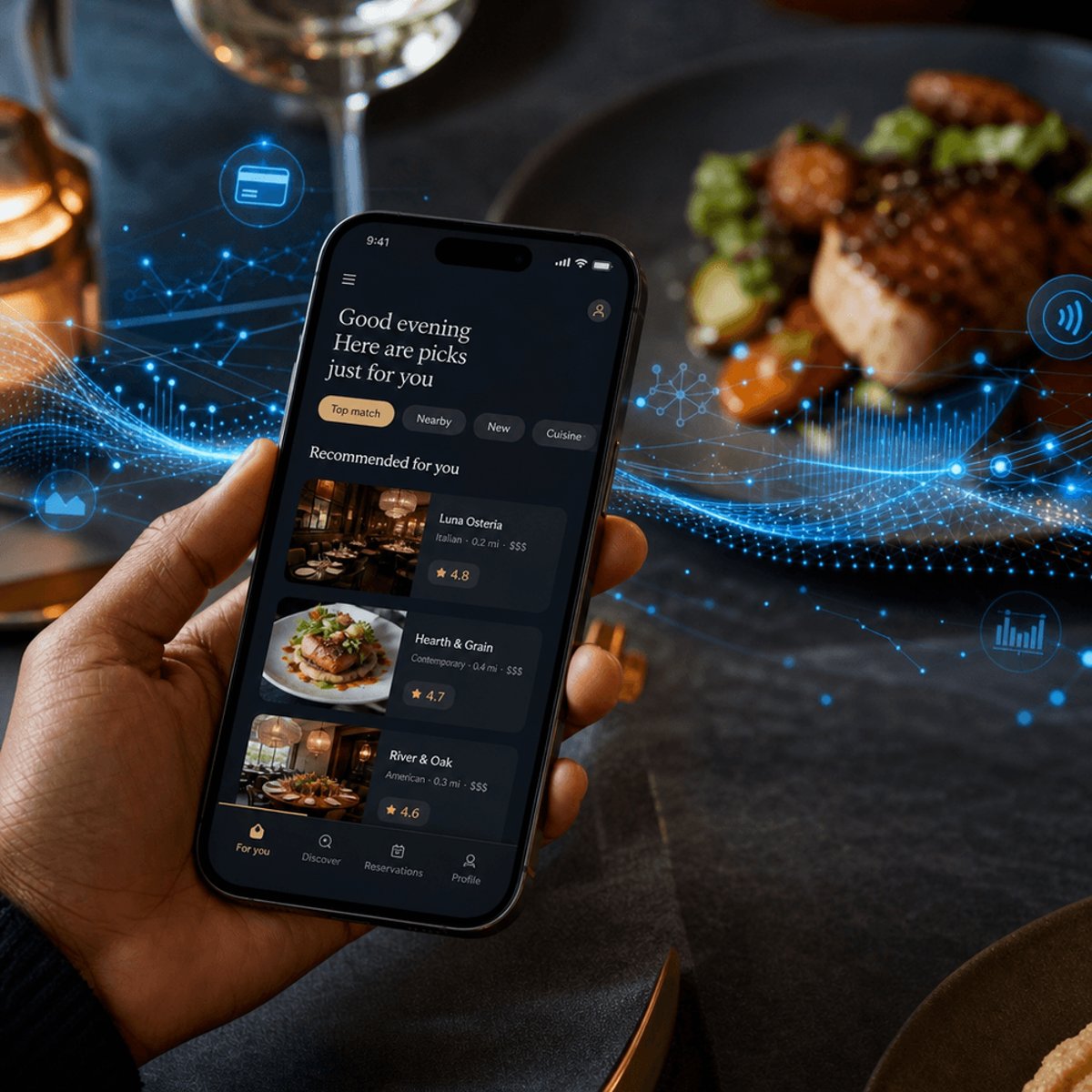
A new restaurant discovery app is ditching the Yelp playbook entirely. Zest, which just launched with backing from Alexis Ohanian's 776 and Kindred Ventures, taps into users' actual transaction data to surface restaurant recommendations based on where people really eat, not just where they say they like. It's a bet that your credit card statement tells a more honest story than any five-star review ever could.
The restaurant recommendation game just got a major shakeup. Zest is launching today with a fundamentally different approach to helping people find their next meal - one that tracks where you actually spend money, not where you claim to love eating.
Backed by Alexis Ohanian's 776 and Kindred Ventures, the startup is betting that transaction data tells a more accurate story than any review site ever could. According to TechCrunch, the app uses AI to generate personalized restaurant recommendations by analyzing users' real dining patterns and the places they frequent.
It's a pointed challenge to the Yelp and Google Maps model that's dominated restaurant discovery for years. Those platforms built empires on crowdsourced reviews and star ratings, but they've also struggled with fake reviews, review bombing, and the classic problem of people who write glowing five-star reviews for places they visited once versus the neighborhood spot they hit three times a week but never bothered to review.
Zest flips that equation. By connecting to users' financial accounts - likely through services like Plaid - the app can see exactly where someone actually eats, how often they return, and how much they typically spend. That behavioral data becomes the foundation for recommendations, with AI models processing patterns to suggest new spots that align with proven preferences rather than stated ones.
The timing is notable. Consumer fintech apps have been pushing deeper into lifestyle recommendations for years, with companies like Mint and newer players surfacing spending insights. But Zest appears to be making the financial data the core feature rather than an add-on, essentially building a social dining discovery platform on top of transaction infrastructure.
There's obvious privacy considerations here. Users need to grant access to their financial data, which remains a significant friction point despite the success of budgeting apps and neobanks. But for those willing to share, the value proposition is clear: recommendations based on what you actually do, not what algorithms think you might like based on demographic guessing.
The 776 and Kindred backing adds credibility. Ohanian, who co-founded Reddit before building 776, has focused his fund on consumer social applications that reimagine existing categories. Kindred has backed companies like Uber and Coinbase, showing appetite for platforms that scale through network effects.
What remains unclear is how Zest plans to monetize. Traditional restaurant discovery apps lean on advertising from restaurants trying to boost visibility, or reservation fees through integrations with platforms like OpenTable. Transaction data opens different doors - potentially affiliate relationships with payment processors, premium subscription tiers, or even helping restaurants identify and target their most frequent diners.
The competitive landscape is crowded but fragmented. Instagram has become the de facto restaurant discovery tool for younger users, while TikTok drives viral restaurant trends. Legacy players like Yelp maintain strong local search positioning, and Google Maps benefits from universal distribution. Breaking through that noise with a new standalone app is notoriously difficult.
But if Zest can prove that transaction-based recommendations actually work better than the alternatives, it could carve out a meaningful niche. The app essentially functions as proof of concept for a larger idea: that financial data, properly analyzed, can power better consumer experiences across categories. Restaurants are just the starting point.
Zest is making a bold bet that your wallet knows your taste better than your words ever could. By anchoring restaurant discovery in actual spending behavior rather than aspirational reviews, the startup is testing whether transaction data can become the foundation for a new generation of lifestyle apps. The 776 and Kindred backing suggests investors see potential beyond just restaurant recommendations - this could be a template for reimagining discovery across shopping, entertainment, and travel. The question now is whether enough users will trade privacy for personalization, and whether those recommendations actually deliver enough value to build lasting habits in an already crowded market.