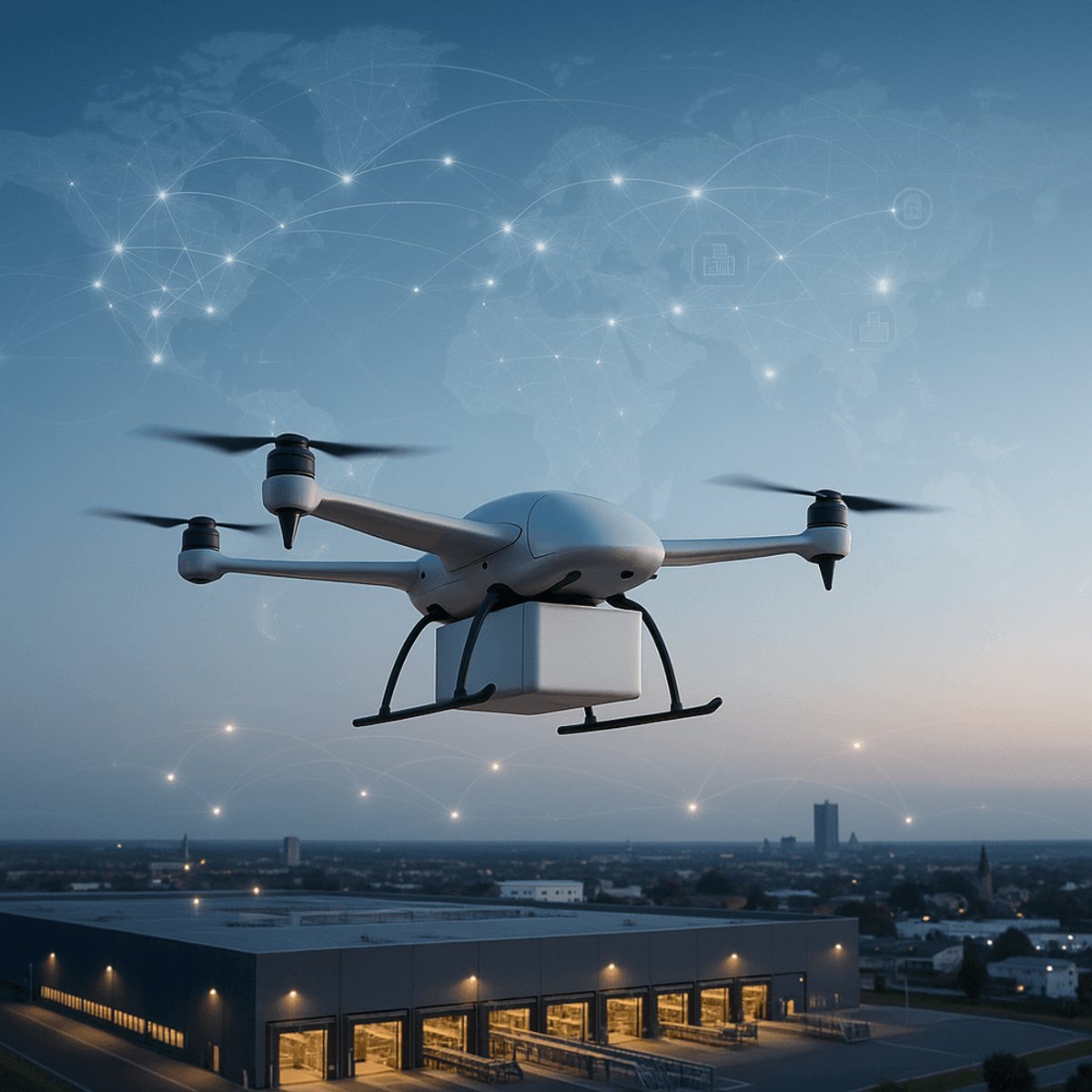
Drone delivery pioneer Zipline just closed another $200 million in funding, extending a round that now values the autonomous delivery startup at $7.6 billion. The fresh capital comes barely two months after the company's January raise, signaling aggressive investor appetite for last-mile drone logistics as the sector races toward mainstream adoption. It's a striking vote of confidence in autonomous delivery tech as traditional logistics players scramble to compete.
Zipline just pulled in another $200 million, extending a funding round that now pegs the drone delivery startup at a $7.6 billion valuation. The capital injection comes barely 10 weeks after the company's January raise, a timeline that suggests either explosive growth metrics or an urgent need to outpace competitors in the rapidly maturing autonomous delivery space.
The quick turnaround between funding tranches isn't common outside of hypergrowth scenarios. When companies return to the market this fast, it usually means one of two things: the business is scaling faster than projected, or the competitive landscape is heating up enough to justify aggressive expansion. Given Zipline's operational footprint across multiple continents and its recent push into retail delivery, both factors are likely at play.
Drone delivery has evolved from experimental novelty to legitimate logistics infrastructure over the past few years. Zipline started with medical supply delivery in Rwanda back in 2016, but the company's ambitions have expanded dramatically. The startup now operates delivery networks spanning healthcare, retail, and food services, with active operations in the U.S., Rwanda, Ghana, Kenya, and Japan.
The $7.6 billion valuation puts Zipline in rarified air among logistics-focused startups. For context, that's more than double the valuation of most last-mile delivery competitors and signals that investors see autonomous drones as a genuine disruptor to traditional delivery models. The company's approach - fixed routes, automated loading, and precision drop systems - has proven more scalable than earlier attempts at drone delivery that relied on human pilots or required landing zones.
What makes this funding particularly notable is the timing. Traditional logistics companies are currently grappling with labor shortages and rising fuel costs, creating an opening for automated alternatives. Amazon has been testing its Prime Air drone program for years but hasn't achieved the scale that Zipline now operates at. Wing, Alphabet's drone delivery subsidiary, has also made progress but focuses primarily on suburban markets rather than the mix of urban and remote deployments that Zipline tackles.
The capital will likely accelerate Zipline's expansion in the U.S. market, where regulatory approval has traditionally moved slower than in African nations where the company first proved its model. The Federal Aviation Administration has been gradually loosening restrictions on autonomous drone operations, and Zipline has positioned itself to capitalize on those regulatory shifts.
From a unit economics perspective, drone delivery starts making serious sense once network density reaches critical mass. The fixed costs of drone infrastructure and automated distribution centers get spread across more deliveries, while traditional delivery services see marginal costs increase with each additional drop. Zipline's bet is that this funding will help it hit that density threshold in enough markets to make the model unassailable.
The competitive pressure isn't just coming from other drone startups. Traditional players like UPS and FedEx are exploring autonomous delivery options, while e-commerce giants are building their own logistics networks. Zipline's advantage lies in its head start and operational experience, but maintaining that lead requires the kind of aggressive scaling that $200 million can fund.
Investors backing this extension clearly believe the drone delivery market is approaching an inflection point. The technology works, the regulatory environment is improving, and the economic case gets stronger as fuel costs rise and labor becomes scarcer. Whether Zipline can convert this capital into insurmountable network effects before competitors catch up will define the next chapter of autonomous logistics.
Zipline's rapid-fire $200 million extension isn't just about having more runway - it's a signal that the drone delivery market is entering a land-grab phase where scale matters more than patience. The $7.6 billion valuation reflects investor belief that autonomous logistics will reshape last-mile delivery, but it also raises the stakes. The company now needs to prove it can convert capital into market dominance before traditional logistics giants and well-funded competitors close the gap. For an industry that's been promising disruption for a decade, this might finally be the moment when drones move from novelty to necessity.