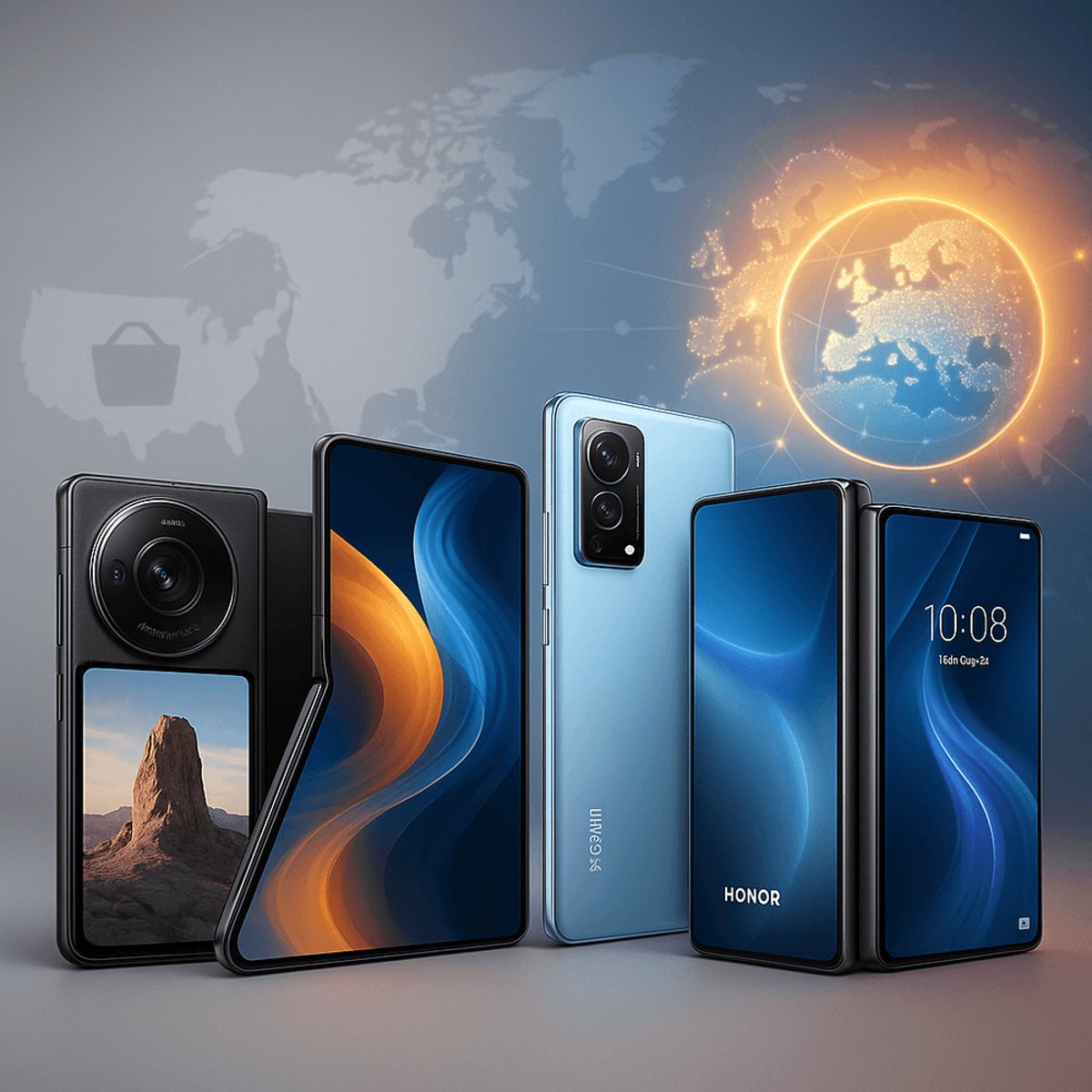
The smartphone market in the US has become predictable. If you're willing to import, Europe and Asia are selling feature-packed flagships the US carriers decided weren't worth bringing over. Wired tested some of the best ones you're actually missing, from foldables to ultra-zoom cameras.
Walk into any US carrier store and you'll find the same four or five flagship phones everyone else has. Meanwhile, in Europe and Asia, manufacturers are pushing designs that never make it stateside - foldables with second screens, 200-megapixel zoom lenses, and silicon-carbon batteries that keep phones running for two days straight.
Wired's Simon Hill spent time with over a dozen phones that prove what we're missing. The standouts show real innovation beyond the incremental camera tweaks and processor bumps Americans have resigned themselves to.
Take the Oppo Find X9 Pro. Its 200-megapixel telephoto lens handles 3X optical zoom cleanly, and 6X zoom by cropping to 50 megapixels keeps shots sharp. But the real trick is the detachable Hasselblad Teleconverter Kit - this enormous lens clips onto the case and adds another 3.28X zoom. It's awkward without a tripod, sure, but for photographers, it's the kind of creative freedom US flagships abandoned years ago. At £1,099, it's pricey, but it's also packed with an IP66/IP68/IP69 rating and a 7,500-mAh battery that's good for two days.
The Xiaomi 17 Pro Max takes a different approach to innovation - a second, smaller screen on the back that surrounds the camera lenses. Xiaomi loaded it with playful tricks: selfie preview with the main camera, music controls, customizable themes, even a retro gaming case for Angry Birds. It's frivolous until you realize it actually changes how you interact with the phone. The 17 Pro Max is a specs beast with flagship internals, but it's stuck in China so far.
For Americans wanting a taste without the import headaches, the Poco F7 Ultra (£569) feels like a cheat code. It pairs the Snapdragon 8 Elite with a high-res 6.67-inch display and 120Hz refresh rate. There's wireless charging up to 50 watts, an IP68 rating, and Xiaomi's promising four Android upgrades plus six years of security patches - longer than most US phones. The catch is bloatware and the price bump from previous Poco generations, but it's still half what you'd pay for an Apple or Samsung flagship.
Budget hunters should look at the Xiaomi Poco X7 Pro (£349). It delivers a gorgeous 6.67-inch OLED display, snappy performance, solid 50-megapixel main camera, and IP68 water resistance. Battery life is genuinely impressive. It won't blow anyone away, but at that price with those specs, it's genuinely hard to beat.
The most ambitious phone here is the Oppo Find N5 - at 3.6mm thick when open, it's the world's slimmest foldable. The 6.62-inch cover screen and 8.12-inch inner display are both excellent, and it's loaded with Snapdragon 8 Elite, 16GB RAM, and 512GB storage. Wireless charging hits 50 watts. The camera is the obvious compromise for the form factor, and the software has some quirks, but it represents where phones are heading - if you're willing to import at $1,429.
Not every international phone is a slam dunk. The Honor Magic 7 Pro ($1,021 or £849) has an excellent design and solid triple-lens camera, but that big camera cutout on the front looks dated, and the ultrawide struggles. The Motorola Edge 50 Pro has a compact design and nice display, but lacks processing power and only has a couple Android upgrades left. The Nothing Phone 3a Lite trades on translucent hardware appeal, but the camera disappoints and bloatware kills the vibe.
What ties these phones together - the good ones anyway - is commitment to longevity and features that actually matter. Most offer IP68 or better water resistance. Many promise 5-7 years of updates. The batteries use newer silicon-carbon chemistry for better stamina. These aren't revolutionary phones, but they represent what's possible when companies compete on substance instead of just iterating on last year's design.
The US smartphone market has become comfortably predictable, with the same manufacturers releasing minor variations of last year's phones. But scroll through European and Asian retailers, and you'll find phones with genuinely different ideas - second screens for creativity, modular camera systems for photographers, foldables that are actually slim enough to pocket. Yes, importing means dealing with bloatware, occasional software quirks, and no carrier support. But for anyone frustrated that innovation stopped at "bigger camera" and "thinner bezels," these phones prove there's a whole world of smartphone ambition happening everywhere but here.