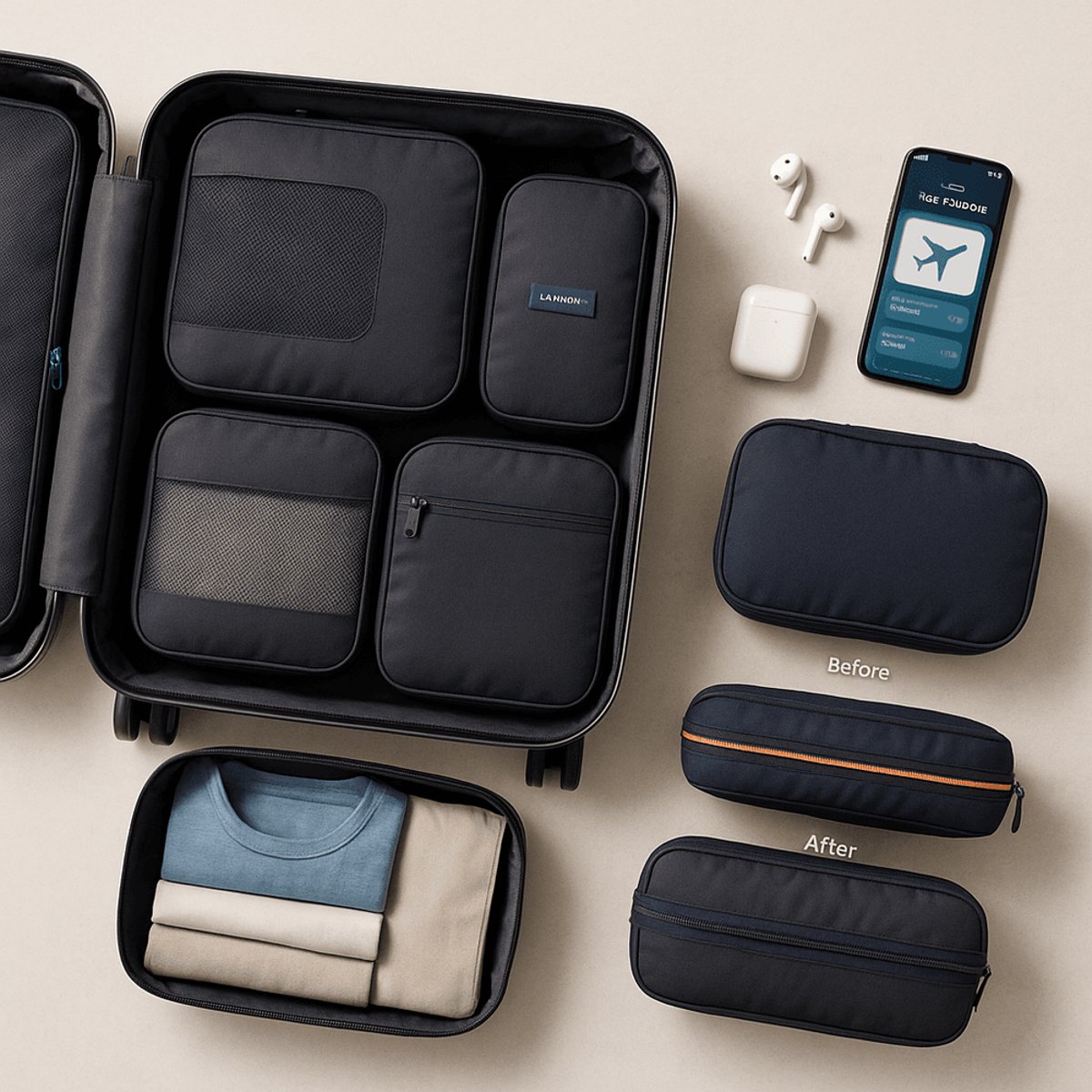
Travel organization just got a major upgrade. WIRED's comprehensive testing of over 20 packing cube brands reveals which travel accessories actually deliver on their promises, from compression tech to smart labeling systems that are changing how we pack.
The humble packing cube is getting a tech makeover. WIRED's latest buying guide reveals how travel organization accessories are incorporating smart features that go way beyond basic zippered pouches.
Béis is leading the charge with their $68 packing cube system that includes interchangeable label window inserts. The branded mesh-window cubes come with practical labels like "bras" and "pajamas" alongside playful options like "proceed with caution" and "so fresh & so clean." It's not just Instagram-friendly - the labeling system actually solves the problem of identical-looking cubes, according to WIRED's testing.
But the real innovation is happening in compression technology. Eagle Creek's Pack-It Reveal Garment Folder ditches traditional zippers entirely, using an envelope-style design with adjustable Velcro closures and an included folding board. WIRED's reviewer kept button-up shirts wrinkle-free for two weeks using the system.
The vacuum compression space is heating up too. Ekster's $89 Vacuum Travel Kit includes a portable travel pump and maintains IPX7 waterproof rating throughout the compression cycle. While space savings didn't match expectations compared to traditional cubes, the waterproof seal held up during overnight testing.
Meanwhile, luggage manufacturers are building packing cube integration directly into their designs. Travelpro's VersaPack+ Carry-On comes with built-in 9" x 2" packing cubes on a removable divider system, plus compression straps in the main compartment. The $323 expandable spinner represents a shift toward modular travel systems.
Royce & Rocket takes integration even further with their Castle suitcase series. What looks like a standard hard-shell case opens to reveal fold-down shelves sized specifically for packing cubes. The $630 system comes with matching compression cubes, though WIRED notes the shelf hardware adds significant weight - nearly hitting airline limits even with minimal packing.
Amazon's house brands are also stepping up quality. WIRED found Amazon Essentials' $24 four-pack comparable to brands costing four times as much, featuring sturdy mesh windows and ripstop-like fabric. However, Bagsmart cubes edged them out for durability at an even lower price point.
The testing revealed some surprising insights about materials and construction. Shacke Pak claims YKK zippers on their $29 eight-piece set, but WIRED's teardown couldn't locate YKK branding. Meanwhile, premium options like Dagne Dover's Roma cubes justify their $12-30 per cube pricing with wire-reinforced edges that maintain shape and prevent clothing compression.
Sustainability is becoming a factor too. Eagle Creek uses recycled polyester in their compression designs, while Rux's $126 bundle features ultra-high-molecular-weight polyethylene gridstop that's both durable and designed for their modular storage ecosystem.
The buying guide also highlights emerging travel tech accessories. WanderFull's $59 HydroBag represents the crossover between fashion and function, while Dosey's $26 pill compact brings vintage aesthetics to modern travel organization with its seven-day compartment system.
WIRED's testing methodology involved seven months of real-world use, including airport stress tests and family travel scenarios. The compression test involved fitting bulky sweatshirts and sweatpants into the largest cubes from each set, while durability testing included multiple wash cycles and rough handling simulations.
The verdict? While basic ziplock bags cost $5 for a box, packing cubes offer three key advantages: breathability (crucial for dirty laundry), durability (no rips or tears), and compression capability that plastic bags simply can't match. The best options combine these functional benefits with smart design features that make travel organization genuinely easier.
The packing cube market is evolving beyond simple organization into smart travel tech. While premium options like Béis and Eagle Creek justify higher prices with innovative features, budget choices from Amazon brands prove you don't need to spend big for quality. The key is matching your travel style with the right technology - whether that's compression systems for space-savers, labeling systems for organization enthusiasts, or integrated luggage solutions for seamless packing. As travel continues rebounding, these accessories represent the intersection of function and technology that modern travelers demand.