A water bottle that costs $300. That's the reality Okapa has created after eight years of R&D and over 10,000 prototypes. The startup claims its flagship product redefines hydration with medical and aerospace-grade materials, targeting luxury consumers willing to pay six times more than premium competitors. But does engineering justify the price tag?
The startup Okapa just dropped the most expensive water bottle on the market - and it doesn't even have smart features. At $295, this chrome-pink cylinder costs more than most people's monthly gym membership, yet it can't track your hydration or filter your water. What it promises instead is something far more audacious: to redefine the entire experience of drinking H2O.
Founder Hardy Steinmann isn't new to luxury positioning. The former Hublot marketing executive spent the 80s and 90s selling high-end timepieces before relaunching Hamilton watches globally for Swatch Group. Now he's applying that luxury playbook to hydration, claiming 'The State of Okapa' represents a mindset where 'the unthinkable is being realized.'
The engineering specs read like a NASA procurement list. Okapa uses borosilicate glass typically found in laboratory equipment, wrapped in anodized aluminum shells with Nitronic 60 stainless steel components - the same grade used in surgical instruments. The company secured over 70 patents globally during its development process, targeting what it calls 'micron-level precision.'
But does 'medical-grade' actually mean anything? Dr. Gerome Burke Jr., a board-certified medical toxicologist at the FDA's Center for Drug Evaluation and Research, delivered a reality check. 'Medical-grade in relation to water bottles means very little,' Burke told WIRED. 'It's often just a vague marketing term that leverages the prestige of the medical field to create perception of heightened safety that isn't substantiated by regulatory science.'
The FDA doesn't maintain official 'medical-grade' designations for bottles or cups, making the term essentially equivalent to standard food-grade certification. Any plastic approved for food contact already meets basic safety standards. What matters more, according to Burke, is transparency about material composition and commitment to avoiding hazardous chemicals like PFAS.
Okapa argues its material choices aren't just marketing theater. Every surface touching water - borosilicate glass, silicone, nylon, and stainless steel - is 'chemically inert,' meaning it won't leach plasticizers, metals, or forever chemicals. The materials withstand temperatures up to 230°F without deforming, making sterilization easier and reducing bacterial buildup compared to standard soda lime glass or cheap plastics.
The real test came during two months of daily use. WIRED's Hannah Singleton put the bottle through airport security, European train rides, and countless coffee shop visits. The durability claims held up remarkably well - after eight weeks of heavy use, only a splinter-sized nick appeared on the base. Multiple drops onto hard surfaces left the inner glass completely intact, with the aluminum shell absorbing impact better than expected.
The user experience delivers on its premium positioning. The spring-loaded cap opens with a satisfying 'pop' using one hand, while the Swiss-made Grilamid plastic mouthpiece feels noticeably softer than standard bottles. A reliable locking mechanism prevents accidental opening - a crucial feature after laptop-destroying incidents with cheaper competitors. The entire unit disassembles for thorough cleaning, with every component except the metal shell being dishwasher-safe.
Yet the $300 question remains: does exceptional engineering justify the price premium? Purifyou's borosilicate glass bottle offers similar material benefits for $25. High-end competitors with smart features like UV sterilization and app connectivity typically cap out around $150.
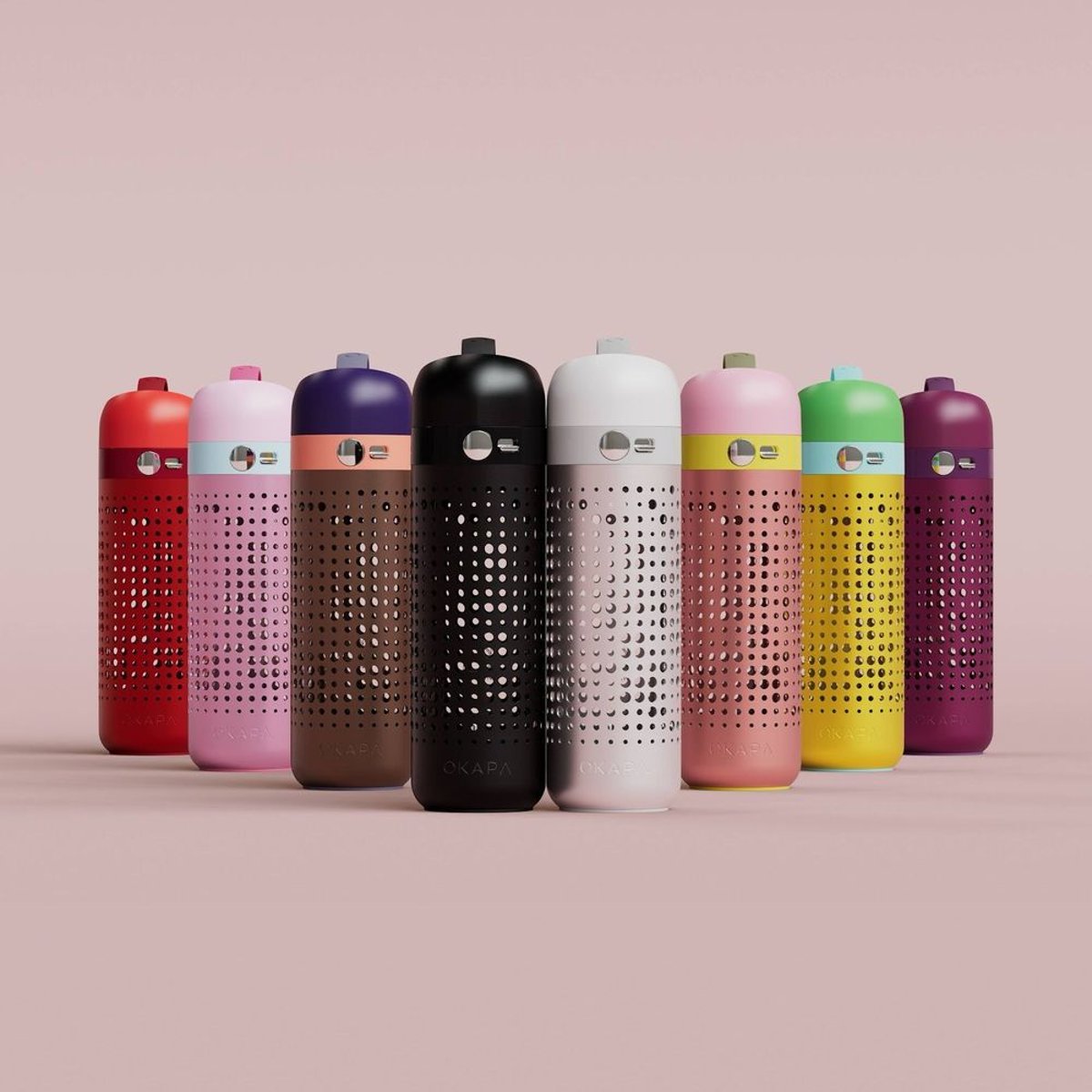
Okapa is betting on a different value proposition entirely. The company targets fashion-conscious consumers, partnering with designers for New York Fashion Week runway shows. Eight colorways with names like 'Peaches Copperwire' and 'Redd Rumble' suggest this isn't competing with Hydro Flask or Yeti - it's positioning against luxury accessories where function follows form.
The startup's Instagram bio simply reads 'luxury hydration,' signaling aspirational positioning over practical innovation. But whether consumers will embrace a $300 status symbol that looks identical to cheaper alternatives remains the ultimate market test.
Okapa represents the collision of startup engineering obsession with luxury market positioning. While the $300 price tag defies rational justification - especially when $25 alternatives offer similar materials - the execution is undeniably impressive. Eight years and 10,000 prototypes produced what might be the most thoughtfully designed water bottle ever made. Whether that translates to commercial success depends entirely on finding consumers who value engineering perfection over practical economics. In a market where status symbols command premium prices regardless of utility, Okapa's bet on luxury hydration might just work.