DJI just proved that you don't need to be a drone enthusiast to fall in love with flying. The Neo 2, priced around $280, brings camera improvements and smarter obstacle detection to an ultra-portable package small enough to slip into any backpack. But there's a catch: the US ban means most American buyers will miss out on what might be the company's most accessible drone yet.
I've never been a drone guy. Big, fragile, expensive machines held no appeal for someone with my hand-eye coordination. But DJI just made me reconsider.
The Neo 2 is DJI's answer to the original $199 Neo, and it fixes almost every complaint that held the first generation back. At £209, it's slightly pricier than its predecessor but still significantly undercuts competitors. The fold-down DJI Flip runs $439, while HoverAir's X1 lands at $349. For someone dipping their toes into drone flying for the first time, that price difference matters.
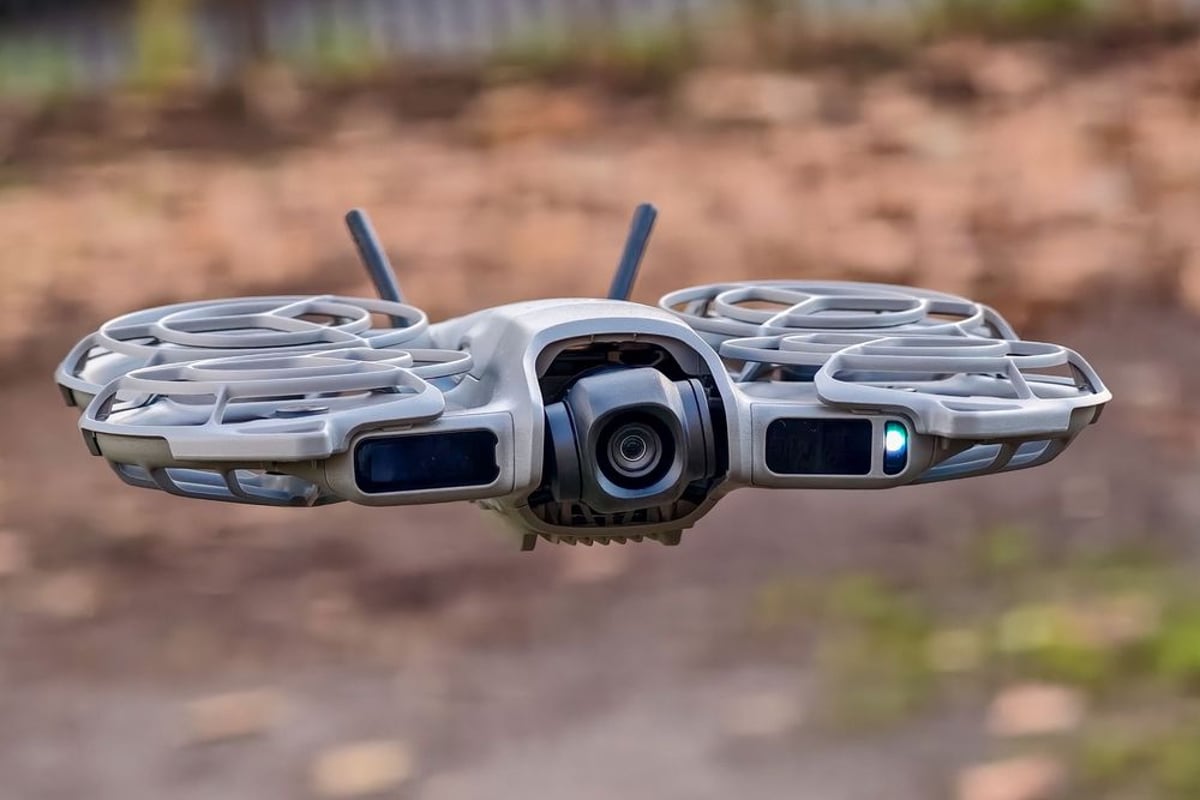
What matters more is what fits in your hand. At 151 grams, the Neo 2 stays comfortably below the 250-gram regulatory threshold in most countries, meaning you can fly this thing almost anywhere without bureaucratic headaches. I threw it in my backpack during a run without a second thought - something I'd never consider with any other drone.
The real magic happens in the automatic flight modes. Tap the dedicated button, hold the drone flat, and you've got five options: Follow mode (which I actually used constantly), Dronie, Rocket, Circle, and a few others. No remote control needed. No app fumbling. Just launch and let the drone do its thing. Follow mode kept pace with me during runs thanks to a 12 m/s top speed, only struggling on genuinely fast bike rides. The drone's obstacle avoidance doesn't break records for intelligence, but it handles most tree-dodging scenarios with surprising competence. I did fish it out of low branches once, and it got temporarily stuck on another occasion, but nothing that made me regret flying it.
That durability is key. Despite couple of crashes during testing, there's not a scratch on the body. Removable propeller guards come standard, and the whole construction feels solid despite its featherweight design. Only the transceiver antennae from higher-end bundles gave me pause - they require four screws to detach, which feels needlessly fussy.
The camera gets the meaningful upgrades that actually matter. Same half-inch-type sensor, same 4K resolution, but the aperture jumped to f/2.2 and frame rates climbed to 60fps in 4K (with 100fps slow-motion available). Vertical video now hits 2.7K at 60fps instead of being stuck at 1080p. The original Neo's portrait video limitation is gone. Photo and video quality sits comfortably at "good enough for social media" territory. Highlights blow out occasionally, and blacks crush in certain conditions, but you're getting smartphone-level image quality while the camera hangs suspended in the air following you around. That's the entire pitch, and it works.
For people who want manual control, there's the DJI Fly app (with all its Android navigation quirks) or DJI's RC-N3 controller, included in the £349 Fly More Combo. That combo also throws in two spare batteries and doubles the drone's effective cost. Given the 15-20 minute flight time per charge, spare batteries are practically mandatory unless you're okay with constant downtime.
Storage isn't a problem. The Neo 2 packs 49GB onboard, more than double the original Neo's 22GB, and ditches the need for SD cards entirely. A few hours of 4K footage fits comfortably without worrying about offloading constantly.
The biggest frustration isn't hardware - it's software. The DJI Fly app on Android is a mess. It forces landscape orientation on startup, then demands portrait mode once you enter flight controls. The interface feels cluttered and poorly organized, offering zero guidance on basic tasks like pairing the RC controller. Android users can't find it on the Google Play Store either; you'll have to download directly from DJI's website. iPhone users might find it in the App Store for now, but the ongoing US ban casts doubt on how long that lasts.
That ban is the elephant in the room. There are no realistic hopes of a US launch anymore, which is genuinely frustrating. This is the drone that could have converted a generation of reluctant first-timers. Instead, Americans are locked out while the rest of the world gets access to what might be DJI's most beginner-friendly option ever.
The DJI Neo 2 proves that entry-level drones don't have to feel like training wheels. For around $280, you're getting a genuinely fun, genuinely capable flying camera that handles the basics so well you'll forget you're a beginner. Battery life is short, the app needs work, and obstacle avoidance isn't foolproof. But none of that stopped me from wanting to keep flying. If you can actually buy one outside the US, this is the drone that makes convincing normal people that drones are worth their time and money.