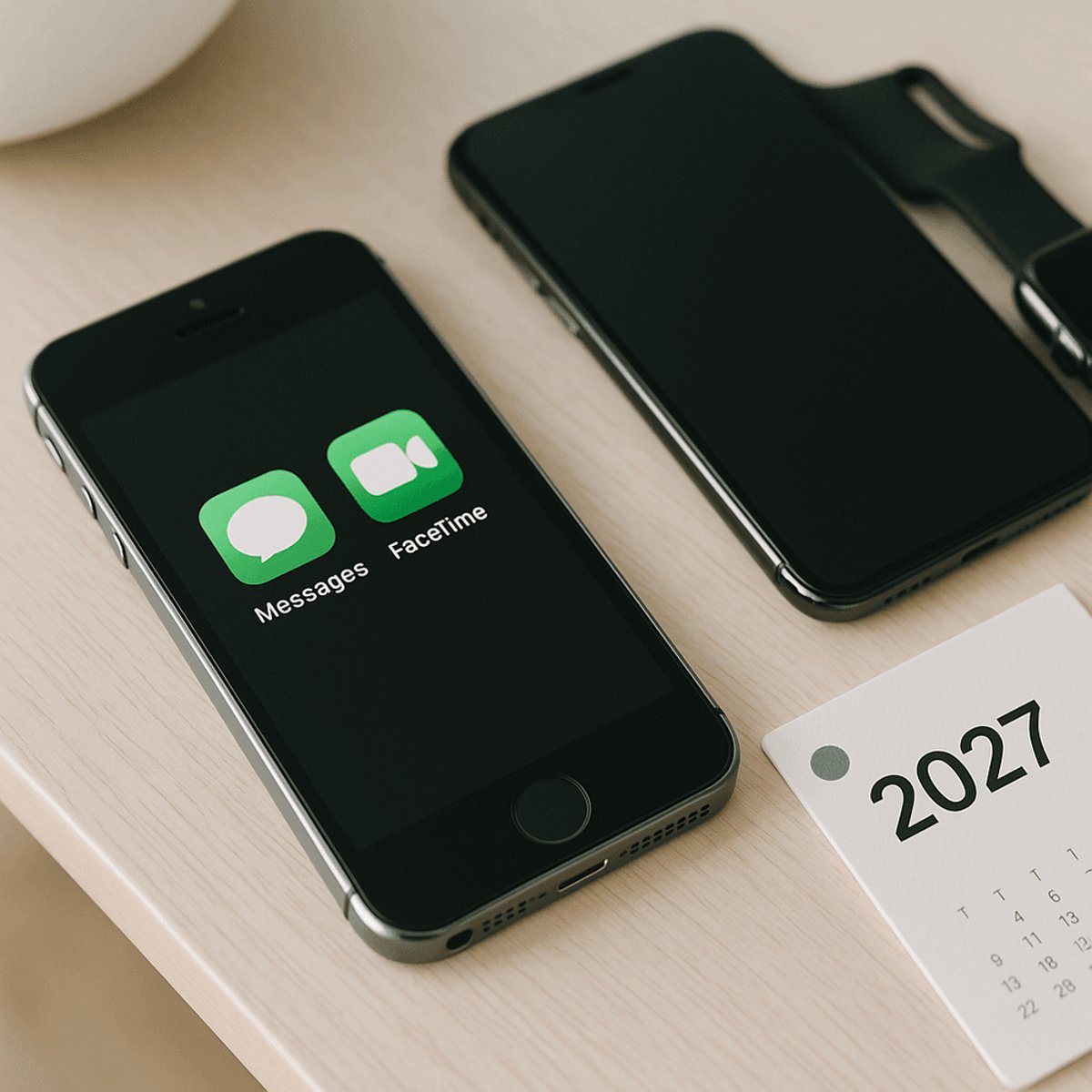
Apple just threw a lifeline to devices most companies would've abandoned years ago. The Cupertino giant released surprise patches Monday for iOS versions dating back to 2013's iPhone 5S, renewing security certificates to keep iMessage and FaceTime running through January 2027. It's an unusual move for devices that haven't seen updates in months or even years, revealing Apple's quiet commitment to keeping old hardware minimally functional long after the spotlight moves on.
Apple doesn't usually revisit ancient operating systems. When an iPhone or iPad falls off the support list, it typically gets a year or two of security patches before fading into obsolescence. But Monday's batch of updates breaks that pattern in a way that reveals something interesting about how the company thinks about its installed base.
The company pushed out iOS 12.5.8, iOS 15.8.6, and iOS 16.7.13 - covering devices from the iPhone 5S through the iPhone X. According to Apple's release notes, these aren't security patches or feature additions. They're certificate renewals, pure and simple. Without them, iMessage and FaceTime would've stopped working when the original certificates expired in January 2027.
For iOS 12 users, this marks the first update since January 2023 - nearly three years of radio silence broken only to keep the lights on a bit longer. iOS 15 and 16 saw their last patches in mid-2025, making these updates less shocking but still noteworthy. The iPhone 5S, which launched in 2013 alongside Touch ID and the 64-bit A7 chip, gets to live another day.
The timing tells its own story. These devices are approaching 13 years old, sporting 1-2GB of RAM and processors that struggle with modern web browsing. Apple's own Safari browser on these systems lacks critical security patches, and third-party developers largely abandoned iOS 12 years ago. You can't realistically use an iPhone 5S as your daily driver in 2026.
But that's not really the point. As Ars Technica originally reported, these devices found second lives as single-purpose gadgets - baby monitors, white noise machines, kitchen timers, or simple messaging devices for kids. The updates acknowledge this reality without pretending these phones are still full-featured smartphones.
Apple's iOS 18.7.4 update also swapped out the certificate, though that's expected since iOS 18 still receives active patches for the iPhone XS and XR. Oddly, the iOS 16 update doesn't mention the security certificate in its release notes, and devices stuck on iOS 17 didn't get an equivalent patch. The inconsistency suggests these weren't part of a grand unified strategy so much as targeted fixes for specific certificate expiration dates.
The move contrasts sharply with how most tech companies handle legacy hardware. Google typically provides three years of OS updates for Pixel devices, while Samsung recently extended its commitment to four years for flagship Galaxy phones. But neither company routinely goes back to patch 13-year-old operating systems just to keep messaging apps functional.
There's no business case for these updates in the traditional sense. Apple can't sell services or accessories to iPhone 5S owners who are already locked out of the App Store's modern ecosystem. The company isn't courting good press - the updates arrived with minimal fanfare and no announcement. This appears to be pure maintenance, the kind of unglamorous infrastructure work that keeps old systems limping along.
It's worth noting what these updates don't do. They don't patch security vulnerabilities or add features. They won't make these devices any more capable of running modern apps or browsing today's web safely. The built-in Safari browser is still years behind on web standards and security fixes. Anyone using an iPhone 5S for general web browsing is taking significant security risks.
But for dedicated use cases - a FaceTime station at grandma's house, an iMessage device for a middle schooler's first phone, a HomeKit controller mounted on the wall - these patches matter. They extend the useful life of hardware that's already been paid for, keeping it out of landfills a bit longer while maintaining basic connectivity to Apple's ecosystem.
The environmental angle isn't trivial either. E-waste from smartphones represents a growing challenge, and keeping devices functional longer - even in limited capacities - reduces the pressure to replace working hardware. Apple has made sustainability commitments a cornerstone of recent product launches, though the company still faces criticism for making repairs difficult and controlling the parts supply chain tightly.
Apple's decision to patch 13-year-old iOS versions won't make headlines or move markets, but it reveals something about how the company balances ecosystem control with practical support. These aren't actively supported devices by any reasonable definition - they're relics kept minimally functional for edge cases and secondary uses. But in an industry that typically abandons hardware the moment it stops generating revenue, that minimal functionality still matters. For the iPhone 5S owners using their devices as baby monitors or the parents who handed down an old iPhone 7 as a kid's first phone, these certificate renewals mean those devices stay useful a bit longer. It's unsexy infrastructure work, but it's the kind of thing that builds long-term trust even when nobody's paying attention.