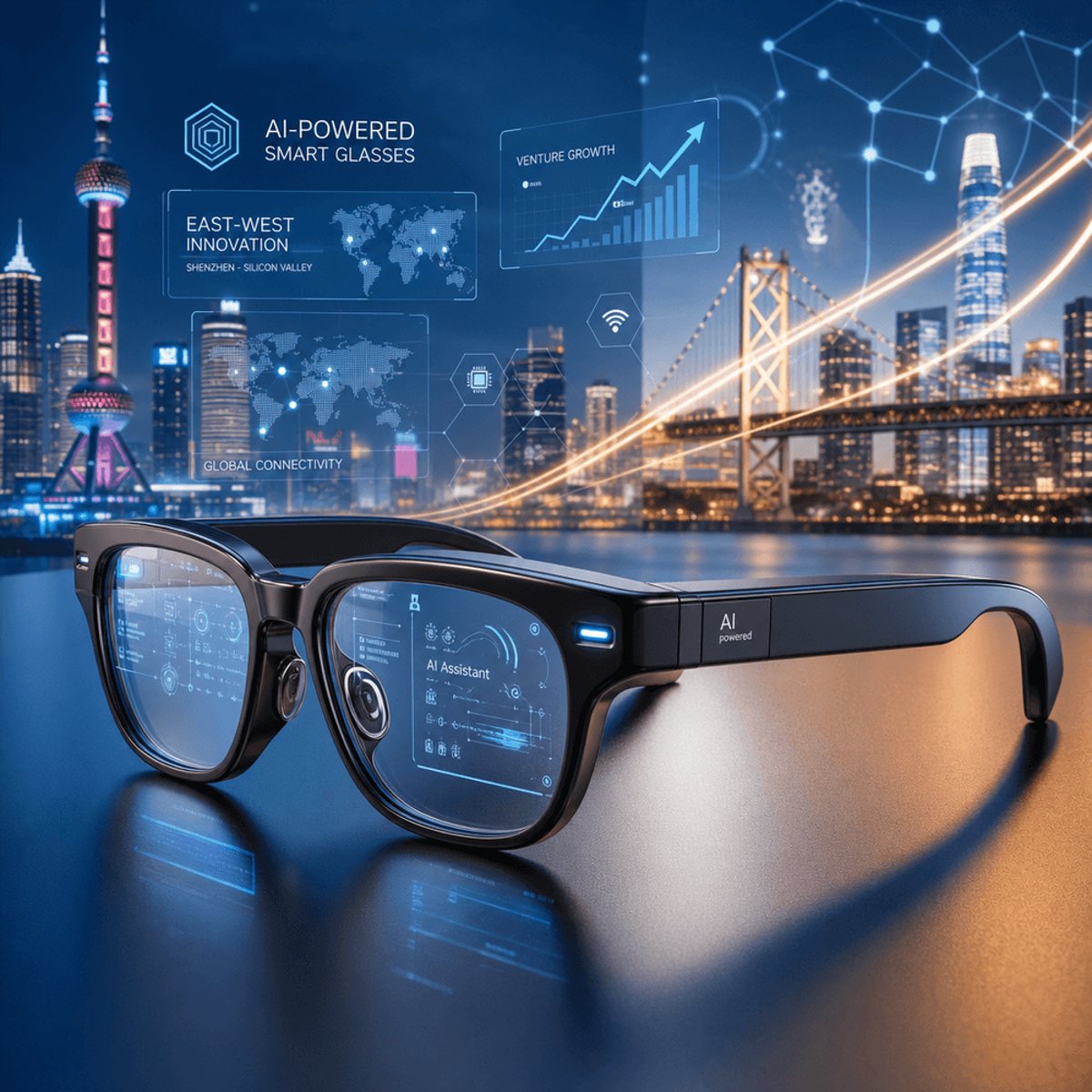
A Shenzhen-based smart glasses startup led by an Apple veteran just hit unicorn status, marking one of the biggest bets yet on AI-powered wearables coming out of China. Tencent and Meituan co-led the funding round that values the company at over $1 billion, according to CNBC. The move sets up a direct East-West showdown in the race to build consumer AI hardware that can actually replace your smartphone.
The smart glasses war just got a lot more crowded. A Shenzhen startup that's been quietly building AI-powered eyewear secured unicorn status this week, with two of China's biggest tech companies betting big that wearable AI is about to go mainstream.
Tencent and Meituan co-led the funding round that pushed the company past a $1 billion valuation, according to people familiar with the matter. The exact amount raised wasn't disclosed, but the backing from these heavyweights signals something important - China's tech giants think the window for AI hardware is opening right now, not five years from now.
The startup's led by a former Apple executive who worked on wearables during the early Apple Watch days. That pedigree matters in a category where hardware execution is everything. Meta learned this the hard way, spending years and billions on VR headsets before finally cracking the code with Ray-Ban smart glasses that people actually want to wear.
But here's what makes this interesting - the Chinese approach appears fundamentally different from Meta's partnership strategy. Instead of licensing a fashion brand, this startup is building its own identity from scratch, betting that AI features will matter more than brand recognition. That's either brilliant or insane, and we're about to find out which.
The company's been testing its glasses in select Chinese markets for months, integrating features like real-time translation, visual search, and AI assistant capabilities directly into the frames. Think less "take a photo for Instagram" and more "tell me what I'm looking at and translate the menu in front of me." It's a utility-first play that contrasts sharply with Meta's social-media-forward approach.
Tencent's involvement makes strategic sense. The company's been hunting for the next platform beyond mobile after watching Apple and Google dominate smartphone ecosystems. Smart glasses powered by AI could be that platform, especially if they can integrate WeChat and Tencent's other services seamlessly. Meituan, meanwhile, sees obvious use cases for delivery drivers and restaurant workers who need hands-free information access.
The timing isn't coincidental. Meta just reported that Ray-Ban smart glasses sales doubled quarter-over-quarter, proving there's actual consumer demand beyond tech enthusiasts. Apple's Vision Pro showed people are curious about spatial computing, even if the execution isn't quite there yet. And AI assistants have finally gotten good enough to be genuinely useful in real-time scenarios.
What's less clear is whether Chinese consumers will embrace smart glasses the way Western markets have started to. Privacy concerns hit differently in China, where surveillance is more normalized but personal data protection remains a hot-button issue. The startup will need to navigate those sensitivities carefully, especially with facial recognition and constant video capture capabilities built in.
The broader play here is about market positioning. Chinese hardware makers spent the last decade playing catch-up in smartphones and laptops. Smart glasses represent a chance to lead from the front, defining the category alongside or even ahead of Western competitors. Tencent and Meituan clearly believe this team can pull that off.
Competition's heating up fast across the board. Meta is already working on next-gen Ray-Bans with better AI integration. Google never really gave up on smart glasses despite Glass's flameout. Apple is widely expected to release lighter-weight AR glasses within the next few years. Now add a well-funded Chinese challenger into the mix, and you've got a proper race.
The real test comes down to execution. Consumer hardware is littered with unicorn corpses that had great ideas and deep pockets but couldn't ship products people actually wanted. The Apple veteran pedigree helps, but shipping one or two products at Apple is very different from building an entire company from scratch. And competing directly with Meta's established Ray-Ban partnership means fighting uphill on brand recognition and distribution.
But if there's one thing Chinese hardware companies have proven over the last decade, it's that they can iterate fast and manufacture at scale. Those advantages matter enormously in a category where success depends on getting costs down and features up quickly. Tencent and Meituan didn't write checks this size without believing this team can move fast enough to matter.
The smart glasses category is shifting from experiment to battleground, and this unicorn round proves it's not just Western tech giants in the fight. With Tencent and Meituan backing a team that knows how to ship consumer hardware, the next year will reveal whether AI features alone can overcome Meta's brand advantage - and whether Chinese consumers are ready to put AI on their faces. Watch for product announcements in Q3 and early distribution partnerships that'll signal whether this billion-dollar bet has legs.