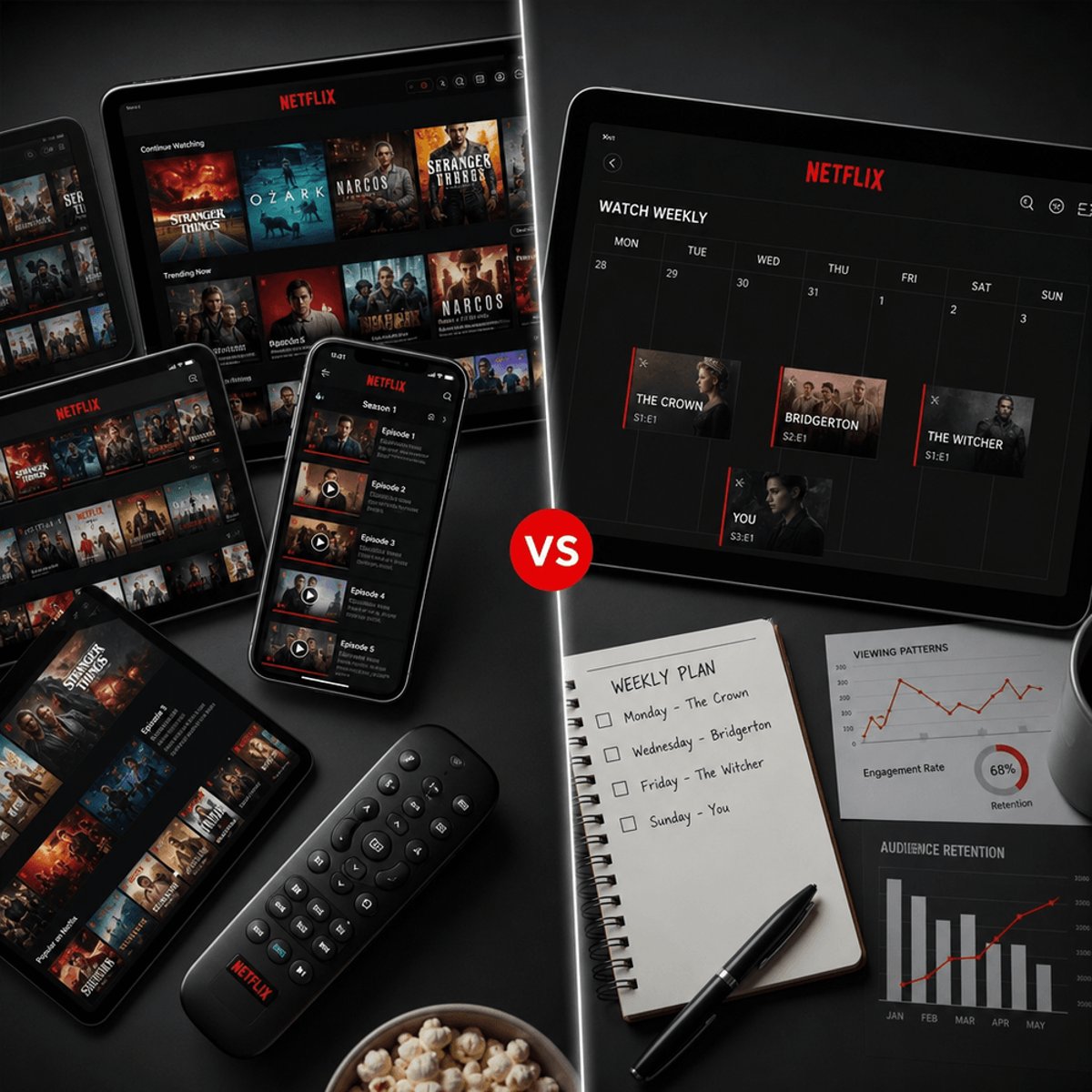
Netflix built an empire on binge-watching, but new data suggests the strategy that killed cable might be killing its own shows. A fresh report from TechCrunch reveals viewers are abandoning series after Season 1 at alarming rates, forcing the streaming pioneer to confront an uncomfortable truth: the all-at-once release model that made it dominant may no longer serve its 280-million-subscriber base. As competitors like Disney+ and Apple TV+ lean into weekly releases, Netflix faces a strategic crossroads that could reshape how we consume television.
Netflix revolutionized television by letting viewers devour entire seasons in weekend marathons. Now that same strategy might be strangling its content before it can breathe.
The numbers tell a troubling story. While Netflix rarely releases granular viewing data, industry observers have noticed a pattern: shows that generate massive opening-weekend buzz vanish from the cultural conversation within weeks. Compare that to HBO's weekly release model, where shows like "House of the Dragon" dominated social media for months, building anticipation and sustaining subscriber interest between episodes.
TechCrunch reports that Season 2 retention has become a critical pain point. When every episode drops simultaneously, there's no incentive to maintain an active subscription beyond that initial binge. Subscribers can join, consume, and cancel within a month, a behavior pattern that's becoming increasingly common as streaming fatigue sets in and household budgets tighten.
The competitive landscape has shifted dramatically since Netflix pioneered binge-watching in 2013 with "House of Cards." Back then, the all-at-once model was revolutionary, a clear differentiator from traditional television. But Disney+ found success with weekly releases for Marvel and Star Wars properties, creating appointment viewing that kept subscribers engaged for months rather than days. Apple TV+ followed suit, and even Amazon Prime Video has experimented with hybrid models.
The economic implications run deeper than subscriber churn. Netflix reportedly spends over $17 billion annually on content, but if shows can't build lasting cultural cachet, that investment generates diminishing returns. Weekly releases allow word-of-mouth to build organically, letting smaller shows find audiences over time rather than getting buried in the algorithm after their opening weekend.
There's also the creator perspective to consider. Showrunners have increasingly complained that binge-watching undermines their craft. Plot twists that took months to write get spoiled within hours. Character development meant to unfold gradually gets consumed in a blur. The pacing and structure of prestige television was developed for weekly viewing, and some argue the art form suffers when that rhythm gets compressed.
Netflix's recent experiments suggest it's aware of the problem. The company split the final seasons of "Stranger Things" and "The Crown" into multiple parts, releasing them weeks apart. It's a half-measure that acknowledges the issue without fully committing to change. But those tentative steps indicate internal discussions about whether the binge model remains viable.
The streaming wars have entered a new phase focused on profitability over pure subscriber growth. Netflix reported 280 million subscribers in its latest earnings, but Wall Street now cares more about retention metrics and revenue per user. If the binge model is causing subscribers to bounce in and out rather than maintain steady subscriptions, that's a fundamental business problem that requires strategic rethinking.
Competitors are watching closely. If Netflix pivots away from binge releases, it would represent one of the most significant strategic reversals in modern media history. The company that killed appointment television might have to resurrect it, acknowledging that human psychology craves the communal experience of watching and discussing shows together over time.
The irony isn't lost on industry observers: Netflix spent a decade training viewers to expect instant gratification, and now it may need to retrain them to wait. That's a difficult proposition when your brand identity is built on convenience and control. But the alternative, continuing to lose viewers between seasons while competitors build more engaged audiences, might be worse.
What happens next will likely depend on data Netflix hasn't shared publicly. The company has access to granular viewing patterns, completion rates, and retention metrics that could prove or disprove whether binge-watching truly hurts long-term engagement. If internal data shows the model is broken, expect gradual but decisive changes. If it vindicates the current approach, competitors might face their own reckoning about weekly releases.
Either way, the streaming landscape is maturing past its disruptive phase into something more sustainable. The question isn't whether Netflix will change, but whether it can change fast enough to stay ahead of an industry it once dominated effortlessly.
Netflix stands at an inflection point that will define the next decade of streaming. The binge-watching model it pioneered may have run its course, a victim of its own success as the market it created became saturated with competitors learning from its playbook. If Season 2 retention really is collapsing, the company faces a choice between ideological purity and business pragmatism. The streaming wars aren't won by who disrupts first, but by who adapts fastest when disruption becomes the status quo. For Netflix, that might mean embracing the very weekly release rhythm it once made obsolete.