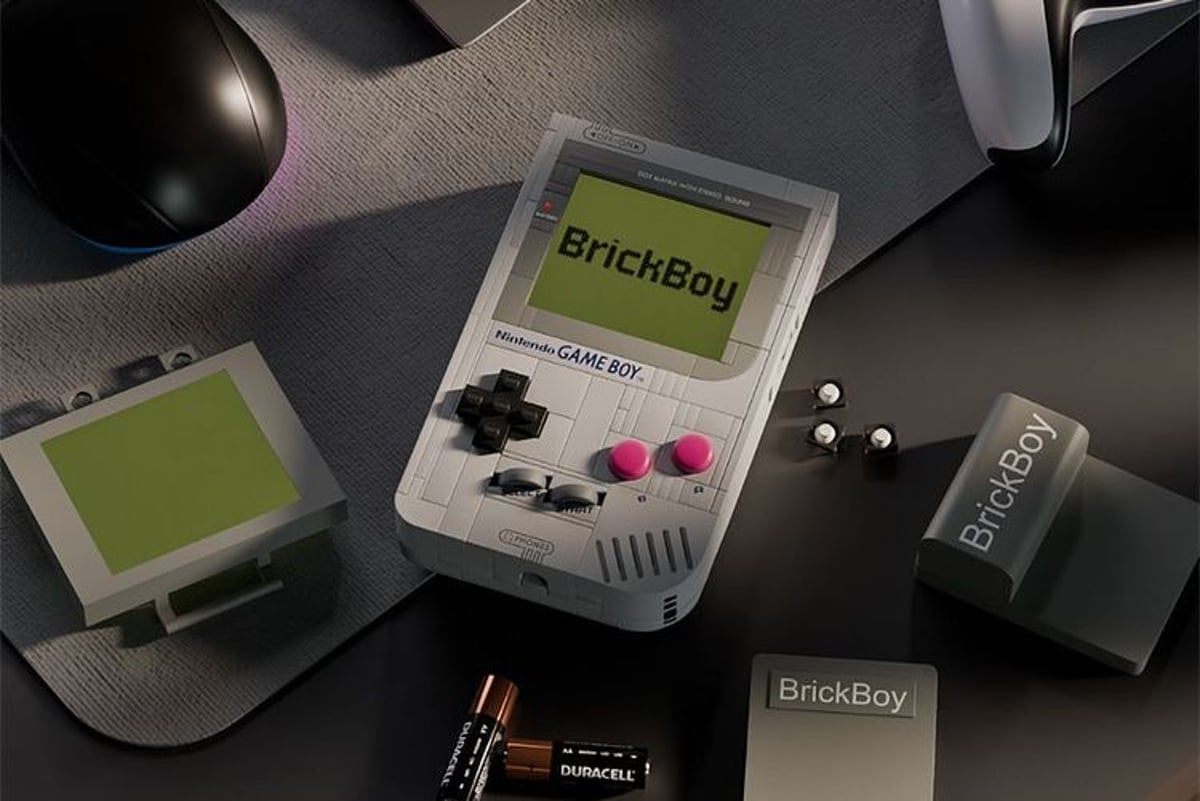
The BrickBoy emulator kit has launched on Kickstarter with pricing that could shock retro gaming fans. Starting at €129 ($150) for basic Game Boy emulation, the kit costs more than twice Lego's original $60 Game Boy set - and that's before you factor in needing the actual Lego model. With shipping delayed until March 2026, early backers are questioning whether nostalgia justifies the premium price tag when dedicated handheld emulators offer more power for less money.
The crowdfunding campaign everyone's been waiting for just went live, and the numbers are raising eyebrows across the retro gaming community. After being announced last week, the BrickBoy kit that transforms Lego's buildable Game Boy into a functional emulation device has officially launched on Kickstarter. But the pricing structure is already sparking debate about whether nostalgic appeal can justify the premium cost.
Three distinct versions hit the platform today, each targeting different levels of retro gaming enthusiasm. The Essential Kit strips things down to basics - grayscale Game Boy titles only, mono speaker audio, and a €129 price tag that translates to roughly $150. Early backers can snag it for €99 (about $115), but here's the kicker: that doesn't include Lego's $60 Game Boy set that you actually need to make this work.
Do the math and you're looking at $175-210 total investment for the most basic setup. That puts it head-to-head with Anbernic's handheld emulators that come ready to play out of the box with superior performance and broader game compatibility. The RG34XX, for instance, handles everything from Game Boy through PlayStation 1 titles at a similar price point.
Stepping up to the Gamer Kit brings the feature set closer to modern expectations. For €169 ($197), you get Game Boy Color and Game Boy Advance compatibility, Bluetooth headphone support, and a rechargeable battery system. It's a meaningful upgrade that addresses some of the Essential Kit's limitations, but the price gap widens further when compared to dedicated devices.
The top-tier Collector's Edition pushes into luxury territory at €189 ($220). This version transforms the Lego Game Boy into what the creators call "a functional display piece running demos." It's clearly targeting collectors and display enthusiasts rather than serious gamers, though the practical value proposition becomes even murkier at this price point.
Timing adds another wrinkle to the equation. All three versions are estimated to ship sometime in March 2026 - that's roughly 16 months away. In the fast-moving world of handheld emulation, that's an eternity. Companies like Anbernic and Retroid are constantly pushing new devices with better screens, more powerful chips, and expanded game libraries.
The BrickBoy does offer one advantage that purists will appreciate: ROM-based emulation means no hunting down original cartridges. Unlike Natalie the Nerd's upgrade kit that requires authentic Nintendo chips and cartridges for the most legitimate experience, BrickBoy takes the software emulation route.
But that convenience comes with trade-offs. The Lego Game Boy's ergonomics weren't designed for extended gaming sessions, and the button layout follows the original's limitations rather than modern comfort standards. You're essentially paying premium prices for a device with questionable long-term playability.
The crowdfunding landscape for retro gaming accessories has seen mixed results lately. While some projects like the Analogue Pocket found success by targeting serious enthusiasts, others have struggled when pricing doesn't align with performance expectations. BrickBoy sits in an interesting middle ground - it's clearly a passion project with genuine engineering behind it, but the target market might be smaller than the creators hope.
Early campaign metrics will tell the story. If backing numbers stay strong despite the pricing concerns, it suggests there's real appetite for premium Lego-compatible gaming accessories. If momentum stalls, the creators might need to reconsider their positioning against established handheld emulator manufacturers.
The BrickBoy represents an intriguing fusion of nostalgia and modern emulation technology, but its success will ultimately depend on whether enough fans value the Lego aesthetic enough to pay premium prices for compromised ergonomics. With established handheld emulators offering superior performance at similar or lower costs, and a 16-month wait until delivery, the kit faces an uphill battle in a competitive market. For collectors and Lego enthusiasts, it might be worth the investment. For serious retro gamers, the math probably doesn't add up.