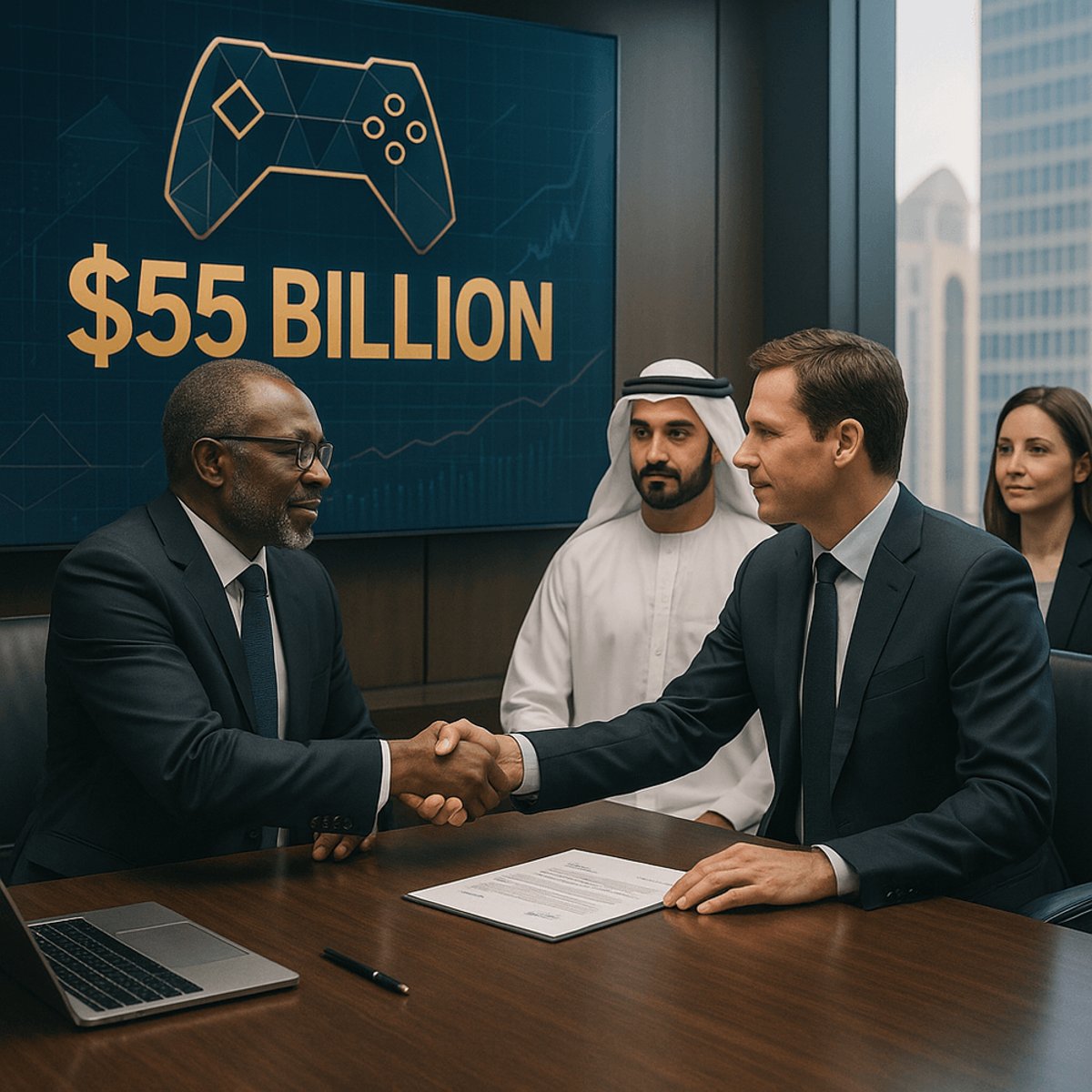
Electronic Arts just agreed to the largest leveraged buyout in Wall Street history. The gaming giant behind Madden and The Sims will go private in a $55 billion all-cash deal with Saudi Arabia's Public Investment Fund, Silver Lake, and Affinity Partners, paying shareholders $210 per share - a premium that sent the stock soaring 6% in premarket trading.
Electronic Arts just pulled off the biggest gaming deal in history, and it's reshaping how we think about the entire industry. The $55 billion all-cash buyout announced Monday morning represents more than just another private equity play - it's a seismic shift that puts one of gaming's biggest publishers under the control of Saudi Arabia's sovereign wealth fund and Wall Street powerhouses.
The numbers tell the story of just how valuable gaming has become. At $210 per share, the consortium of the Public Investment Fund, Silver Lake, and Affinity Partners is paying a hefty premium for the maker of Madden, FIFA, and The Sims. EA's stock had already surged 15% Friday to $193.35 after the Wall Street Journal broke news of the pending deal, and it jumped another 6% in premarket trading before being halted.
What makes this deal particularly fascinating is the backing from Saudi Arabia's PIF, which already owns 9.9% of EA and is rolling that stake into the buyout. The sovereign wealth fund has been aggressively expanding into gaming and entertainment as part of Crown Prince Mohammed bin Salman's Vision 2030 diversification strategy. They've already invested billions in companies like Nintendo and Activision Blizzard, but this EA deal marks their biggest gaming bet yet.
Jared Kushner's involvement through Affinity Partners adds another layer of intrigue. The former White House advisor and Trump son-in-law has positioned his private equity firm as a bridge between Middle Eastern capital and American assets. "I've admired their ability to create iconic, lasting experiences, and as someone who grew up playing their games - and now enjoys them with his kids - I couldn't be more excited about what's ahead," Kushner said in EA's announcement.
The timing couldn't be more critical for EA, which has been under pressure to justify its premium valuation amid increasing competition from mobile gaming and changing player preferences. The company's traditional sports franchises like Madden and FIFA remain cash cows, but the shift toward live-service games and subscription models has created execution challenges. Going private gives EA breathing room to invest in long-term transformation without quarterly earnings pressure.
Silver Lake's participation signals serious confidence in gaming's growth trajectory. The tech-focused private equity giant has backed everyone from Airbnb to Twitter, and they typically don't write checks this big unless they see massive upside potential. Their expertise in scaling technology platforms could help EA navigate the transition to cloud gaming and AI-powered content creation.
For the broader gaming industry, this deal sets a new valuation benchmark that could trigger more consolidation. If EA is worth $55 billion, what does that mean for Take-Two Interactive, Ubisoft, or other major publishers? The answer might be that everything's about to get more expensive, especially as tech giants like Microsoft and Sony continue their content acquisition sprees.
The regulatory landscape adds complexity too. While this isn't a traditional tech merger that might trigger antitrust concerns, the involvement of foreign sovereign wealth funds in American entertainment assets could draw scrutiny from the Committee on Foreign Investment in the United States. Saudi Arabia's growing influence in gaming, from PIF's investments to the Kingdom's ambitious Neom city gaming hub, represents a strategic play that goes well beyond financial returns.
What happens next will reshape EA's development priorities and potentially the entire industry's direction. Private ownership typically means more aggressive investment in R&D and less conservative decision-making - exactly what EA might need to compete with Epic Games' Fortnite empire and emerging AI-powered gaming experiences.
This isn't just the largest gaming buyout ever - it's a signal that the industry has matured into a strategic asset class worthy of sovereign wealth fund attention. For EA, going private offers the runway to reinvent itself without Wall Street's quarterly scrutiny. For the gaming industry, it sets a new valuation ceiling that could trigger a wave of consolidation. The real question isn't whether this deal gets done, but whether it kicks off a broader transformation of how we think about gaming companies as strategic assets rather than just entertainment businesses.