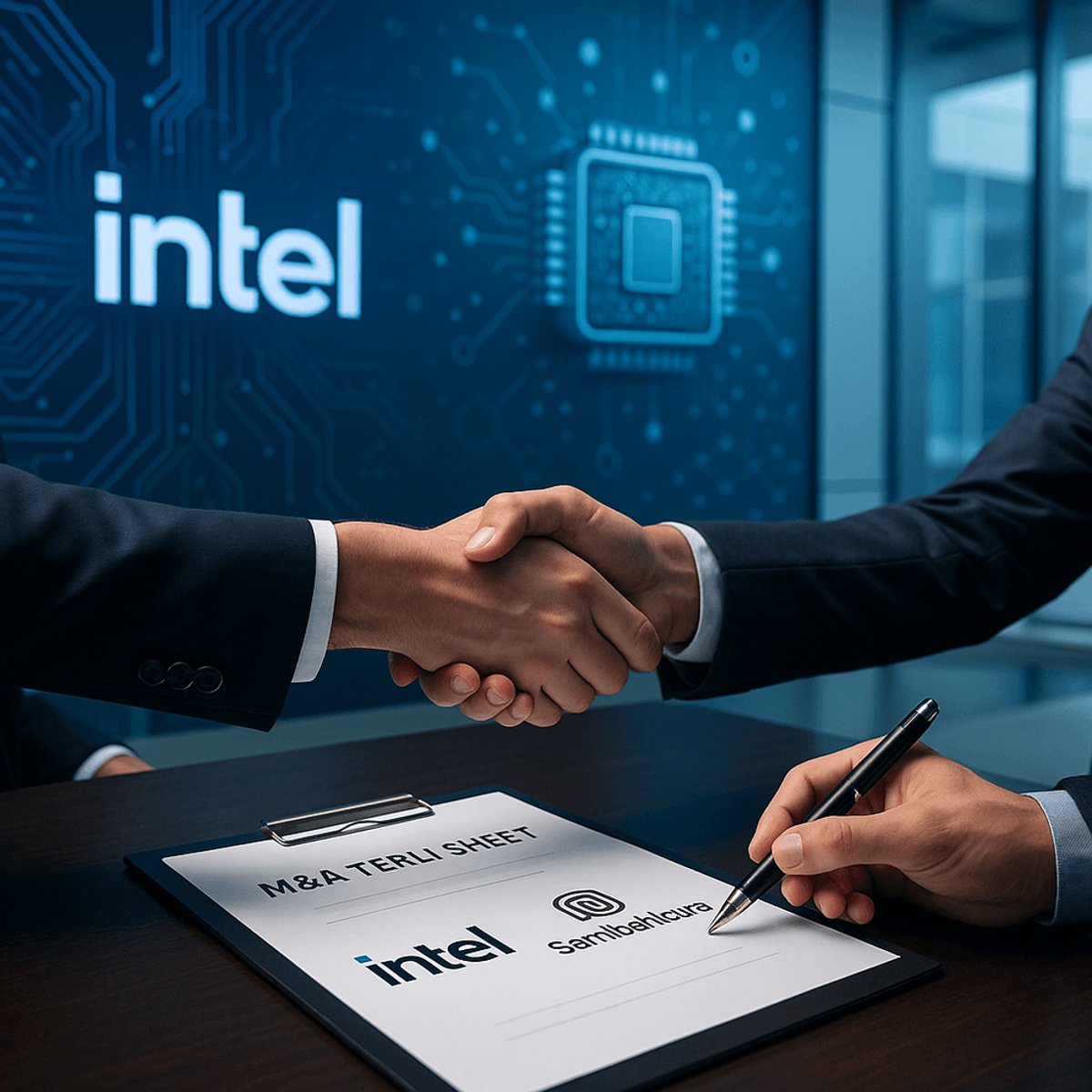
Intel just took a major step toward acquiring AI chip startup SambaNova Systems, signing a non-binding term sheet that could reshape the competitive landscape in artificial intelligence semiconductors. The deal, first reported by WIRED, marks Intel's latest push to catch up in the AI chip race where it's been trailing behind Nvidia and other competitors.
Intel is making its boldest move yet to close the AI chip gap. The semiconductor giant has signed a term sheet to acquire SambaNova Systems, the Palo Alto-based AI chip startup, according to two sources with direct knowledge of the agreement who spoke to WIRED.
The timing couldn't be more strategic. SambaNova, once valued at $5 billion during the 2021 funding frenzy, has seen its star fade as the AI chip market consolidated around Nvidia's dominance. BlackRock reportedly slashed the value of its SambaNova shares by 17% over the past year, creating an opening for Intel to swoop in at a discount.
The deal dynamics reveal just how intertwined these companies already are. Intel CEO Lip-Bu Tan currently serves as chairman of SambaNova, while Intel Capital has invested in the startup. Adding another layer, SoftBank - which led SambaNova's massive $676 million Series D round in 2021 - made a major investment in Intel earlier this year.
"The agreement is non-binding, meaning the deal is not yet finalized and could be dissolved without penalty," the WIRED report notes. The companies now face weeks or months of regulatory approval, liability scrutiny, and financial due diligence.
SambaNova brings serious AI credentials to the table. Founded in 2017 by Stanford professors Kunle Olukotun and Christopher Ré alongside Oracle veteran Rodrigo Liang, the company has raised $1.14 billion total and specializes in inference computing - the process where large language models make predictions from data.
For Intel, this acquisition represents a lifeline in the AI chip wars. The company has struggled to compete with Nvidia's GPU dominance in AI training and inference, despite its historical leadership in CPUs. Intel's data center revenue has been under pressure as customers increasingly choose specialized AI chips over traditional processors.
The broader semiconductor landscape is watching closely. Advanced Micro Devices has been gaining ground with its AI accelerators, while Google and Amazon have developed custom AI chips for their cloud services. Intel's acquisition of SambaNova could help level the playing field.
CEO Tan has been reshaping Intel since taking over earlier this year, focusing on debt reduction, spinning off non-core assets, and pivoting to AI-first strategies. The company received an $8.9 billion government infusion in August to expand domestic semiconductor manufacturing, providing financial flexibility for strategic acquisitions.
Industry analysts see this as Intel's acknowledgment that building competitive AI chips from scratch would take too long. By acquiring SambaNova's technology and talent, Intel could accelerate its AI roadmap by years.
The deal also highlights the challenging fundraising environment for AI chip startups. Despite the AI boom, many specialized chip companies are struggling to secure growth capital as investors become more selective. SambaNova's willingness to explore a sale reflects this reality.
Whatever the final price, this acquisition could mark a turning point for Intel's AI ambitions. The company that once dominated computing is betting that SambaNova's inference technology can help it reclaim relevance in the age of artificial intelligence.
This potential acquisition represents more than just another tech deal - it's Intel's recognition that the AI chip race requires bold moves, not incremental improvements. With SambaNova's inference technology and Intel's manufacturing scale, the combined entity could challenge Nvidia's dominance in enterprise AI. But execution will be everything. Intel has a history of struggling with acquisitions, and integrating SambaNova's technology while maintaining its innovation edge won't be easy. For the broader AI industry, this deal signals that consolidation is accelerating as companies race to build complete AI ecosystems rather than point solutions.